A few weeks ago, the film Exodus – Kings and Gods was launched and, in anticipation of the upcoming Torah readings about the liberation of the Israelites from slavery, I decided to watch the movie. I wanted to see how the authors of the film interpreted the biblical narrative. I was disappointed in the film in so many ways. I never expected to see a movie that was close to the bible’s narrative, and/or to Jewish interpretation, but in my opinion the film’s only goal was to devalue the Bible. The filmmakers presented a crude idea of a shizophrenic Moses who caused Israel to become insane followers of a cruel, child-murdering God.This film is not the first attempt at finding scientific explanations for the 10 plagues, and to devalue Moses’ prophecy as a kind of mental delusion. Usually, I don’t mind these attempts, as long as they respect and don’t vilify those who have a different understanding of the Torah. Unfortuantely this film has no intention of doing so. (more…)
Author: Rabbi Schell
-
Exodus – Kings and Gods
A few weeks ago, the film Exodus – Kings and Gods was launched and, in anticipation of the upcoming Torah readings about the liberation of the Israelites from slavery, I decided to watch the movie. I wanted to see how the authors of the film interpreted the biblical narrative. I was disappointed in the film in so many ways. I never expected to see a movie that was close to the bible’s narrative, and/or to Jewish interpretation, but in my opinion the film’s only goal was to devalue the Bible. The filmmakers presented a crude idea of a shizophrenic Moses who caused Israel to become insane followers of a cruel, child-murdering God.This film is not the first attempt at finding scientific explanations for the 10 plagues, and to devalue Moses’ prophecy as a kind of mental delusion. Usually, I don’t mind these attempts, as long as they respect and don’t vilify those who have a different understanding of the Torah. Unfortuantely this film has no intention of doing so. (more…)
-
Vayechi
Year 3 Genesis 49:27-50:26 (Plaut p 313; Hertz p 187)Haftarah I Kings 2:1-12 (Plaut p 323; Hertyz p 191)Jacob’s final blessing to his children and grandchildren precedes demand that he be buried in the ancestral grave in Hebron at the Machpelah. There it is his desire to be laid to rest alongside his wife Leah, his parents Isaac and Rebecca and his grandparents Abraham and Sarah. Jacob has become a resident of Egypt, and the preparation for burial occurs according to local custom as does the initial period of mourning. It is only after that, with Pharaoh’s permission, that a great journey is undertaken to bring Jacob to his final resting place in Canaan. Then a week of mourning takes place.Through the generations, Jews living in exile and dispersion have been challenged to meld and adapt custom and practice to local standards and necessities. The exceptional mourning for Jacob, the outflow from Goshen and Egypt of so vast a party for the religious observance sets a model for the loyalty and connection of the ancient Israelites to their adopted land of Egypt. How ironic that in the next chapters of the narrative that predominates in Jewish memory, it is precisely Pharaoh’s refusal to permit such a national religious observance that leads from plague to plague.The death of Joseph described in the closing verses of Genesis at a young 120 years of age brings the age of the Patriarchs and the formation of the Israelite nation to a full stop. The origin of the tribes is clear. While none of this national saga has external confirmation, these ideas have long served as the baseline of Jewish self-definition. Bound to one another by descent and experience, ancient Israelite religion is intimately bound up with the national identity. The consistent presence and acceptance of gerim—strangers—as a protected part of the whole, is important to the development of the religion of conscience, human concern and prophetic imperatives. Founded in a call for justice (Let my people go!), and realized through the power of divine presence, in modernity the response to the quest for the diving in our lives ascends and resonates.Perhaps this is quintessentially so for Joseph, the stranger-in-a-strange-land whose life becomes the model for leadership, initiative and success. It is this confluence, the multiplicity of streams the flow into Jewish identity that mark Judaism and Jewish identity through the millennia.Rabbi Robert Jacobs
-
Vayiggash
Year 3 Genesis 46:28-47:27 (Plaut p 293; Hertz p 174) Haftarah Ezekiel 37:15-28 (Plaut p 302; Hertz p 178)The great re-union of Joseph and his aged father Jacob/Israel lead to a welcome for all of Bet Yisraeil—the House of Jacob/Israel—as part of the empire of Pharaoh. The first meeting of patriarch and King leads to blessing. Nonetheless, Joseph will lead the way through the years of drought that follows to an economic conquest of all Egypt and Canaan, too. Holding a virtual monopoly on the stores of grain, the centralization of power for Pharaoh occurs in course. Money, land, and rights all pass to the King and lands are pacified.Over generations, there have been many conquests of peoples in different areas of the world. Often these have been perpetrated through military force. More subtle have been the economic conquests based in human necessity and nefarious plotting. Modern schemes like those of Stalin and the USSR whose goal was a central power and elimination of private land ownership fell to incapacity and blinding corruption.The narrative of Torah serves to set the stage for the later developments that haunt the Book of Exodus: the new Pharaoh, who no longer is indebted to Joseph, is transformed to the oppressor whom God will ultimately defeat. The descendants of Jacob, who have come under Joseph’s power and authority, will suffer greatly in the process. For medieval Ashkenazic Jewry who found their way from the Rhine in the west to Poland in the east at the invitation of early Polish kings, and who served as those king’s trusted advisors and administrators, later history is filled with similar destinies and abuses.Reviewing these repeated historical patterns and the repeated negative outcomes for Jews and for the world, the classic text of Torah stands as clear calls for justice, avoidance of corruption and moral decisiveness.Rabbi Robert Jacobs
-
Hanukkah
Stories have great power. We tell stories about ourselves and about our communities because they give our lives meaning, and they help us navigate between the past and the future. We use stories to help us make sense of the world and our place in it. Not far behind the seemingly innocent plots of many of the stories we tell about our community’s religious history lie profound existential truths addressing our most pressing religious concerns.What grade–school child or Jewish nationalist doesn’t love to hear or tell tales about physical acts of heroism performed by our Maccabee brothers and sisters? Competing with this story of military might is the pious narrative of the oil lasting for eight days and the rededication of our holy Temple, a deeply religious moment in our people’s history.The story of the oil lasting for eight days does relate a miracle. The question is how do we interpret the story, and where do we attach meaning. The power of the miracle that God performed was not that God provides us with oil that we would not have had otherwise. Rather, God kept a small quantity of oil miraculously aflame for eight days in order to communicate to the Jewish people that God was present in their community. The miracle of the oil was that God gave the Jewish community, the very people that had suffered so greatly in their war against the Greeks, a clear sign that God had not abandoned this holy nation.This Hanukkah story explicitly addresses our intense urgency to feel God’s presence in our lives. We all have our personal miracles and for someone else they might not have a big influence, though these memories and miracles are very special to us. Spirit of Chanukah shows us optimism and I wanted to have this opportunity to share my miracle story with you. (more…)
-
Vayeishev
Genesis 39:1-40:23 (Plaut p 252; Hertz p 147. )Haftarah Amos 2:6-3:8. (Plaut p 263; Hertz p 152)The parashah tells the stories of how Jacob’s other sons sold Joseph into captivity in Egypt, of how Judah wronged his daughter-in-law Tamar and discovered his transgression, and how Joseph served Potiphar and was imprisoned when falsely accused of assaulting Potiphar’s wife.In our parashah God, Judah and Tamar all see things from their own perspective, and they see things differently. Having left his family ‘Judah saw there a daughter of a certain Canaanite, whose name was Shuah; and he took her’ (Gen 38:2). Judah’s relationship with Shuah began with him seeing her. Together they had three sons: Er, Onan and Shelah. Er was married to Tamar, but as the story continues: ‘Er, Judah’s firstborn, was wicked in the sight of Adonai; and Adonai slew him’. Tamar then married Onan, so that Er’s name would be maintained, but Onan spilt his seed as he did not want to continue his brother’s name. And once again we read that Onan ‘was wicked in thesight of Adonai, and Adonai also slew him’.Judah did not want to risk his final son, and so he sent Tamar away, saying that when Shelah was grown up she could marry him. As time went by, Tamar realised that this was unlikely to happen, and so she dressed provocatively to seduce Judah, ‘for she saw that Shelah was grown, and she was not given to him for his wife. When Judah saw her, he thought her to be a harlot’. Rather than pay her, Tamar (with her identity hidden) took a tribute from Judah, which she would keep until he sent payment. He sent his friend Hirah to pay her; and he went and asked the men ‘where is the harlot, who was at Einayim by the way side? And they said, There was no harlot in this place’. While there is more to the story of Judah and Tamar, one of the striking details is that it happens at a place called einayim, the Hebrew word for eyes; as if to further emphasise for us the importance of sight.The story is a reminder to open our eyes to make sure we are fully aware of the world around us. But it is also a reminder that we all see things differently and it is sometimes important to try and see something through the eyes of another. Tamar and Judah saw things differently and the misunderstanding, confusion and deception all sprang from this. The challenge for us is to truly open our einayim, our eyes. —Rabbi Adrian M Schell[Source: Burkeman: Two Minutes of Torah]
-
Wajeze: Jakobs Feilschen mit Gott?
Der Wochenabschnitt Wajeze berichtet von Jakobs Reise nach, seinem Leben in, und seiner Flucht aus Haran. Er erzählt von Jakobs erster Begegnung mit Rachel und von den Jahren, die er für Laban arbeiten muss. Der Bericht schildert die gemeinsamen Lebensjahre mit Rachel und Lea und die Geburt der ersten 11 Söhne und die von Dina. (more…)
-
Vayetze: Bargaining with God ?
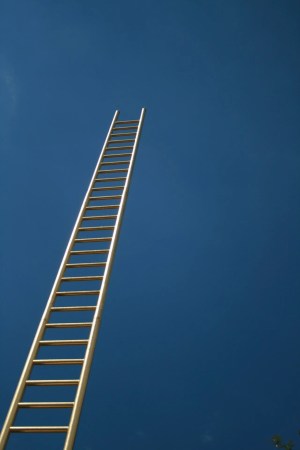 Parashat Vayetze tells of Jacob’s travels to Haran, his sojourn there, and his return to Canaan. It recounts Jacob’s first meeting with Rachel, his time working for Laban, living with Rachel and Leah, and the birth of all his children save Benjamin. Jacob has a dream in which he sees a ladder set upon the earth reaching up to the heavens. God appears at the top of the ladder and promises Jacob he will inherit the land of Canaan. He promises Jacob, saying: “Remember I am with you.” Jacob wakes up and offers the first recorded Jewish prayer in the Bible:“If God remains with me; if He protects me on this journey that I am making and gives me bread to eat and clothes to wear, and if I return safely to my father’s house – the Eternal will be my God …”There is something troubling about Jacob’s prayer. It sounds more like Jacob is saying ‘let’s make a deal’ than the exalted theological language we would expect from one of our forefathers. More than that, his vow is strange because he seems to be asking for the very things that God has already promised him! (more…)
-
A ‘light’ for Israel
 Dear friends,The news that overwhelms us in the media about the terrorist attacks in Israel saddens me in a myriad of ways. It is hard to withhold my tears over the dead in Jerusalem, and like my fellow Jews across the world, I mourn for the victims of the latest attacks across the whole country.Less than a year ago I lived in Israel for a while, and walked through the streets of Tel Aviv and Jerusalem daily. I felt safe, and had the feeling that we finally could see a glimpse of a new era for Israel – a place where Jews can live in safety, secure with their neighbours of all creeds. And now? Once again, our friends in Israel are filled with fear when they go out in public. Once again, words have become deadly weapons, as those around us use them to call for violence. Holy sites, places that should actually be filled with peace and security, have become places of grief and terror. (more…)

