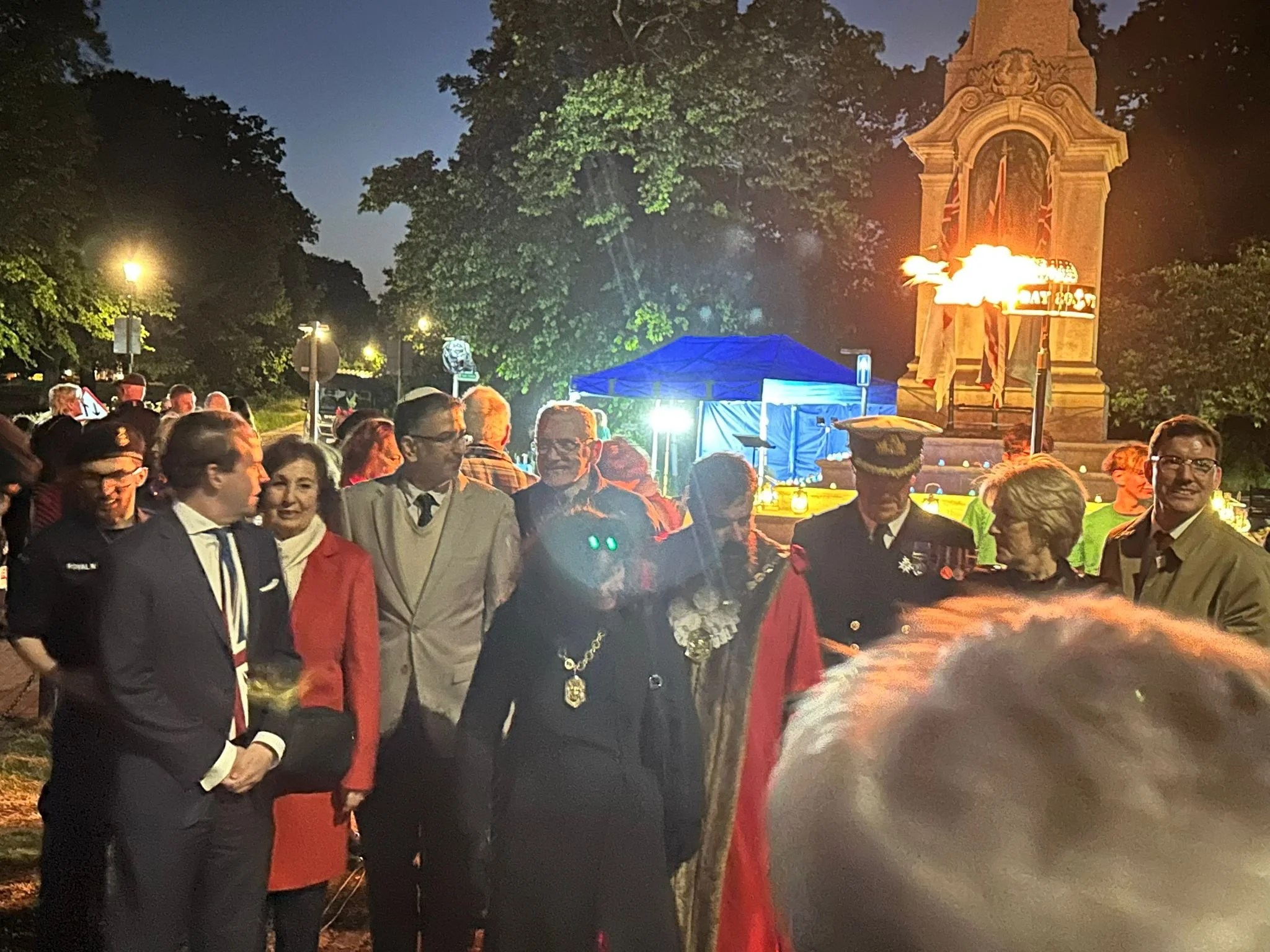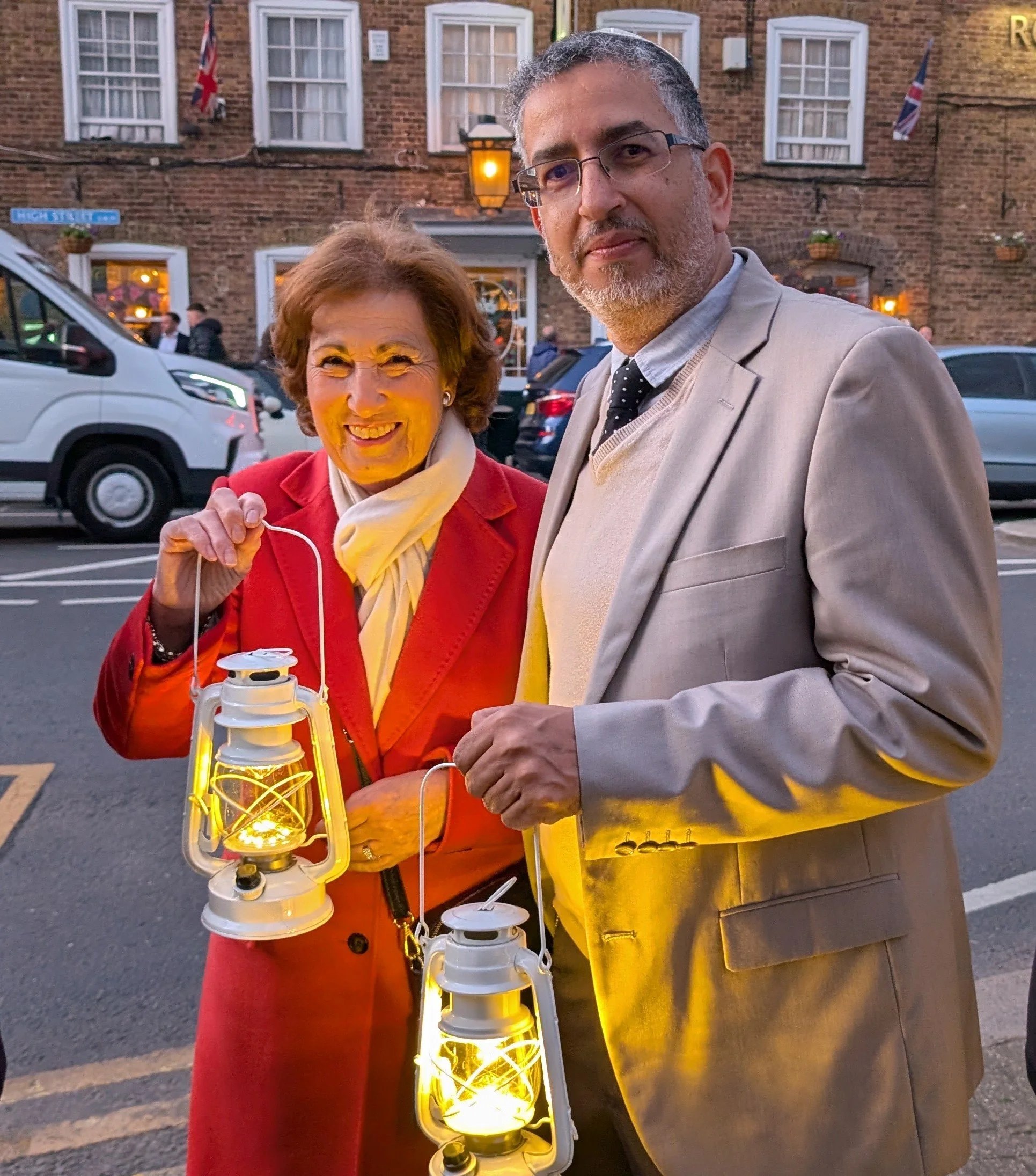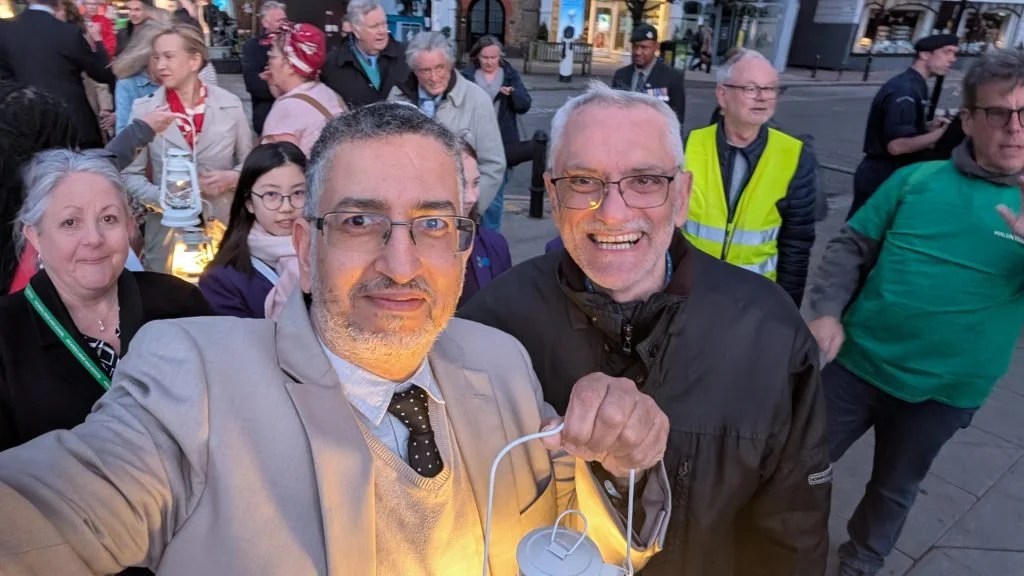
During a recent election event in Wandsworth, it was unsettling to observe how easily people reached for categories instead of seeing the person. Labels like refugee, Muslim, or Zionist became shapes used to manage fear or assign blame. This sermon looks at the Torah portion of Kedoshim, which begins with a command defining our entire spiritual purpose: “You shall be holy, for I, the Eternal your God, am holy”. Holiness is not a static quality we own; it is a verb and an act. We also reflect on Israel at 78, considering how to hold onto the prophetic vision of equality despite a deeply fractured reality.
Tag: Kedoshim
-
From Yom HaZikaron to Yom Ha’Atzma’ut
From “after the deaths” to “you shall be holy”.
If you have ever experienced Yom HaZikaron in Israel, you know about the siren. For two minutes, everything just stops. People pull over on the motorway, stand beside their cars, and wait in silence. And then, only a few hours later, the sun goes down and the fireworks begin. The intense grief of Memorial Day gives way almost instantly to the street parties of Yom Ha’Atzma’ut.
I must admit, I often find that shift quite jarring. It feels a bit too quick.
But when you look at our Torah reading for this week, you realise that moving straight from grief to a demanding present is actually a very old Jewish pattern. We are reading the double portion of Acharei Mot and Kedoshim. The text begins by bluntly naming a trauma: “And the Eternal spoke to Moses, after the death of the two sons of Aaron…” [1]. It doesn’t linger on the pain or offer easy comfort. Instead, it moves straight into Kedoshim, delivering a radical communal command: “You shall be holy; for I the Eternal your God am holy” [2].
As Rabbi Steven Abraham observes, this is the very arc of our tradition, moving “from trauma to holiness, from death to moral obligation” [3]. The call to holiness does not wait for a time of peace and serenity. It arrives precisely in the unresolved space after death.
It is tempting to think of holiness as private piety, or perhaps just keeping strictly to the rules. But the medieval commentator Ramban warned that a person can follow the letter of the law and still be a “villain with the permission of the Torah” [4]. In other words, studying the rules, but not feeling them, or filling them with kindness and compassion, doesn’t make you holy. True holiness is recognising the ethical fabric of our society. It is the command to leave the gleanings of our harvest for the poor, to refuse to place a stumbling block before the blind, and to love the stranger as ourselves.
This week, as we mark Israel’s 78th year of independence, the movement from grief to sovereignty feels more demanding than ever. The pain across the region remains acute, the political reality deeply fractured. What does it mean for us, sitting here in London, to mark this anniversary today?
It means that our response to loss cannot simply be despair. Our response must be a recommitment to the work of Kedoshim. We honour those who have fallen not merely by standing for a siren, but by insisting on a society—both there and here—built on justice, truth, and compassion.
As you enter Shabbat, I ask you: which verse from this holiness code will we, as the Wimbledon Synagogue community, choose to carry this year? Let us step out of the silence of mourning and into the demanding, necessary work of repair.
Shabbat Shalom,
Rabbi Adrian M. Schell
Endnotes: [1] Mechon Mamre, “Leviticus Chapter 16,” English translation based on the 1917 JPS Tanakh, accessed 21 April 2026, https://mechon-mamre.org/p/pt/pt0316.htm. [2] Gidon Rothstein, “Parshas Kedoshim: The Challenging Requirement To ‘Be Holy’,” TorahMusings.com, 12 May 2016, quoting Leviticus 19:2 (JPS), accessed 21 April 2026. [3] Rabbi Steven Abraham, “Be Holy Anyway: Moral Courage in the Shadow of Loss,” rabbistevenabraham.com, 3 May 2025, accessed 21 April 2026. [4] Ramban (Nachmanides) on Leviticus 19:2, translated and cited in “Introduction to Jewish Ethics,” Sefaria sheet by Rabbi Mike Uram et al., 13 November 2018, accessed 21 April 2026.
-
Holiness in the Shadow of History: Lessons from Acharei Mot–Kedoshim and VE Day
This week, our Torah portion Acharei Mot–Kedoshim coincides with the 80th anniversary of VE Day – Victory in Europe Day. There’s something profoundly moving about this conjunction: readings that speak of holiness and remembrance, paired with a date that marks both tremendous suffering and ultimate liberation.
Our double portion opens with Acharei Mot – literally “after the death” – referencing the passing of Aaron’s sons. It continues with Kedoshim – “you shall be holy.”
This progression – from death to holiness – mirrors precisely the journey our people have travelled since the Shoah.
When we think about VE Day, 8 May 1945, what images come to mind?
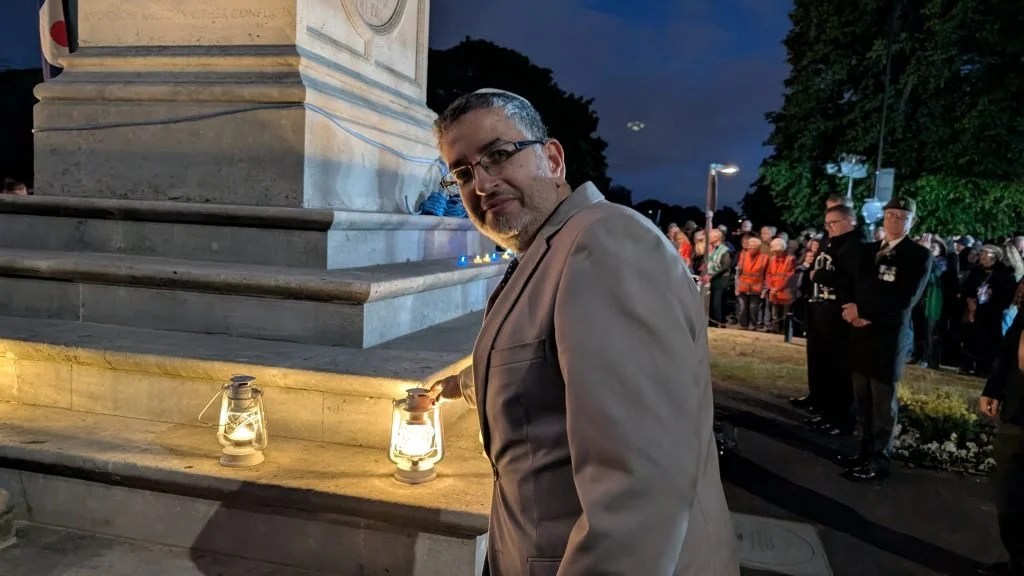
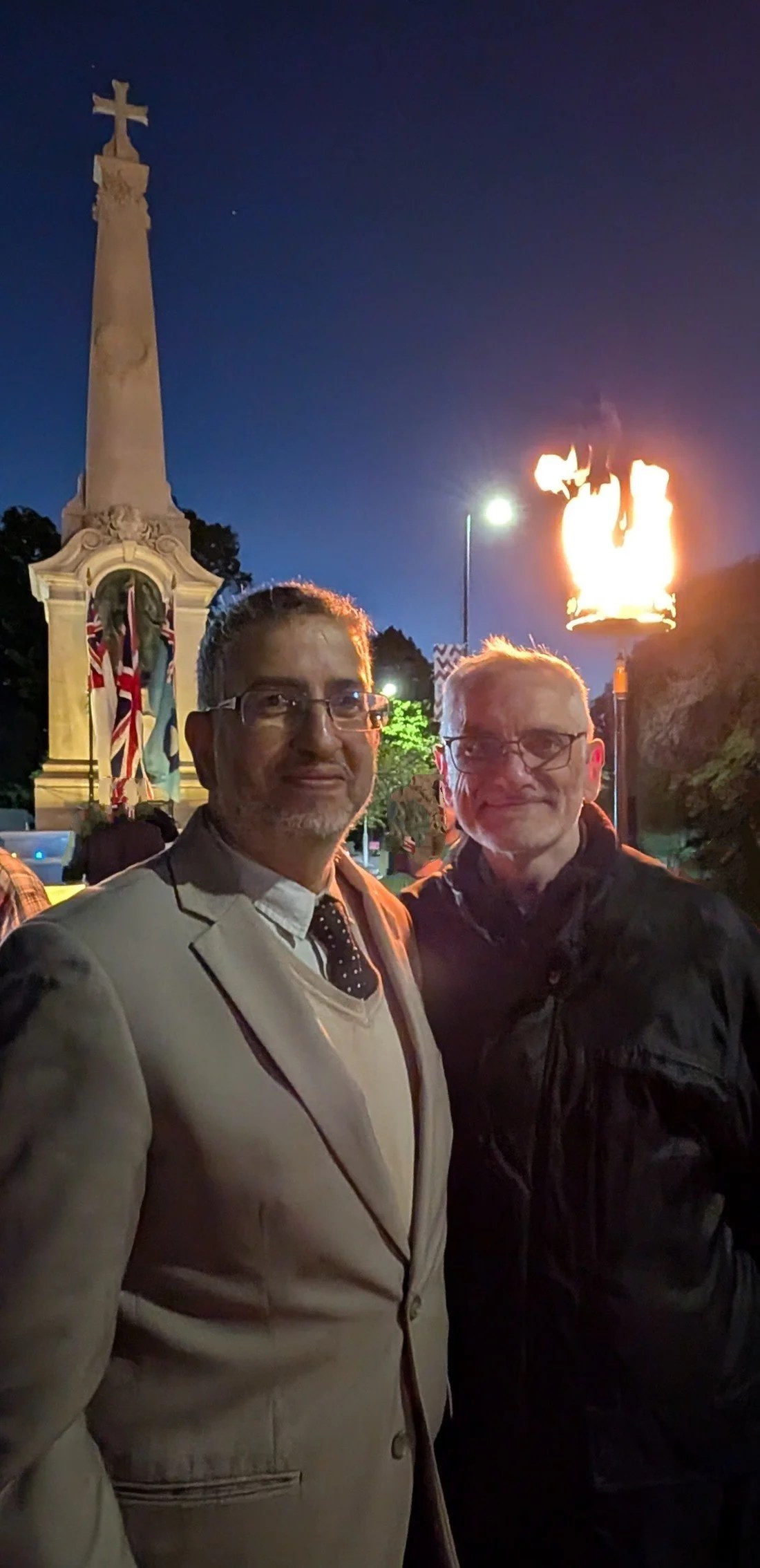
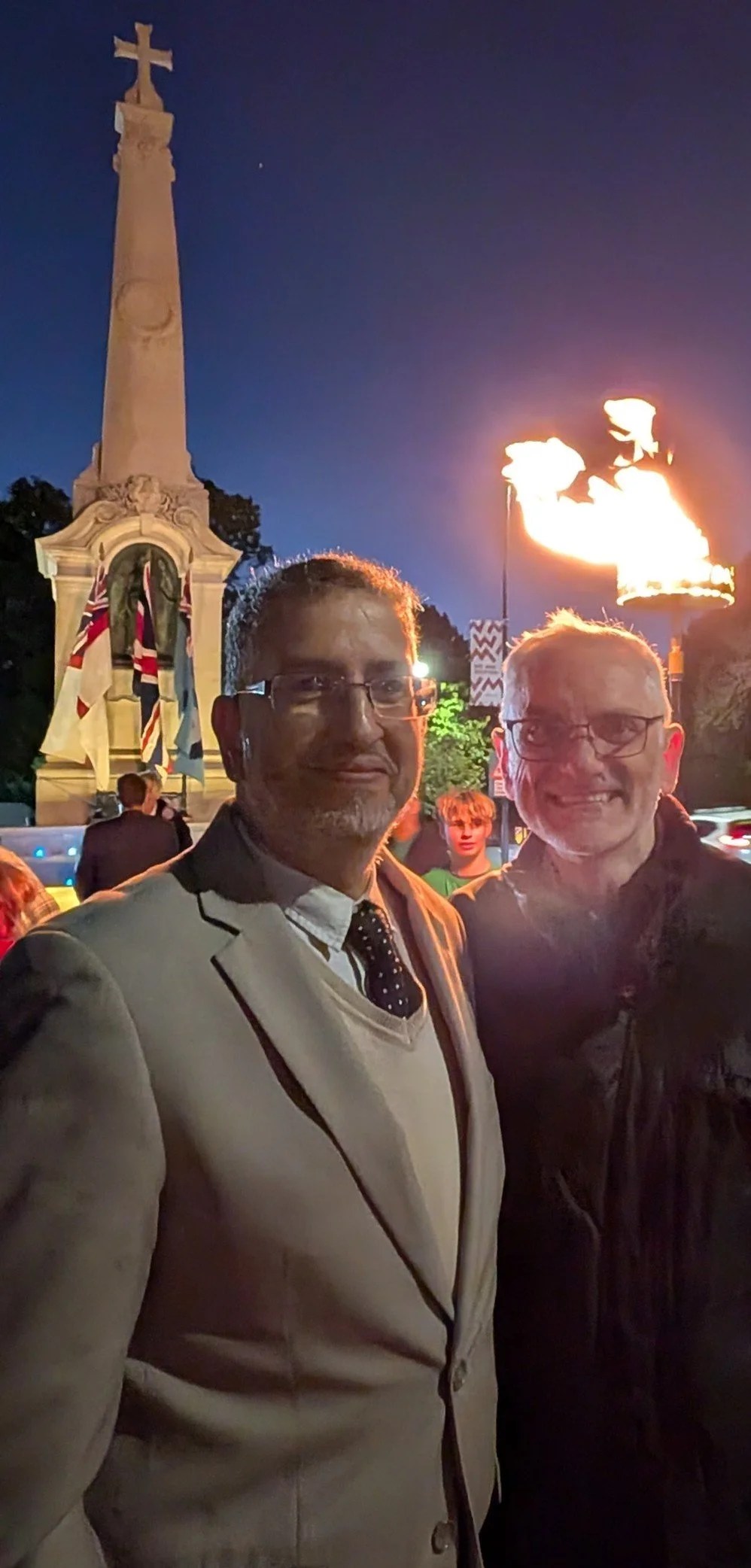
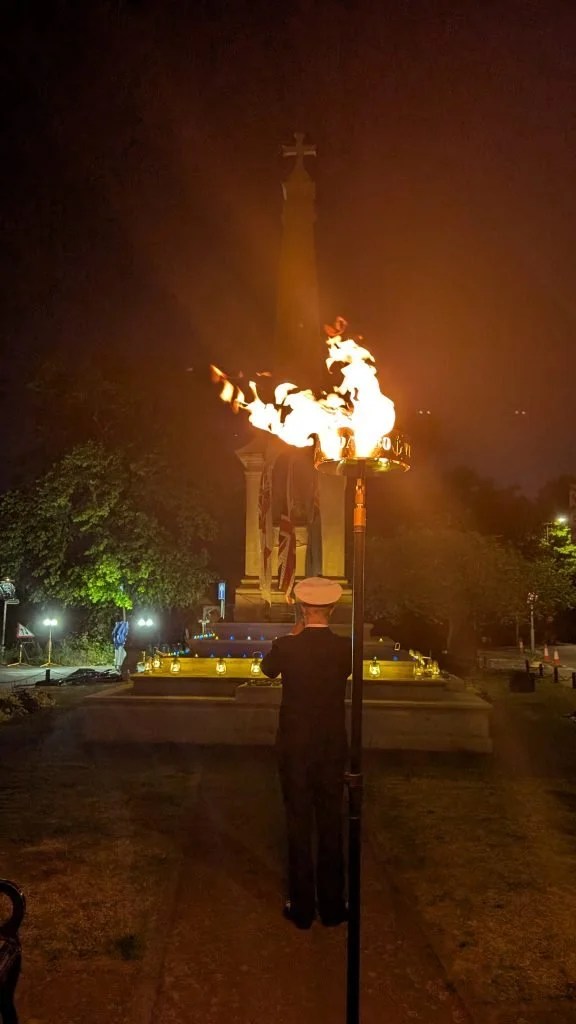
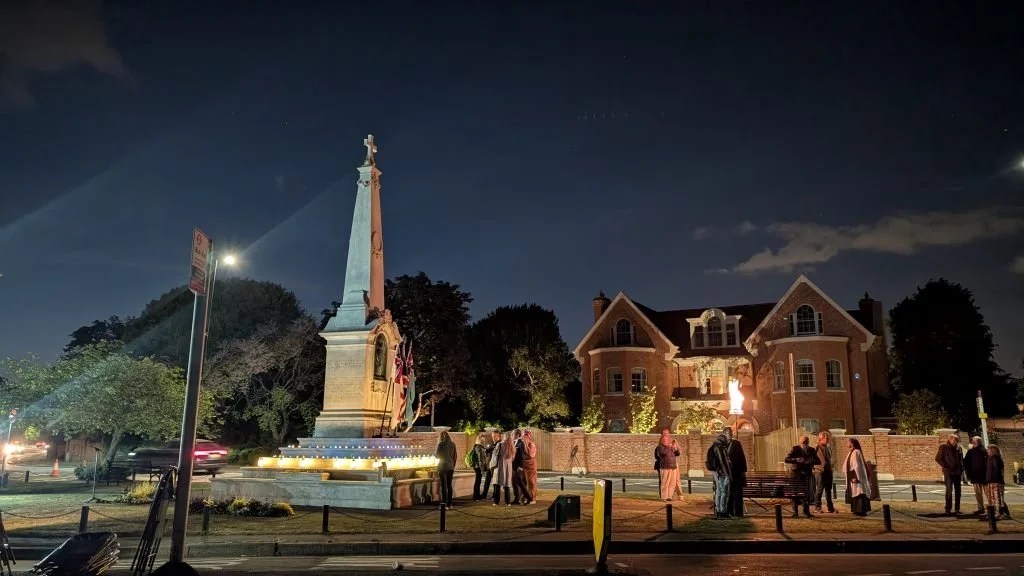
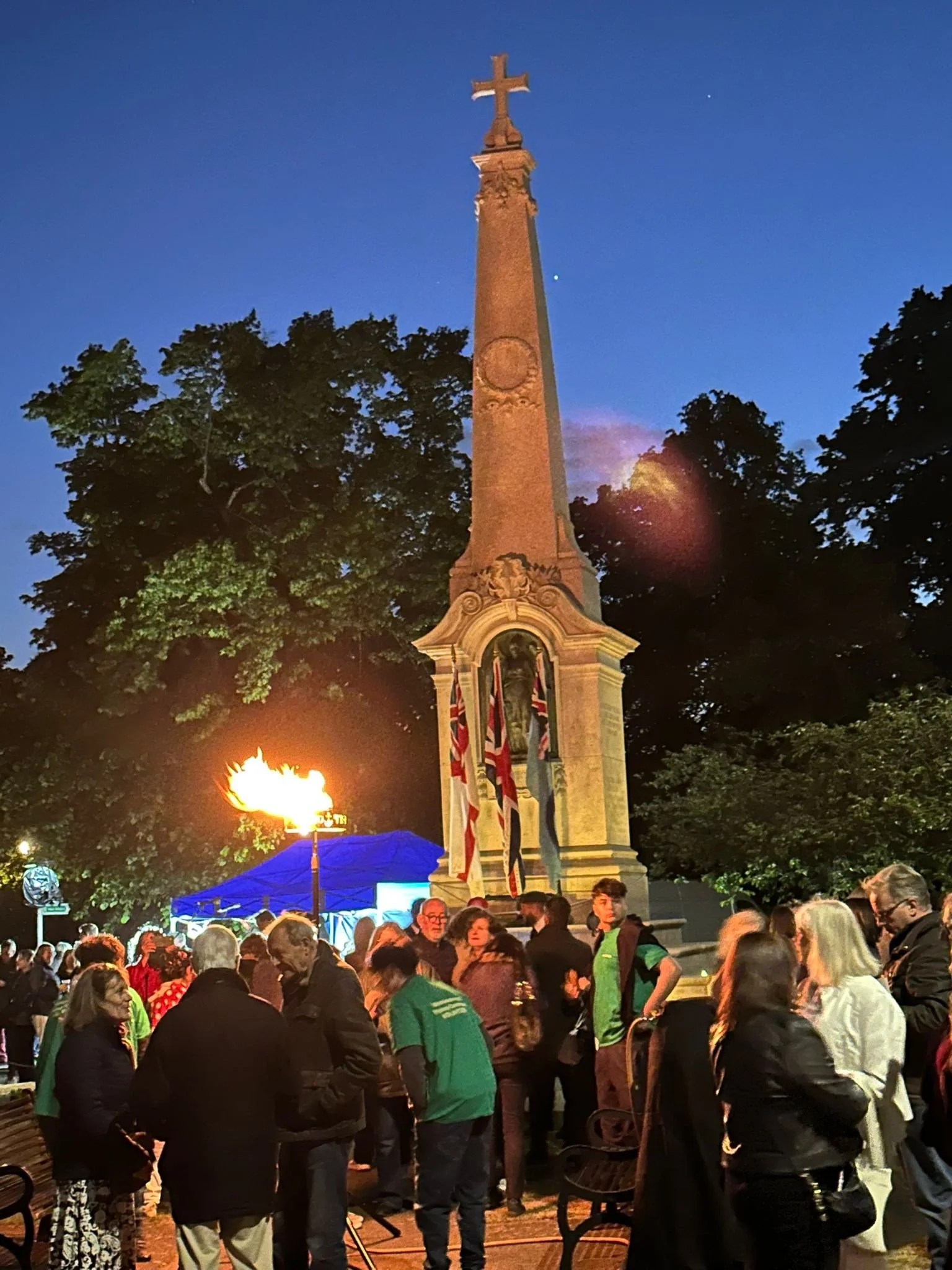
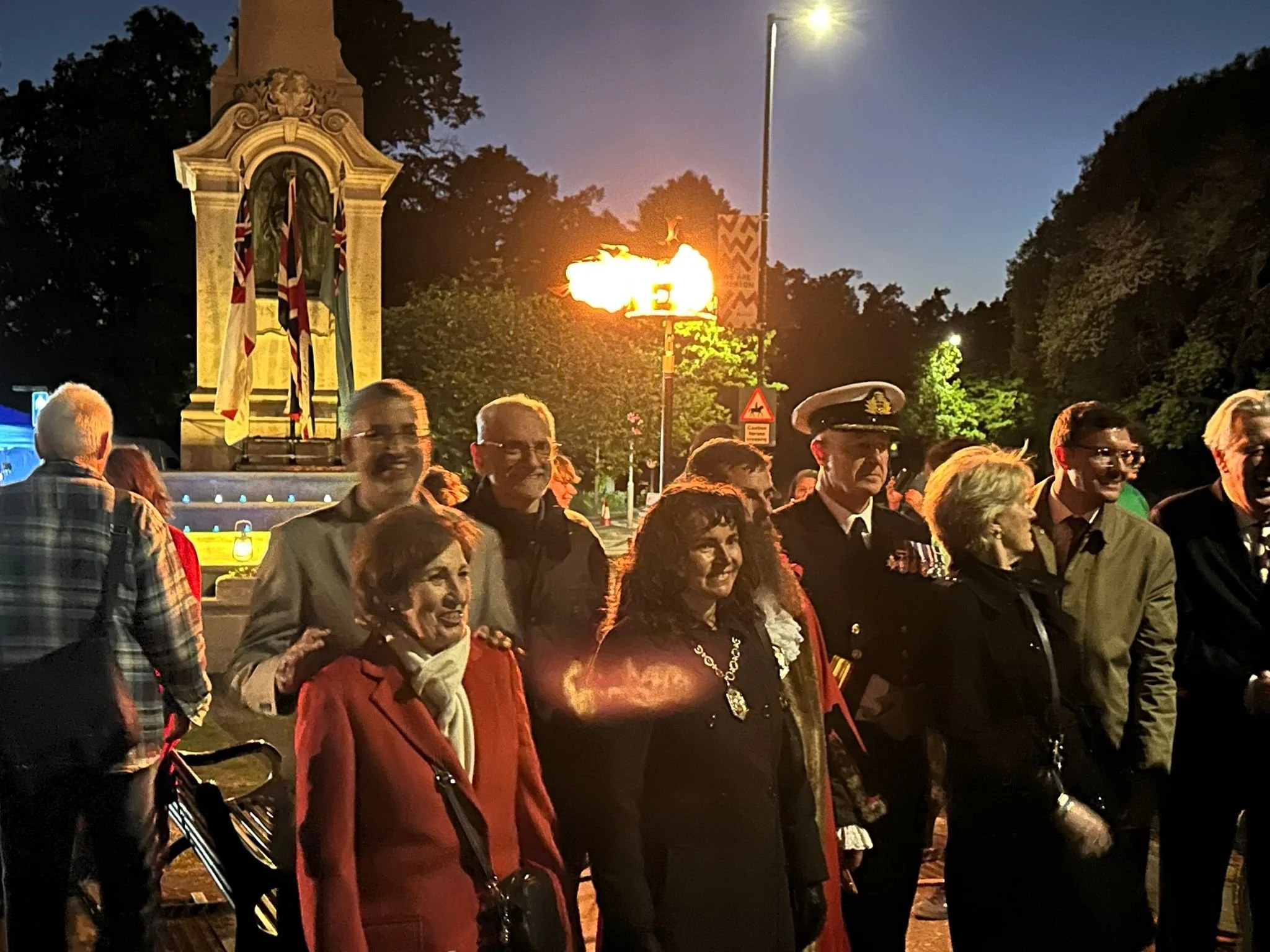
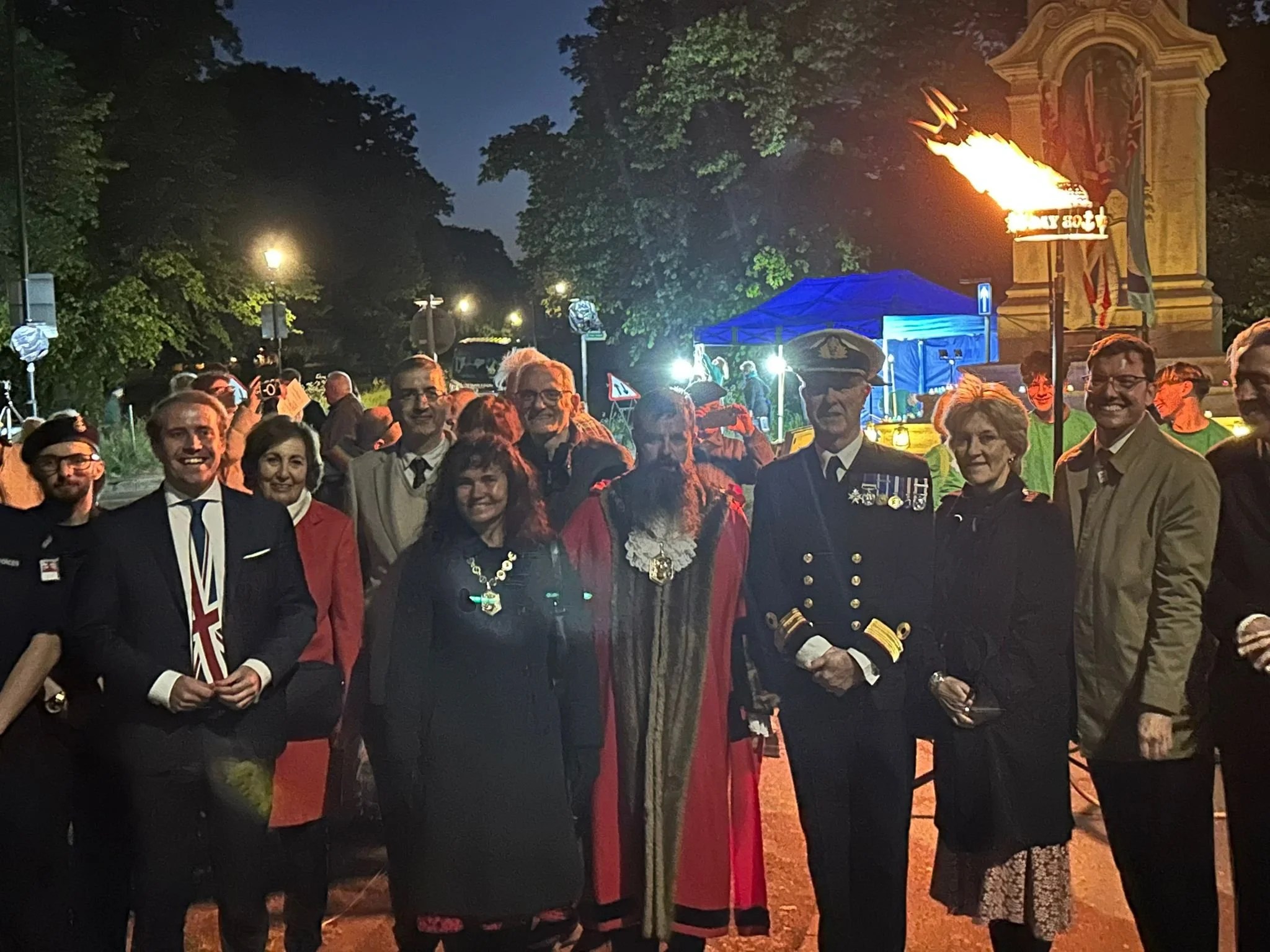
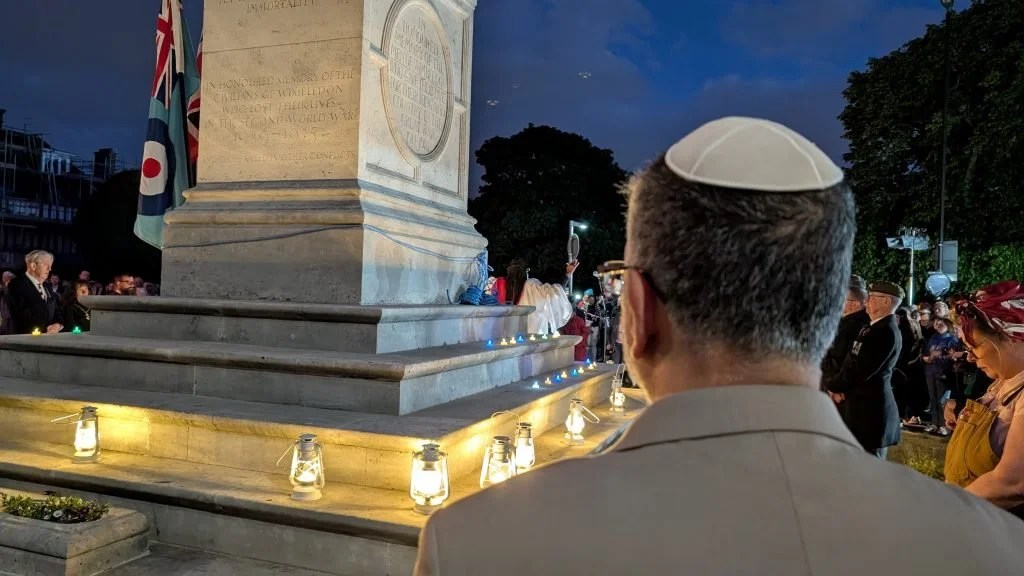
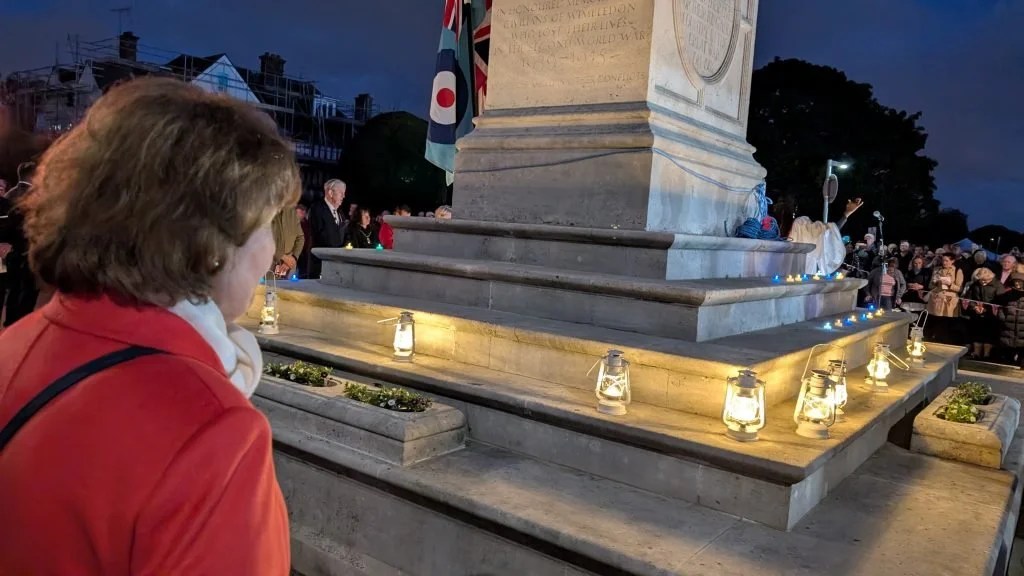
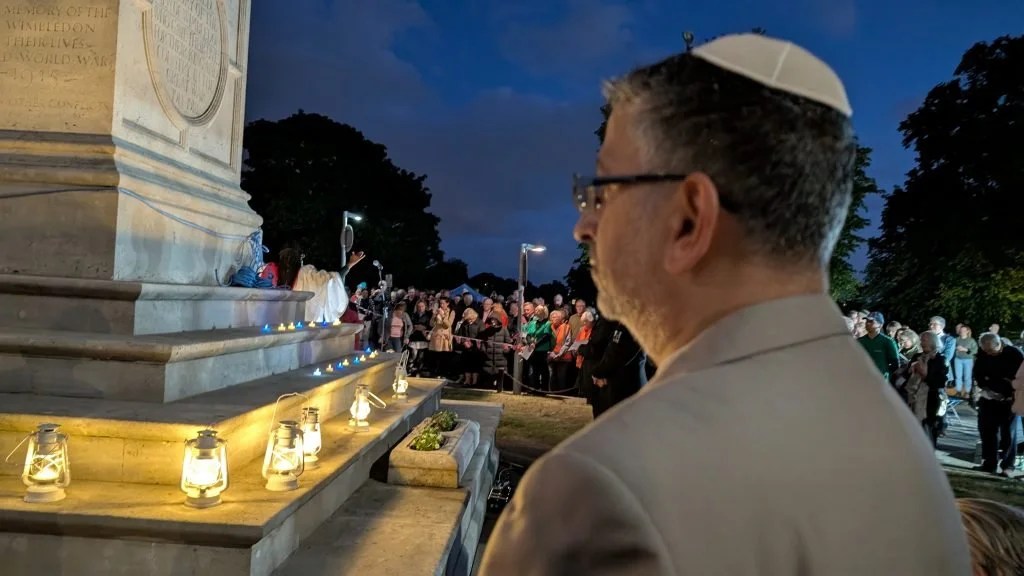
[Pictures: Marking VE80 at the Wimbledon War Memorial on May 8th, 2025]
Perhaps the iconic photographs of celebrations in Trafalgar Square, or soldiers embracing loved ones they feared they might never see again. But as Kenneth Jacobson of the Anti-Defamation League reminds us, alongside those images of jubilation were the heartbreaking photographs of emaciated Jews in concentration camps and the piles of bodies discovered in Nazi death camps.
I remember a conversation I had years ago with a survivor. “When liberation came,” she told me, “I wasn’t dancing. I was numb. I had lost everyone. Freedom meant facing what remained.” Her words stay with me – a crucial reminder that victory came too late for six million of our people.
The Allied military victory undoubtedly saved the world from tyranny. But for European Jewry, it was bittersweet. By D-Day in June 1944, approximately four million Jews had already been murdered. Our people faced what Jacobson calls “the worst possible combination of factors” – a murderous foe committed to our destruction, populations throughout Europe steeped in antisemitism, – American isolationism that gave space for Nazi aggression, and restrictive immigration policies that barred escape.
Everything, it seemed, was working against the Jewish people.
And yet.
In Leviticus 19:2, we read, “You shall be holy, for I, the Lord your God, am holy.” What follows is a remarkable ethical blueprint – instructions about caring for the poor, treating others fairly, loving your neighbour, and welcoming the stranger. In the midst of ritual law comes this profound social vision.
Isn’t that the essence of our response after the Holocaust? From the ashes of destruction, we chose life. From the depths of trauma, we rebuilt.
The survivors’ will to live, the establishment of the State of Israel, the liberation of Soviet Jewry, the flourishing of Jewish communities worldwide – all testify to our commitment to holiness, to creating a better world.
This is what Rabbi Jonathan Sacks called our “defiant hope” – not a naïve optimism, but a determined choice to build even after devastation.
One of the veterans I spoke to recently said something I hope not to forget: “We didn’t just fight against something. We fought for something. For a world where people could live in dignity.”
That idea – that we stand for something, not just against something – echoes through our Torah portion.
Kedoshim tihyu – you shall be holy – is a positive command. Holiness isn’t merely the absence of wrong; it’s the active presence of right.
After the Holocaust, Jews around the world embraced this call to positive action. We didn’t just say “never again” to hatred; we said “yes” to justice, to human dignity, to tikkun olam – repairing our broken world.
Yet today, we face troubling realities. Since October 7th, antisemitism has surged in ways unseen since World War II. The J7 Annual Report on Antisemitism highlights dramatic rises in incidents across seven major countries – Argentina, Australia, Canada, France, Germany, the United Kingdom, and the United States.
Our parasha teaches us that holiness requires vigilance. It demands that we stand up for what’s right, that we speak truth, that we protect the vulnerable.
So what does that mean for us, eight decades after VE Day, as we face new challenges?
First, we must remember. Not just with ritual observance, but with full hearts. We carry the stories of those who perished and those who survived. Their lives, their strength, their silence and their words – all are part of our sacred inheritance.
Second, we must recognise that remembering isn’t enough. Our Torah doesn’t just ask us to recall the past – it commands us to build a just society.
The ethical demands of Kedoshim are not optional; they are the architecture of holiness.
Third, we must find the balance between vigilance and hope. Yes, we must be clear-eyed about the threats we face. But we must also be dreamers, visionaries who look beyond the headlines and see the world as it could be.
There’s a Chasidic teaching most of you know, but which is most appropriate to recall at this moment. Rabbi Simcha Bunim taught that everyone should carry two notes, one in each pocket. One says, “For my sake was the world created.” The other says, “I am but dust and ashes.”
We need both truths – the humility to know our fragility and the confidence to know our worth.
As we mark eighty years since the end of the war in Europe, we stand in that tension – between remembrance and renewal, between grief and determination. The Nazis sought to destroy not just Jewish bodies but Jewish values. Our most powerful response is to live those values more fully.
Kedoshim tihyu – you shall be holy. Not just as individuals, but as a community. Not just in ritual, but in how we treat each other and all humanity. Not just in memory of what was lost, but in service of what can yet be built.
May we honour the past by creating a future worthy of those we remember.
Shabbat Shalom.
This sermon is dedicated to Margot Friedländer, a remarkable woman. May her memory be for a blessing.
-
The Fire that Sustains, the Fire that Consumes
I have just returned from a few days away in Germany. It was good, and it was needed. The truth is, Pesach – as joyful and rich as it is – carries with it a weight that few of us acknowledge aloud. It is one of the most intense, demanding seasons in the year of a rabbi, and this year, I could not find the pause I usually give myself after it.
And you know what? I felt it. Deeply.
There comes a point when even the sweetest duties can start to scorch. When the fire meant to keep us warm begins to burn the edges of our spirit.Acharei Mot, the portion we read this Shabbat, returns to the story of Aaron’s two sons, Nadav and Avihu. They were priests. Devoted, passionate, faithful. They entered the sanctuary with their firepans and their incense, longing to draw close to God. And yet, they died.
Why?
Not because they rebelled. Not because they rejected holiness.
They came too close. They were consumed by the very fire they carried.It is an old and painful truth: sometimes love, untampered, can destroy. Sometimes duty, unchecked, can overwhelm. Even service to God must have boundaries, or it risks becoming a sacrifice God never asked for. The Torah teaches us again and again the wisdom of limits. Shabbat itself is a boundary: six days you shall labour, and on the seventh, you shall rest. The High Priest, in the ritual of Yom Kippur, was commanded to draw near to God – but only once a year, and only after long, careful preparation.
Even Moses, for all his closeness, was told: “You shall see My back, but My face shall not be seen.”Holiness, it seems, requires not only passion but distance. Not only yearning but patience.
It is so easy to forget this. There is always one more task to do, one more visit to make, one more responsibility to shoulder. We tell ourselves we are needed. We tell ourselves it is good. And it is good. But it is not good if it costs us the sacred flame within.
There is a midrash that teaches: “The priests were not allowed to enter the Sanctuary barefoot.” Even the holiest ones needed a layer of protection between themselves and the ground of awe. Maybe today, we need to hear that teaching again.
Maybe the courage to search for holiness includes the courage to rest. Maybe stepping back, breathing deeply, is itself a kind of prayer. A way of saying: “I am not the fire. I am not the sacrifice. I am a vessel, and vessels need filling.”
Shabbat Shalom.
-
Emor: Time for new bridges
Chaverim,The point of being Jewish is to have a relationship with God. Yet, a relationship implies a certain give and take, and there is precious little in the Torah that talks about what we have that God could possibly need. What can we give to God?In our parashah (Lev 22:32) we read: “You shall not profane My holy name, that I may be sanctified in the midst of the Israelite people-I Adonai who sanctify you.” Translation issues become important here. The text says v’nikdashti, “and I will be made holy” amidst the Children of Israel. In other words, “You will make Me holy just as I, Adonai, have made you holy.” Here, for a moment, there is a relationship. We do something for God in response to what God has done for us.However, having a relationship with God is a feathery thing. One never really knows what God is thinking and how we can truly bear witness to God’s will in the world. Yet, through prayer we are reminded of all that is Holy in our world and in ourselves, and through this we form a bridge of connection. We become partners with God in the perfection of this world. It is then that we can truly make God holy. By repairing the brokenness in ourselves, by repairing the brokenness of our world, we repair the brokenness that has resided within God since the first moment of creation and in this way we can indeed make the Holy One, whole once again.Chaverim, the past few weeks were marked by the general election and the campaigns of the different parties here in South Africa. Nature of the matter is that lines were drawn and camps were formed. As much as this is part of any democratic elections, I also saw that new rifts were created in our society, that people felt hurt by the one or the other statement and that unnecessary fears were instilled in some of us. Therefore, we all should come together now and start bringing the people back together; every time after an election is the time to find real solutions, compromises and shared visions. Now is the time to repair the brokenness in our society — independent from any party programme and election—let’s bring back some holiness to our world.Shabbat Shalom – Rabbi Adrian M Schell (Source R’ JR Rapport)

-
Kedoshim: When the world seems to lose its own compass
Chaverim,Once again we are mourning and raging after an anti-Semitic attack on a synagogue over the weekend. I have been and remain determined not to give any anti-Semite the victory they want in any way. Whenever they want to push us out of society, whenever they want us to be too afraid to gather in our places, or to live our lives as Jews out in the open, whenever they want us to feel that we do not belong, we say that is they who do not belong. It is they who are doing wrong and evil. Our place is wherever we chose to live, in South Africa, in Germany, in Australia … and in Israel. Every time an anti-Semite shows his or her face, we and ten or a hundred or a thousand of our friends and allies come to counter them.Last week and the upcoming week are dedicated to the memory of those of our people who perished in the Shoah, and who fought in the many wars to establish and protect the modern state of Israel. We restore the dignity of those who have been dehumanised by the Nazis and we honour those who stood up to protect our Jewish values and heritage. BUT, most important, we keep the promise given to them, to never forget.Our Torah portion for this week opens with the following, beautiful words: “You shall be holy, for I, the Eternal your God, am holy (Lev. 19.2)”. What follows is not only a set of ritual obligations or ceremonies, but mainly a codex of ethical guidelines. Being holy means to be conscious of what we do and how we do things. This is even more important in times when the world seems to lose its own compass, when terror, fundamentalism and populism is shaping the reality in which we are living.Friends, this must not be our future—you—we have it in our hands to counter this: it is our obligation to bring holiness into our world and to create a future that is less frightening. Please vote on Wednesday, strengthen our democracy by making your voice heard, and continue to stand with us when evil shows its ugly face.Our Torah portion mentions love several times. So, let love be our answer.May this Shabbat be filled with love, for you, our people and the whole world.Shabbat Shalom – Rabbi Adrian M Schell