Tag: Pride

  • Welcome Is Not Enough

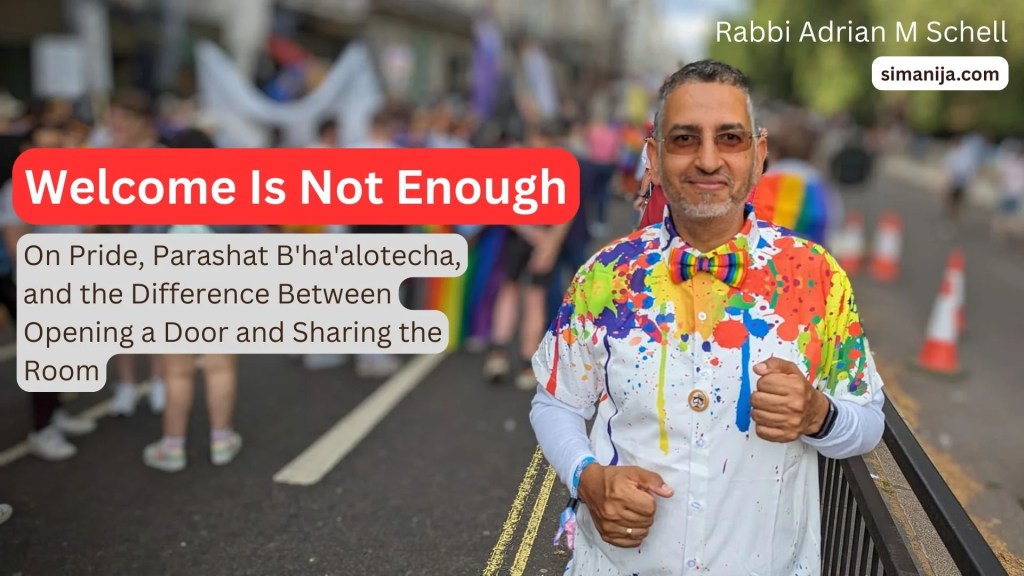
    Welcome Is Not Enough

    On Pride, Parashat B’ha’alotecha, and the Difference Between Opening a Door and Sharing the Room

    Written and first published for Progressive Judaism: https://progressivejudaism.org.uk/latest-thought/

    Pride Month begins next week. Not everyone in our communities will feel the same way about it, and I think it’s worth mentioning that upfront. For some, Pride brings genuine joy. June is a month of celebration and visibility. For others, it causes discomfort and even a sense of threat. This message is for both.

    I have learned to be wary of certain words in synagogue life. “Harmony” is one of them. It sounds entirely virtuous. In practice, it can become a respectable cover for comfort, for the hope that nobody will ask anything that might unsettle the room. Our portion this week offers no such protection.

    Parashat B’ha’alotecha includes the Erev Rav, often translated as the “mixed multitude”, referring to the non-Israelite crowd who left Egypt alongside Israel (Rashi on Numbers 11:4). Rabbinic commentators have often used them as a ready explanation for any trouble experienced during the Exodus. Tensions appear, and blame settles on those whose place feels least secure. It is one of the oldest habits in society, and way older than any modern politics.

    The text gives less support to that rabbinic reading than we sometimes imagine: The Israelites as a whole complain. Leadership wavers. Fear spreads. The Erev Rav may be linked with disturbance, but disturbance is not the same as guilt. Friction often reveals what was already fragile. At its best, it becomes the pressure that pushes a community towards a truer shape. A congregation discovers who it actually is not only in moments of calm, but when it has to answer honestly whose needs count and whose pain is heard.

    I do not want to tidy the Erev Rav into a soft symbol of diversity. The portion does not do that either, and it would be dishonest to pretend otherwise. They are connected with discontent and strain. But I also do not want to accept the scapegoating as the last word. Their presence says something basic about Jewish beginnings. The people who left Egypt were not uniform. From the start, the covenantal community included those who complicated simple categories. Difference is not a late interruption of Jewish life. It has been there from near the beginning, shaping what the community had to become.

    That matters as Pride Month arrives. Queer Jews, trans Jews, Jews of colour, Jews-by-Choice, people from interfaith families, are often spoken about as though they have arrived to test the patience of an established norm. B’ha’alotecha implies a different truth. Those who unsettle a community’s self-image have always been part of the way Jewish life is made, contested, and renewed.

    Welcome still matters.

    A closed door can wound quickly, and most of us know that. But welcome alone leaves power exactly where it was. Someone opens the door, someone sets the terms, someone decides how much difference is acceptable before things get uncomfortable. Belonging asks something different. It means nobody acts as the landlord of the covenant. It means LGBT+ Jews help shape the language and the practice of our communities too, not as guests whose presence is noted with warmth, but as people for whom it is also theirs to build.

    That gap between a welcoming and belonging becomes most visible when the subject is Trans-inclusion. Abstract support is easy. Ordinary arrangements are harder. Toilets, changing arrangements in youth camps, the language on membership forms, or the assumptions quietly built into the way we speak about bodies. All of this reveals whether a community is prepared to share space or only to speak kindly about the idea of sharing it.

    Real disagreement lives here, and it deserves genuine honesty rather than a passing acknowledgement. Some women experience discussions about single-sex spaces through long memories of fear, harassment, or violation. Bodily privacy is not a theoretical matter for them. A community committed to dignity must take that seriously, and that kind of pain is not dissolved by goodwill.

    Trans people know a different kind of bodily fear. Many told me that they enter public space already braced for scrutiny or challenge. Directing someone to the accessible toilet is sometimes presented as a practical compromise. However, it once again marks a person out as a problem that needs to be managed. Most synagogues cannot rebuild their premises, and financial and architectural constraints are real. But a congregation still has choices about whether suspicion or trust will govern the room. Architecture sets limits. It does not set the moral tone.

    Instead, the Jewish concept of Makom, Sacred Space, could be really helpful. Space is never only physical. A room can feel warm and welcoming or cold and uninviting, even when the walls do not move. And our fundamental understanding that every person is created b’tzelem Elohim, in the image of God, is not a decorative phrase to reach for in hard moments. It places a genuine demand on us. If I require another person to become less visible so that I can remain undisturbed, I am not defending holiness. I am defending my preference for familiarity.

    Our Torah portion pushes this challenge even further with the ruling for Pesach Sheni, the second Passover. A group of people find themselves excluded from the Passover offering through no fault of their own. They do not accept this quietly. They come forward and ask: “לָמָּה נִגָּרַע (Lamah nigara) – Why should we be excluded? (Num. 9:7)” That is not a request for nicer treatment. It is a challenge to the structure itself. Moses takes it seriously. The law changes. A new path opens inside the covenant.

    The people in the wilderness ask why they should be excluded. The Torah does not silence them. The Torah brings them in. That experience belongs in any honest conversation about Pride as well. Pride carries real joy, and that joy has been genuinely earned. It also carries the memory of people who grew tired of being asked to wait politely, to be grateful for partial permission, or to stay quiet for the sake of other people’s ease. “Lamah nigara?” belongs to Queer history as much as it belongs in our portion.

    Communities become more faithful, I think, when those pushed to the edge refuse to stay there and ask the centre to change. That process is rarely tidy. It involves real disagreement and competing fears, and it asks us to stay with discomfort long enough for something honest to emerge. It is a conversation worth having properly. Not only during Pride Month, but if you ask me, now is a good time to start it.

    Happy Pride Month.

    Rabbi Adrian Schell serves as rabbi of Wimbledon Synagogue in South West London. Rooted in Progressive Jewish thought, he aims to build a contemporary Judaism that values diversity, encourages honest theological questioning, and ensures every individual is recognised as an essential part of the communal sacred space.
  • Progressive Synagogues from Southwest London Joined Pride in London to Celebrate Queer Jewish Visibility

    Progressive Synagogues from Southwest London Joined Pride in London to Celebrate Queer Jewish Visibility

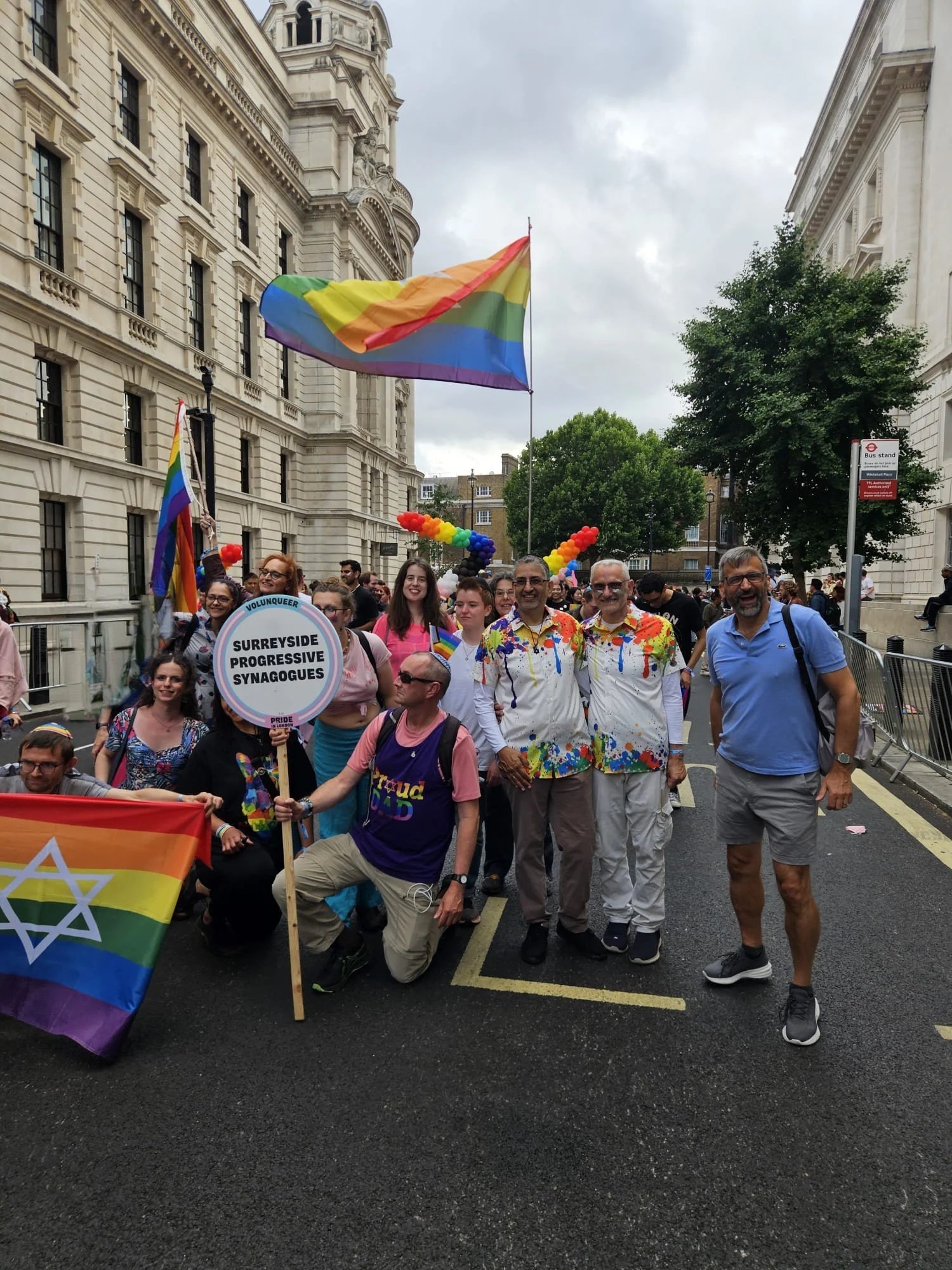
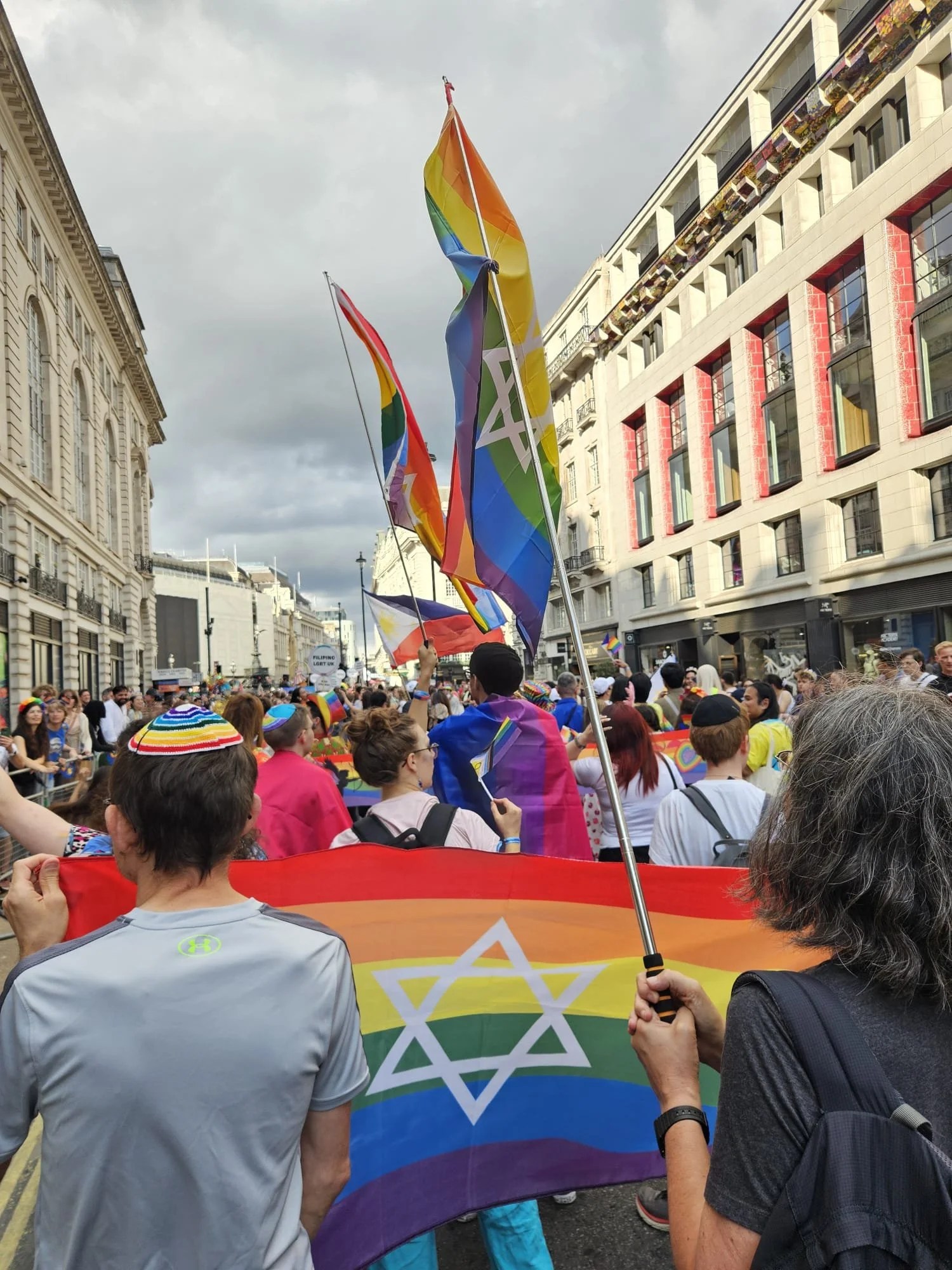
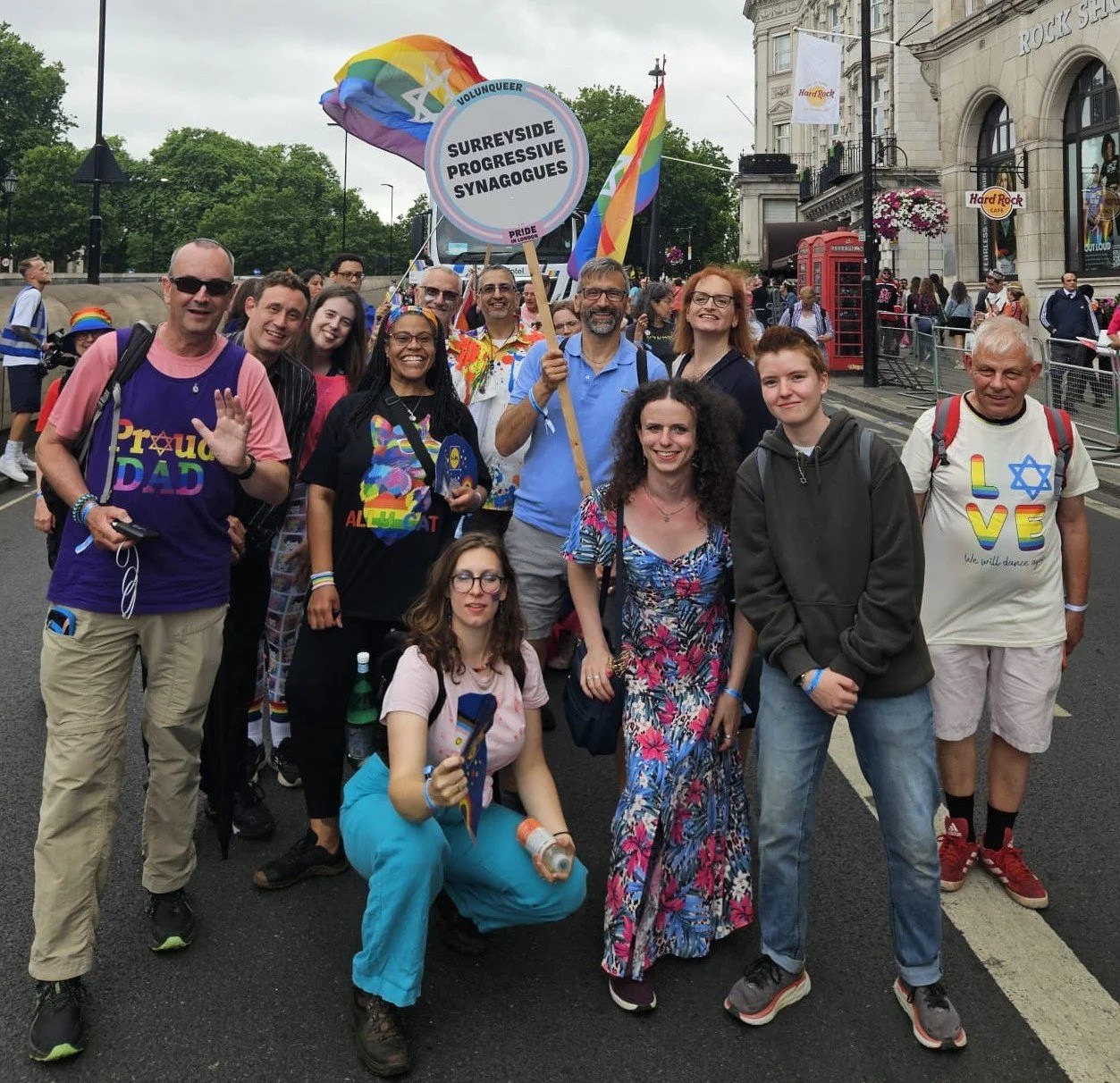
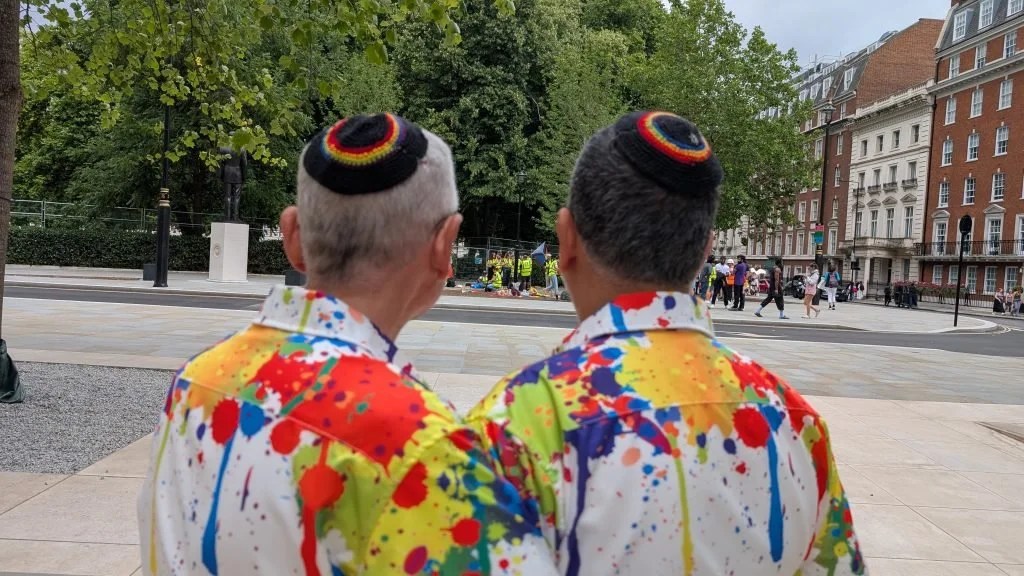
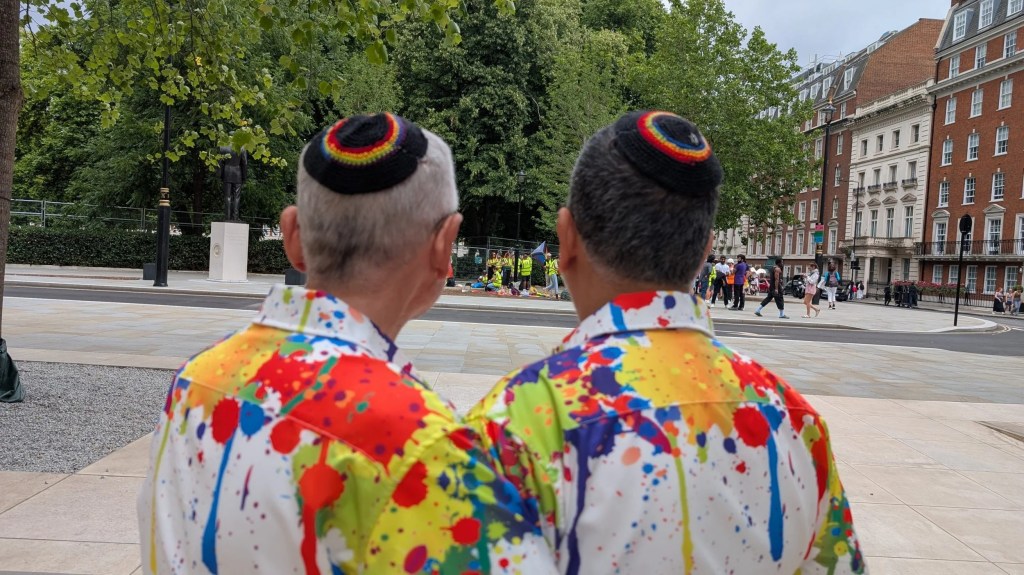
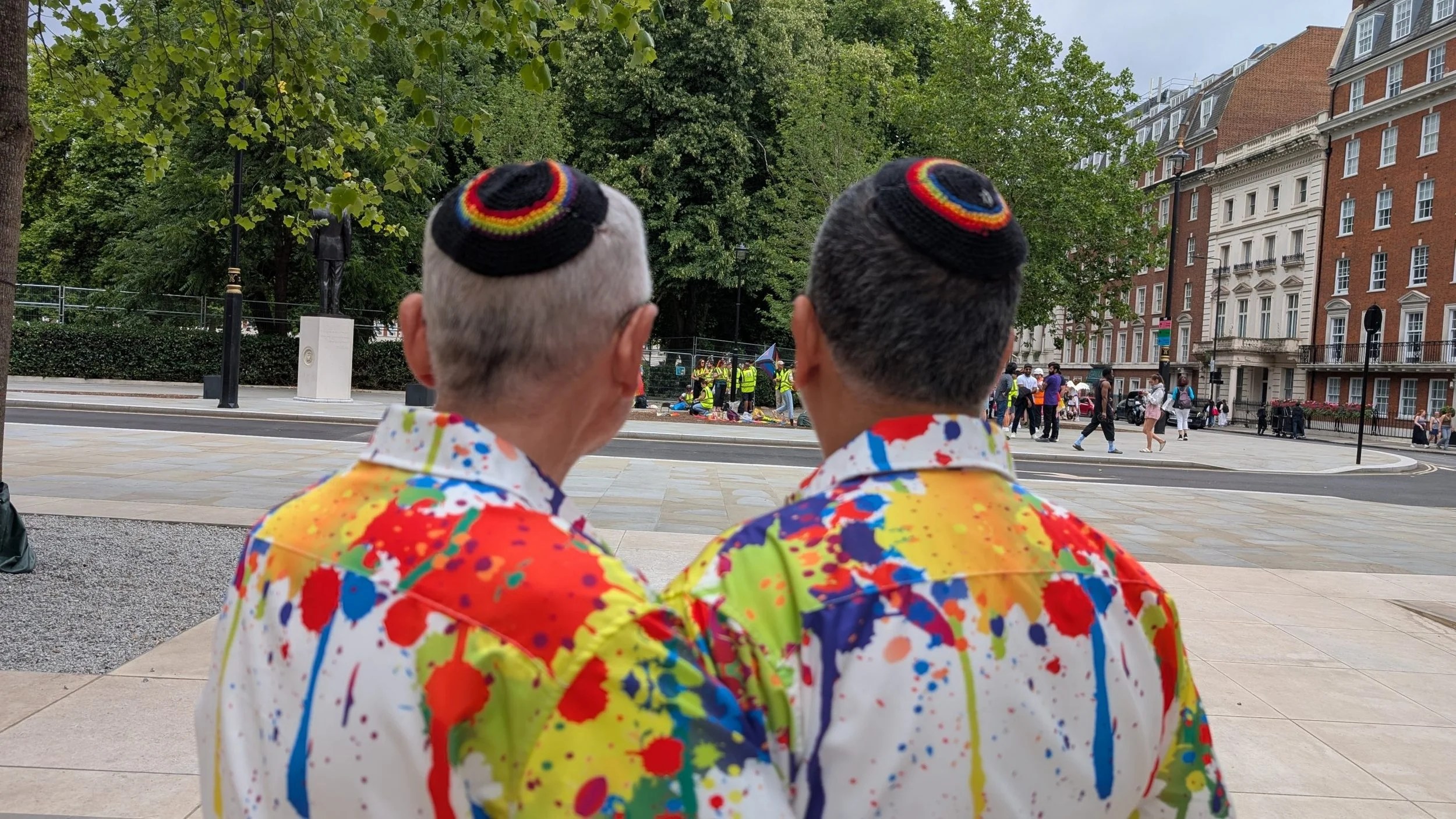
    London, 6 July 2025 – A joyful and proud group of Jewish participants from Southwest London, including members of The Wimbledon Synagogue, NWSS, and Kingston Liberal Synagogue, took part in this year’s Pride in London, standing in solidarity with the LGBTQ+ community and affirming the importance of Jewish visibility in public spaces.

    Joined by Rabbi Adrian Schell of Wimbledon Synagogue, the group marched under the banner of Progressive Jewish values, celebrating the diversity and dignity of queer Jewish lives. The group received warm support and encouragement throughout the day.

    “Our presence at Pride was not a protest against others who chose not to march,” said Rabbi Schell. “It was a statement for visibility. Queer Jews and their allies belong at Pride. We are part of the vibrant, beautiful tapestry of this city and its LGBTQ+ community.”

    The delegation from Southwest London joined the parade with the message that Jewish and LGBTQ+ identities are not mutually exclusive and that silence must no longer obscure those living at this intersection.

    “For too long, Jewish voices have been pushed to the edges of public discourse, and queer Jewish voices even more so,” Rabbi Schell continued. “There are still too many LGBTQ+ Jews who feel they must hide, and too many Jews in general who remain unseen in workplaces, schools, universities, and even among friends. On Sunday, we marched for them as well.”

    The group reported no incidents of antisemitism or hostility and was met with warmth and celebration. Rabbi Schell extended special thanks to the Community Security Trust (CST) for their guidance and care during the event, and to the Pride organisers for their inclusive spirit.

    All three Synagogues, their queer members and allies are committed to returning next year and hope to see even more members of the Jewish community join them in celebrating love, equality, and the freedom to be seen.

    A selection of additional pictures can be downloaded from here: https://photos.app.goo.gl/9BsFcot8RiSJe3fJA 

  • Miriam’s Silence, Our Voice

    Miriam’s Silence, Our Voice

    “Miriam died there and was buried there. The community had no water, and they assembled against Moses and Aaron.” (Numbers 20:1-2)

    The Torah, a text that lovingly dwells on the smallest details, who begat whom, the exact dimensions of the Tabernacle, the precise ingredients for incense, rushes past Miriam’s death with heartbreaking brevity. No eulogy for the woman who saved Moses as a baby. No mourning period for the prophetess who danced at the sea. No tribute to her decades of quiet leadership. Just a burial in the wilderness, and then, the well runs dry.

    Why this silence? Why does the woman who led the Israelites in their first song of freedom exit the story with barely a whisper?

    The Rabbis of the Talmud recognised something crucial: when Miriam died, the water disappeared. They understood that some people are so essential to a community’s life that their absence creates a void we can actually feel. They taught that a miraculous well had travelled with the Israelites throughout their wilderness journey because of her merit. Without her, both literal and spiritual sustenance vanished. Miriam wasn’t just a prophetess or Moses’ sister, she was the wellspring that kept an entire people alive in the desert.

    And yet, the Torah tells us almost nothing about her death. No ceremony. No acknowledgment of all she had done. She simply disappears from the narrative, and only then do we realise what we’ve lost.

    This pattern feels painfully familiar. How often do we fail to celebrate those who sustain us until they’re gone? How often do communities lose their quiet heroes, the grandmothers who cook for everyone, the friends who always listen, the activists who show up to every meeting, and only notice their absence when the well runs dry?

    Think of queer Jews, especially our trans women, our elders living with HIV, those rejected by family and faith. They know intimately what it means to disappear from the communal story. They’ve been told their lives don’t belong in our sacred narrative. Their contributions go unrecorded, their wisdom unheard. And when they are gone, their absence is felt not in memorials or tributes, but in the sudden realisation that something vital is missing, a crisis we notice too late.

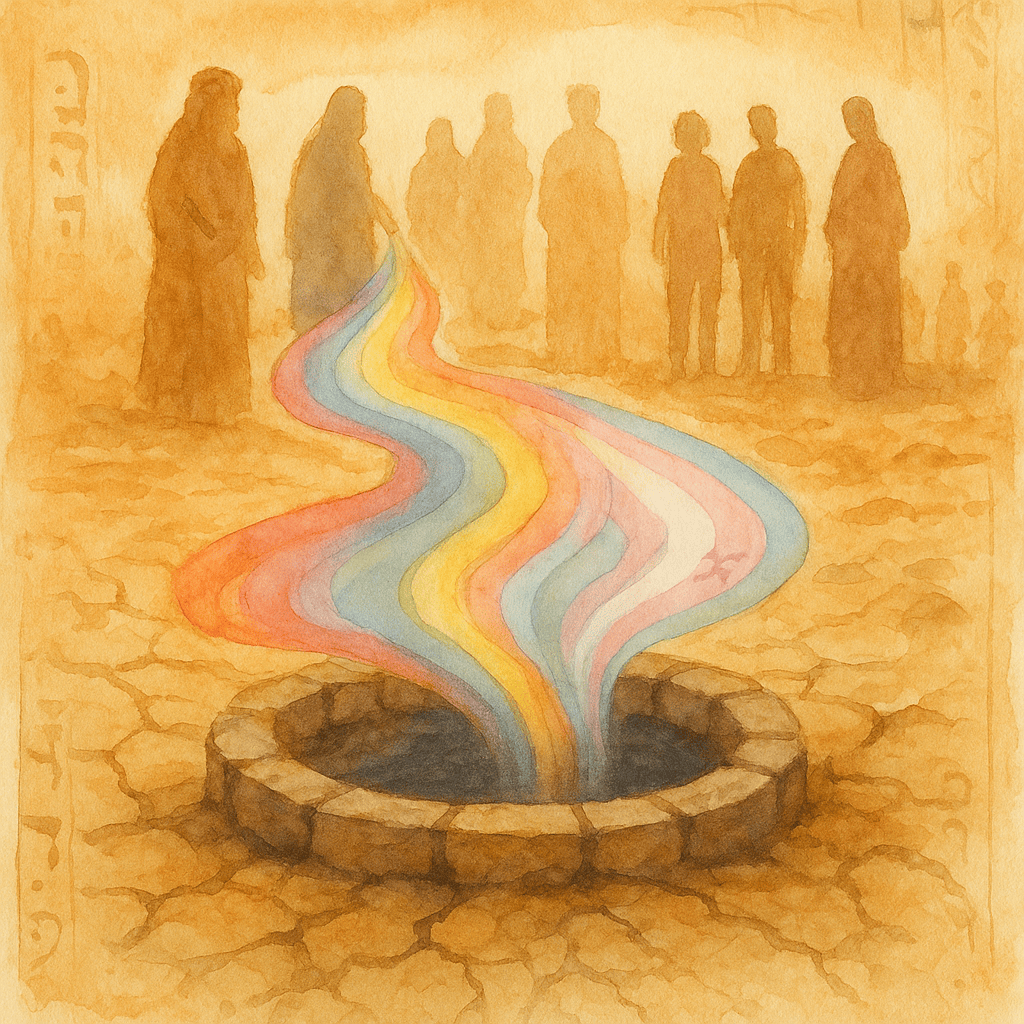
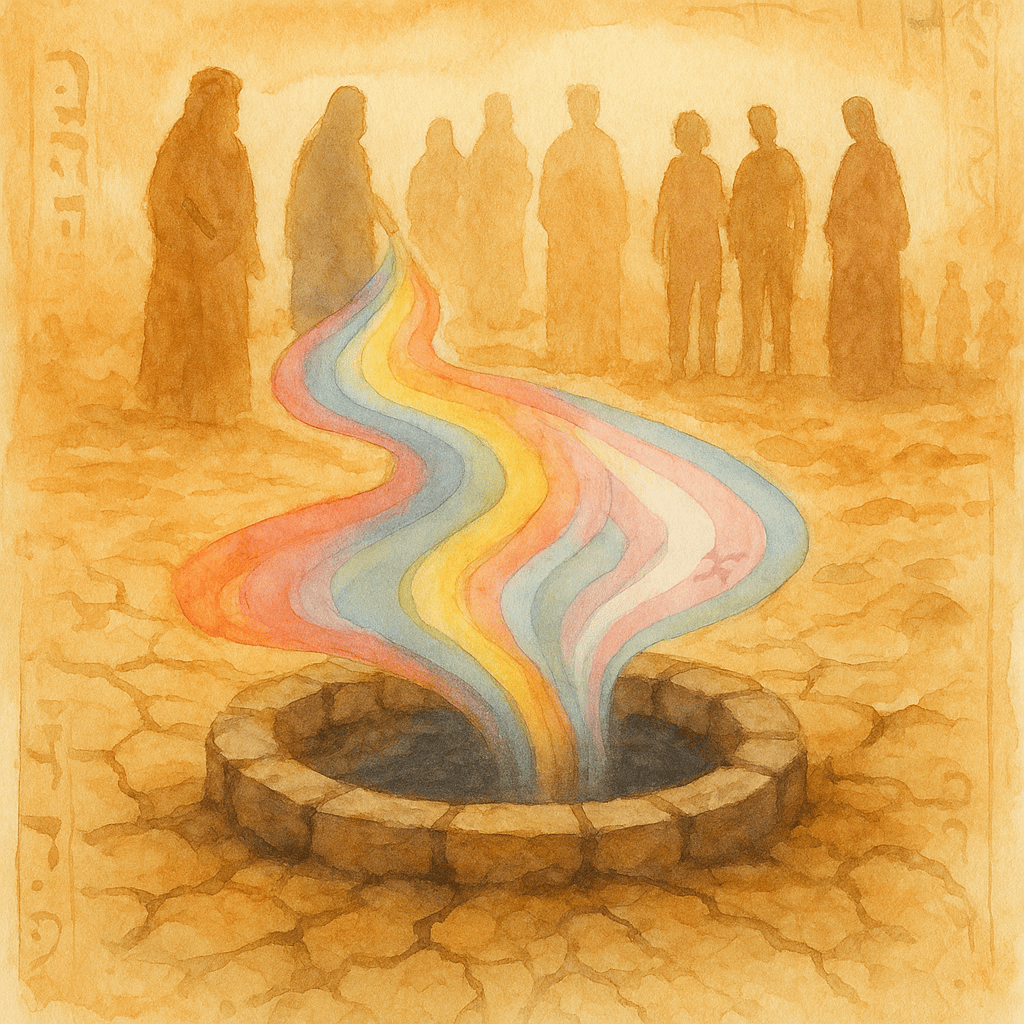
    Tomorrow, London celebrates Pride, and the timing feels significant. Pride is joyfully, unapologetically loud, and it needs to be. It’s a song of liberation, like the one Miriam led at the sea. It’s colour and rhythm and the promise of water in a dry land. It’s a celebration of love in all its forms, a refusal to be silenced.

    But Pride is also, necessarily, a form of remembering. Behind every rainbow flag and joyful parade lives the memory of those whose voices were silenced, by shame, by violence, by indifference. Pride carries the spirits of our Miriams, the ones who kept communities alive through the darkest times and who were buried without the ceremony they deserved.

    And what of Moses in our Torah portion? After Miriam’s death, when the people cry out in thirst, he strikes the rock in anger. The traditional reading focuses on his disobedience to God’s command. But perhaps there’s something deeper here. Perhaps Moses isn’t just frustrated with the people’s complaints. Perhaps he’s grieving. Perhaps he’s lashing out at a world that let his sister disappear so easily, that gave him and the entire community no space to process their loss.

    The LGBTQ+ community knows this feeling intimately. Grief without ritual. Anger without acknowledgment. Joy without safety. And yet, like Moses, we keep moving forward. We keep showing up at the rock, hoping water will flow.

    But here’s where we can do better than the wilderness generation. We don’t just wait for wells to appear. We dig them ourselves. We name our Miriams while they’re still with us. We create space in synagogues, schools, and family gatherings for those whose presence has gone unnoticed.

    In many Jewish communities today, we’re learning to tell the fuller story. We’re adding Miriam’s Cup to our Passover seders, recognising her role in the liberation narrative. We’re lifting up the voices that have been marginalised, making room for stories that have been buried.

    This is sacred work. When we break the silence around those who have been forgotten, when we honour the ones who sustained us without recognition, we participate in a kind of resurrection. The well begins to flow again.

    This Pride Shabbat, let us refuse to let anyone disappear without a trace. Let us mourn out loud for those we’ve lost. Let us celebrate the Miriams among us, the teachers, the caregivers, the activists, the quiet heroes who keep our communities alive.

    Because water doesn’t only come from striking rocks. It flows from memory, from love, from the commitment to ensure that no one’s story is lost to silence.

    When we make space for the voices that have been buried, when we listen deeply to those who have been ignored, we might just find the well bubbling up again, not through miracles, but through the sacred act of remembering.

    When London Pride unfolds tomorrow, may we carry Miriam’s memory with us. May we sing her song of liberation while also holding space for those who never got to sing their own. And may we build communities where every story matters, where every voice is heard, where no one disappears into silence.

    The well is still there, waiting. We just need to recognise it, honour it, and drink deeply from its waters.

  • “When the Dust Speaks: A Reflection for Pride Month”

    “When the Dust Speaks: A Reflection for Pride Month”

    There are portions in Torah that comfort. Others disturb. Parashat Naso offers us both.

    Nestled among instructions about the camp and Nazirite vows, we find an ancient, bewildering ritual: the ordeal of the sotah, the trial for a woman suspected of adultery. It’s hard to read. A woman stands accused, not by witnesses or evidence, but by the jealous suspicion of her husband. She is brought before a priest, her hair unbound, a grain offering in hand. She is made to drink “bitter waters” mixed with dust from the sanctuary floor and ink from a scroll bearing God’s name.

    We flinch. Rightly so. Because even if the ritual ends without punishment, the entire episode is a theatre of humiliation. And if her body swells and she suffers illness, the verdict is cast. Guilty or not, it is she who pays the cost of suspicion.

    So, how do we read this text today, especially at the gates of Pride Month, a season when we affirm dignity, resist shame, and honour those who have too long been told that their love or gender makes them “other”? Let me offer not an answer, but a path.

    The bitter water of the sotah is mixed with dust from the sanctuary. The holiest place. Earth and holiness stirred into a potion meant to judge a woman’s worth.

    And here is the contradiction: how can something born of sacred ground become the tool of shame?

    But perhaps this is the Torah’s quiet subversion. Rabbi Samson Raphael Hirsch once taught that dust is a symbol of common origin. From the dust, we are all made. From the dust, we return. (Hirsch Commentary on Numbers 5:17)

    The dust of the sanctuary says: You belong here too.

    Yes, the ritual is problematic. Yes, it emerges from a patriarchal world where a woman’s value was entangled with a man’s honour. But perhaps within the ritual’s dust lies a seed of truth we can reclaim ,  that every body brought before God carries something holy. That God dwells not only in perfection, but in pain, in process, in protest.

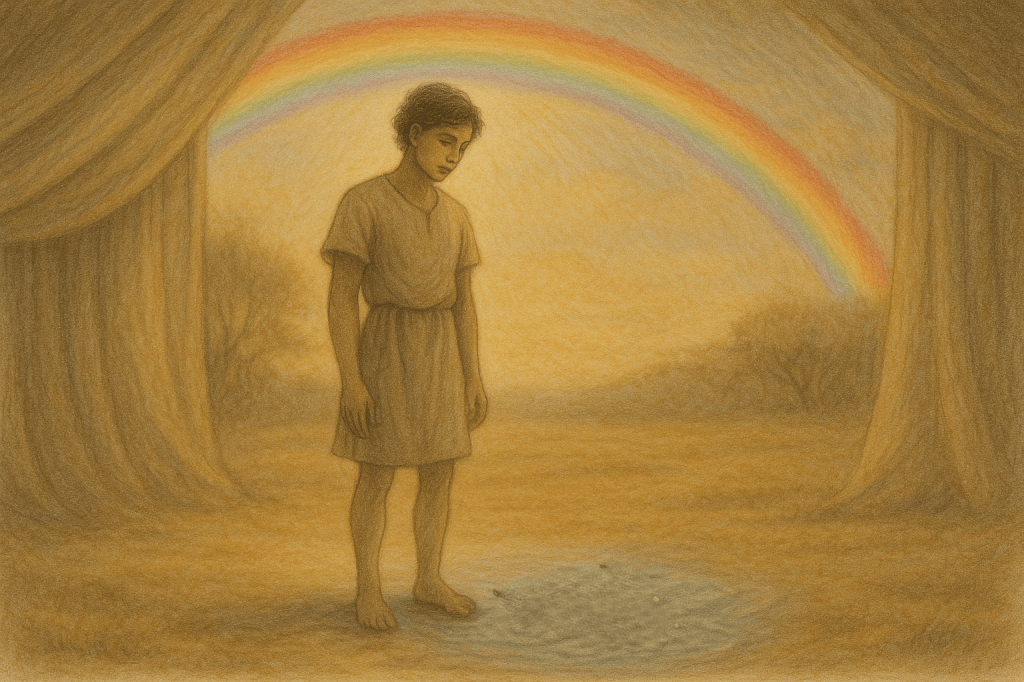
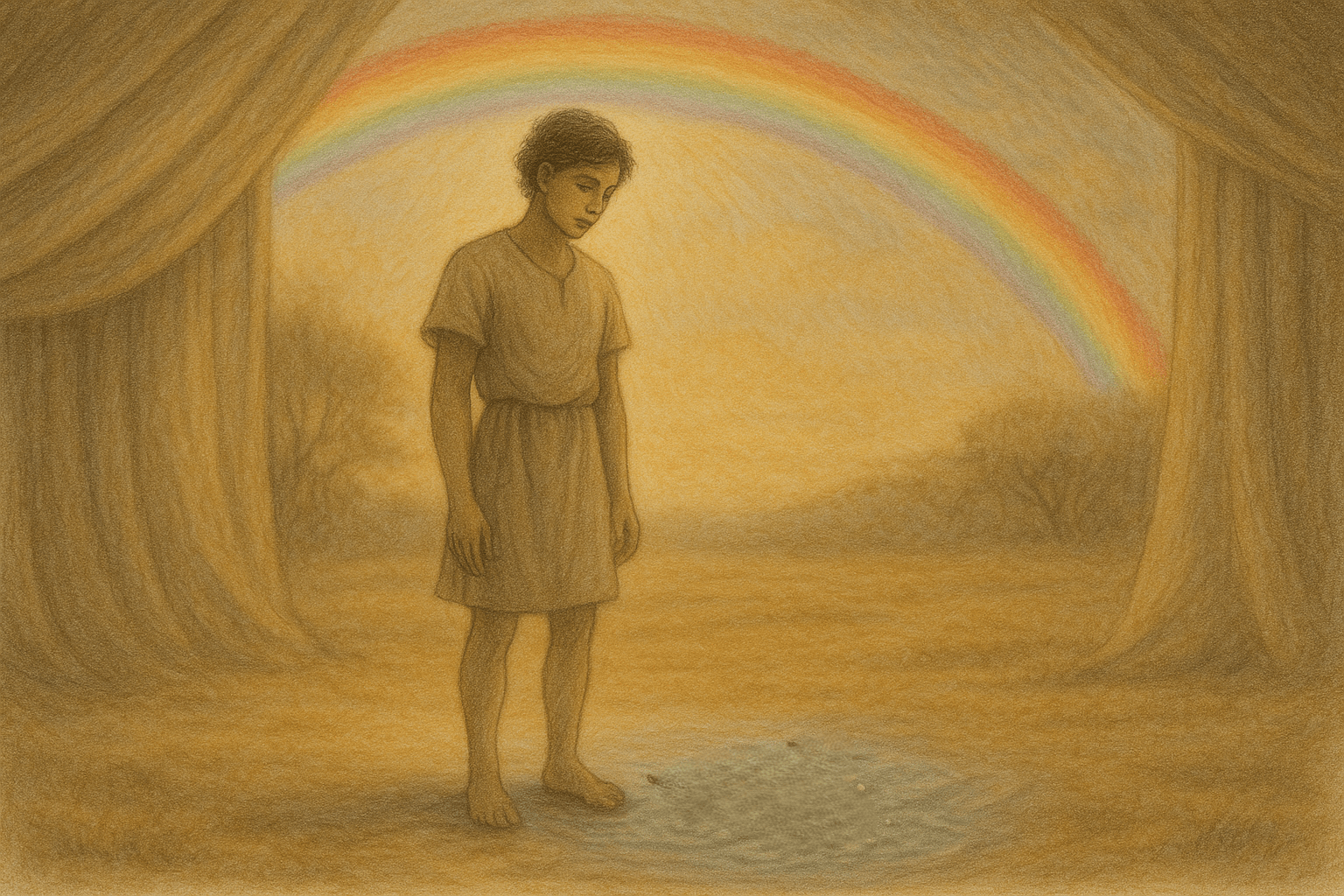
    Imagine now, not a woman before a priest, but a young person, perhaps trans, perhaps queer, standing before a religious community. Not to be shamed, but to be seen. Not with suspicion, but with celebration.

    That is the reversal Pride calls us toward.

    The Torah may speak in the language of its time, but we, its readers, are called to speak in the language of our own. We name the pain of exclusion, and we respond with the rituals of affirmation. We mix our dust with hope.

    This is the gift of Progressive Judaism. We do not read Torah to freeze time. We read it to transform time. And that includes calling out what wounds and blessing what heals.

    Midrash Tanchuma teaches that the sotah ritual exists not because God wishes to punish, but because God wishes to heal a broken relationship. The point, say some sages, was to stop a man from taking violence into his own hands. To introduce delay, to make space for something softer than rage. (based on Midrash Tanchuma, Naso 5)

    Now, imagine what it would mean if our communities applied that logic more widely. When suspicion arises about someone’s identity, or discomfort about the unfamiliar, what if we slowed down? What if we resisted judgement, made space for honest encounter? Could we turn bitterness into belonging?

    The sotah text gives us a script, one that, in its time, perhaps offered protection. But Pride gives us a counter-liturgy. Where the sotah drank words erased, we speak words affirmed. Where her body became a canvas for divine punishment, we honour the body as a vessel of the divine image.

    And we remember, too, those who have been made invisible: people expelled from camps, families, and sanctuaries, not because they broke a law, but because they broke a mould.

    In this light, Pride Month isn’t just a celebration. It’s a sacred protest. A reweaving of the text.

    So maybe the most radical message in this week’s portion is that dust can speak.

    Dust, from which we were formed. Dust, mixed with holy ink. Dust that remembers every footstep, those who came in fear, and those who returned in pride.

    Let us be the generation that reclaims the dust, not for bitterness, but for blessing. Let our sanctuaries be places where no one is tested for worthiness, but everyone is told: You are already whole. You are already holy.

    Shabbat Shalom.