Author: Rabbi Schell

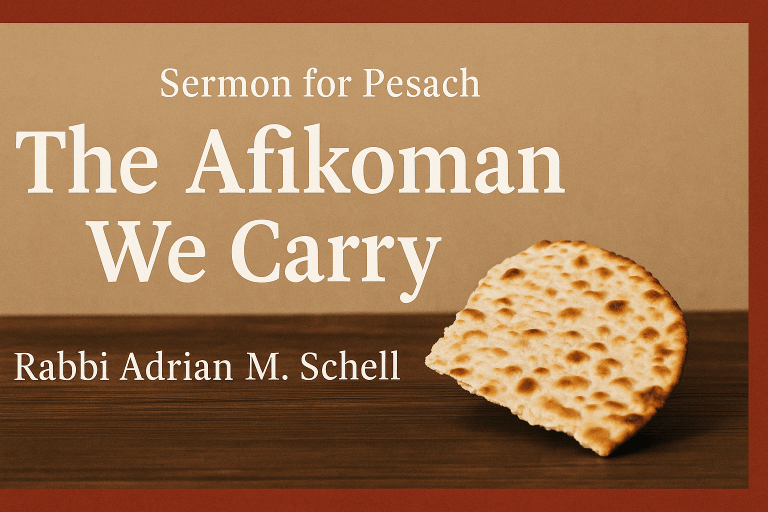
  • The Afikoman We Carry | Pesach Sermon by Rabbi Adrian M. Schell

    The Afikoman We Carry | Pesach Sermon by Rabbi Adrian M. Schell

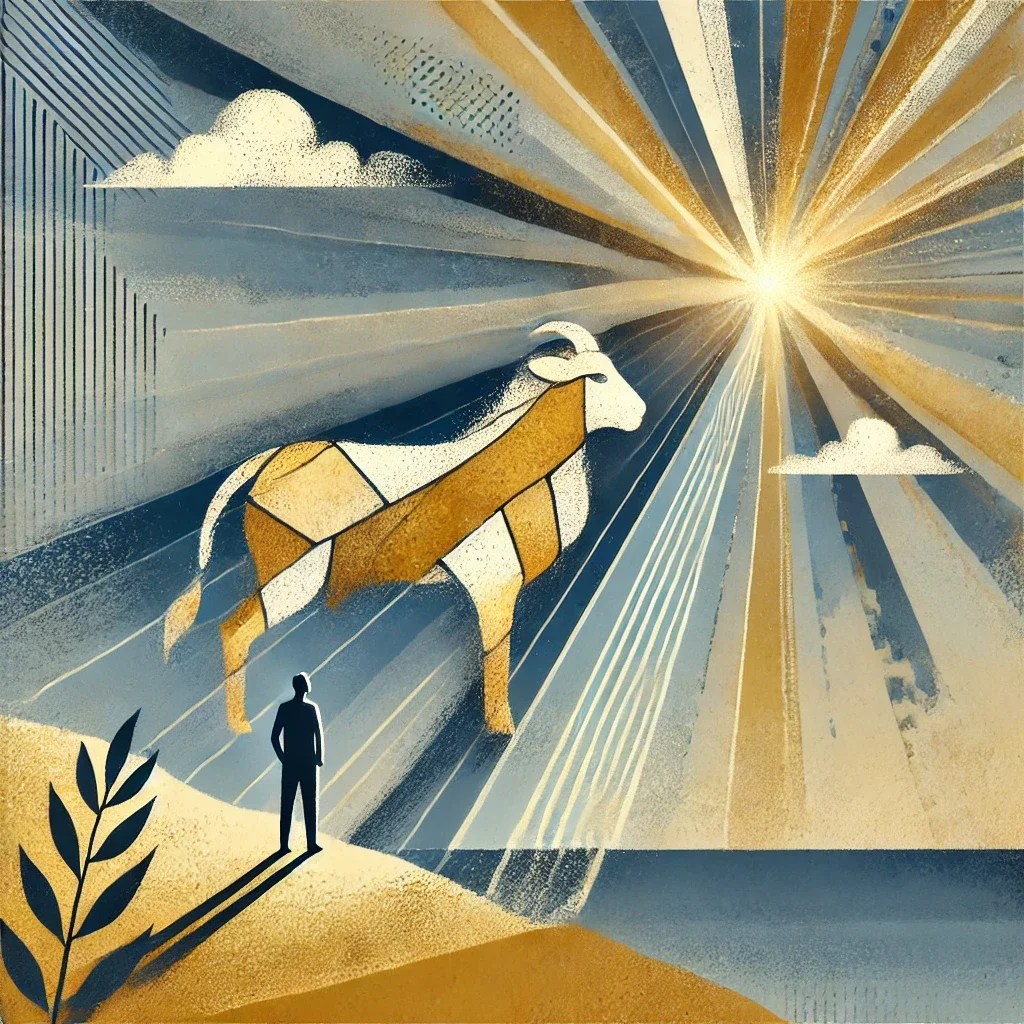
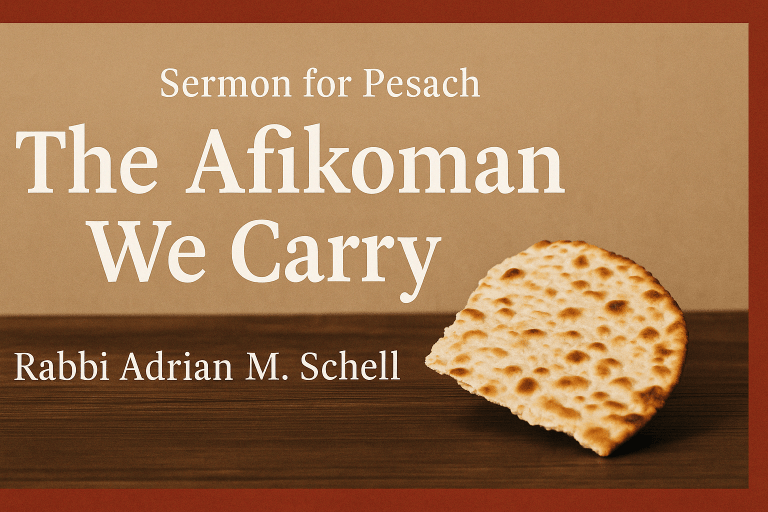
    In this Pesach sermon, Rabbi Adrian M. Schell reflects on a deeply personal and poignant Seder night in Berlin, where a table of rabbinical students, each carrying their own stories and silences, unknowingly held the broken pieces of our collective Jewish memory—and helped one another carry them.

    Using the powerful symbol of the Afikoman, Rabbi Schell explores how the broken middle matzah we hide and redeem mirrors our Jewish experience: fractured by trauma, held in memory, and ultimately returned to the table as a sign of resilience and hope.

    This is a message about survival that doesn’t come easily, about healing that happens at shared tables, and about teaching the next generation not just to find the hidden matzah, but to understand what it means to live with brokenness and still search for redemption.

    In a time when the weight of our past—ancient and recent—feels particularly near, this sermon invites us to embrace the truth that we are all Afikoman: carried, cherished, and ultimately brought back whole.

    https://youtu.be/BWz3Ms3PUAs

    #Pesach2025 #Afikoman #JewishHope #RabbiAdrianSchell #SederReflections #Redemption #JewishMemory #LiberalJudaism #ChagPesachSameach #SpiritualResilience #PassoverSermon #HopeAndHealing #BrokennessAndWholeness #Yachatz #JewishStorytelling #RabbinicalReflections #JewishContinuity

  • Omer Counting 2025

    Omer Counting 2025

    Beginning with the second night of Pesach we count the Omer until we arrive in our calendar at Shavuot. To help you with the counting, we have prepared a leaflet for you with a calendar, the blessings, and the numbers (download link below and available in the Shul).

    Traditionally, the Omer is counted in the evening, after sunset.

    Counting the Days Between Freedom and Purpose

    The Jewish calendar is deeply attuned to time. It maps the rhythms of nature — the cycle of the moon, the tilt of the sun, the turn of the seasons. Yet, there’s one constant that pays no mind to the calendar pages or weather reports: Shabbat. It arrives every week, whether Friday night feels like a Tuesday or a Thursday, whether it’s midsummer or midwinter. During lockdown, when every day blurred into the next, I came to cherish that rhythm. Shabbat reminded me that not all days are the same — some are set apart, sacred in their stillness.

    There’s another curious rhythm in our calendar: the Counting of the Omer. This stretch of 49 days begins on the second night of Pesach and ends on the eve of Shavuot. Each day, according to tradition, must be counted — deliberately and with blessing — just after sunset. There are calendars for it, apps, even WhatsApp groups. And of course, we’ve included an Omer counting sheet on our website to help you keep track.

    Now, technically speaking, an omer is a biblical measure of grain. Originally, this was a purely agricultural count — a countdown from the first barley offering in the spring to the wheat harvest marked by Shavuot. But over time, Shavuot evolved. No longer just a harvest festival, it became the moment we commemorate receiving the Torah at Sinai. And so, the rabbis sought a deeper meaning for the counting itself — because it’s a mitzvah in the Torah, and not one we can simply brush aside.

    I’ve come to love the spiritual arc of this count. The Omer marks the journey between physical liberation — our exodus from slavery in Egypt — and the moment of moral purpose when we stood at Sinai. Day by day, we step through that transformation. From freedom into responsibility. From survival into vision.

    And that matters. Because liberation, on its own, isn’t enough. It’s what we do with our freedom that defines its value — how we protect it, extend it, share it. Every generation must make that journey again. Every one of us must learn how to nurture the fragile plant called freedom, so it grows strong enough to shelter others, too.

    As we count our way through this Omer season, may we also count our blessings, and hold close the hope that those still held captive in Gaza will soon be released. May their suffering come to an end, and may a lasting peace settle over Israel and the region.

    May we all go from strength to strength — in our own lives, and in the life we build together as a community.

    Rabbi Adrian M. Schell

  • The Holiness of Showing Up: A Shabbat Sermon on Nearness and Connection

    The Holiness of Showing Up: A Shabbat Sermon on Nearness and Connection

    In this special interfaith Shabbat sermon for Parashat Vayikra, Rabbi Adrian M. Schell reflects on the meaning of korban, often translated as “sacrifice”, and its deeper message of karov, nearness. What does it mean to truly draw close to one another, especially when it’s not easy? And how can small, quiet moments become sacred offerings in our daily lives? Join us for a heartfelt, joyful exploration of presence, vulnerability, and the holiness of showing up.

    #ShabbatVayikra #InterfaithShabbat #JewishReflection #ProgressiveJudaism #RabbiAdrianSchell #Korban #Karov #SacredConnection #ShabbatMessage #ReformJudaism #WimbledonSynagogue #JewishWisdom

  • Bak, Buk, and the Great Purim Heist

    Bak, Buk, and the Great Purim Heist

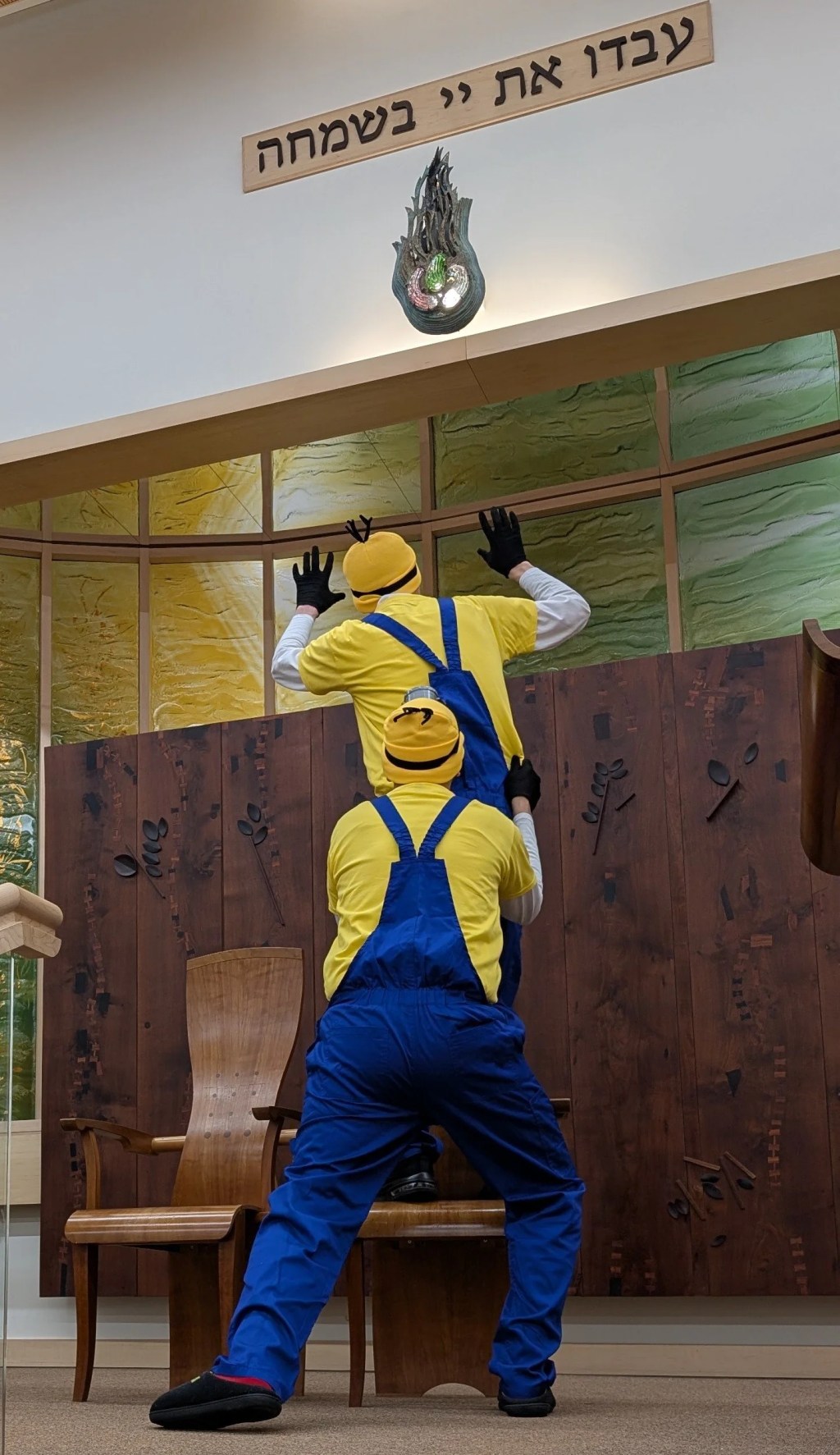
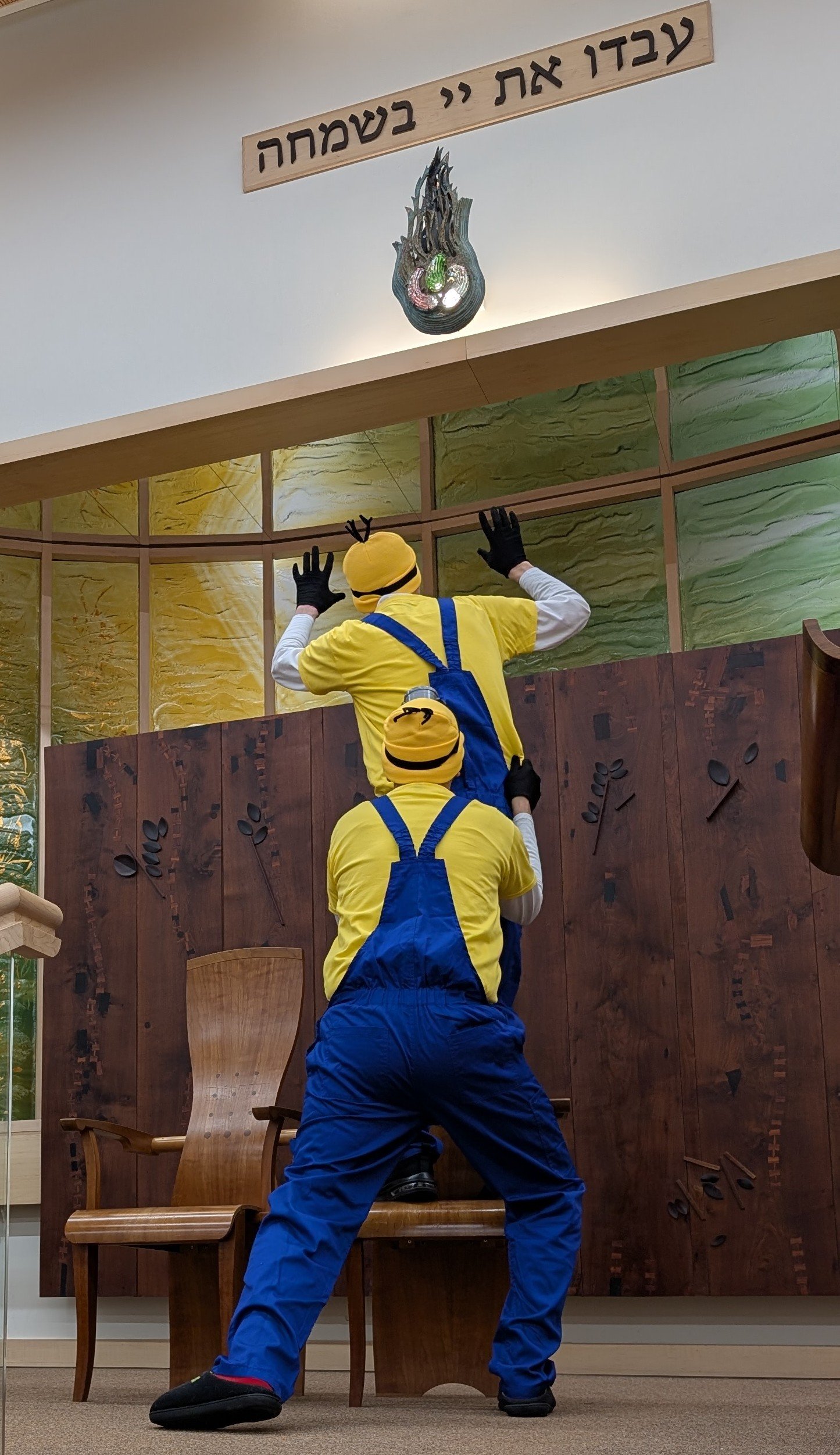
    Wasn’t that a great Purim weekend? Such fun. Thank you to all who attended and contributed to a great celebration. By the way, did you notice this year’s most ambitious, albeit ill-fated, heist attempt? Our two ever-mischievous Minions, Bak and Buk, devised a grand scheme: stealing the Ner Tamid—yes, the Eternal Light itself.

    Why? Who knows? Maybe they thought it was an everlasting supply of banana-scented glow or some secret power source for their next ridiculous gadget. Either way, their plan was doomed from the start.

    First, they underestimated the security presence in the synagogue—not the CST, but the Queen Esthers and Mordechais who were out in full force, wielding groggers with the precision of ancient warriors. Then came the unexpected backup: the Purim bees, who swarmed the would-be thieves in a flurry of buzzing and sticky hands. Defeated and frustrated, Bak and Buk fled, muttering something about “next year in Shushan.”

    This whole incident got me thinking: why would anyone want to steal the Ner Tamid in the first place? Aside from its aesthetic glow, what makes it so special? Well, as Vayakhel reminds us, light in Jewish tradition is more than just illumination—it’s a symbol of continuity, presence, and connection.

    The original command in Exodus was to ensure that a lamp burned continually in the Mishkan (Tabernacle), a visible reminder of God’s presence. Later, in the Temple in Jerusalem, the menorah carried this role, and when the Temple was lost, synagogues carried the tradition forward with the Ner Tamid—an unbroken light in an often-dark world.

    And that’s the thing about the Eternal Light—you can’t steal it. Not really. You can unplug a bulb, sure. You can even knock down a building (heaven forbid). But the light itself—the faith, the resilience, the divine connection it represents—that remains, untouchable and enduring.

    In every Jewish community, the Ner Tamid burns not because of electricity, but because we keep showing up. Because we keep telling our stories, keep practising our faith, keep passing on traditions. The light persists, not through some ancient miracle of oil, but through the real-life miracle of commitment and continuity.

    So, as we move from the festive mischief of Purim into the reflections of Shabbat Vayakhel, let’s take a moment to look at that little light above the ark. It’s not just a decoration—it’s a reminder: no matter what happens, no matter how many times history has tried to snuff it out, we are still here. The light still shines.

    And if, by chance, you see Bak and Buk lurking suspiciously near the ark, just hand them a Havdalah candle. Maybe that will keep them busy.

    Shabbat Shalom!

    Rabbi Adrian

  • In the Shadow of Beauty

    Shabbat Ki Tissa brings us face to face with a rare figure in our tradition—Bezalel, an artist whose name itself means “in the shadow of God.” Bezalel’s job was special: crafting the Tabernacle, creating beauty as an act of holiness.

    But wait: Judaism doesn’t exactly have a reputation for cherishing visual art, does it? Why then is Bezalel’s artistry highlighted with such reverence?

    As so often, it is complicated.

    Judaism’s complicated relationship with art comes down to one big worry: idolatry. Think about it. The ancient world was full of statues and images, worshipped as gods.

     “The work of men’s hands,” as the Torah calls them, was the opposite of our invisible God. Judaism favours words over images, a faith of listening rather than seeing. Yet, in this week’s Torah portion, we have Bezalel, and later, Oholiab—men chosen specifically for their artistic talent.

    Rabbi Samson Raphael Hirsch explains that many ancient cultures were driven by aesthetics—beauty for its own sake—while Israel pursued ethics and morality. But even he recognised that Judaism never turned its back entirely on beauty. The concept of “hiddur mitzvah,” beautifying the mitzvah, shows how deeply beauty can speak to our souls. It isn’t beauty for beauty’s sake—it’s beauty in service of something higher.

    And isn’t that something we’ve all felt, at least once? Have you ever been moved by a melody at synagogue, lost yourself gazing at our stained-glass windows, or felt something stir inside you while holding a beautifully embroidered Talit? These moments aren’t just imaginations—they are transformative. Maimonides, ever the practical thinker, admitted art could even lift melancholy, though he viewed it mostly as therapeutic.

    Rav Kook, the great teacher, took it a step further. He once walked through London’s National Gallery and saw the paintings of Rembrandt. And he believed, profoundly, that Rembrandt glimpsed the divine light—the same light God created on the very first day.

     In Rembrandt’s paintings, it wasn’t about perfection; it was humanity illuminated from within. Could it be, then, that Bezalel was tapping into the same hidden light?

    Here’s the thing: art in Judaism isn’t about the artist. It isn’t even purely about the artwork itself. Instead, it’s about what the artwork reveals—the holiness behind the beauty. It’s about reminding us of something greater than ourselves. Bezalel crafted the Tabernacle not simply as a dwelling, but as a reminder of the presence of God among the people.

    The Psalms say, “Worship the Eternal in the beauty of holiness.” Judaism asks us to find holiness first, and beauty will naturally follow.

    It’s about hadrat kodesh, not just aesthetics. Art isn’t merely decoration; it’s a gateway to spirituality.

    This way, Bezalel isn’t an artist alone, but someone who showed us the power of creativity to reconnect us with the sacred. Each piece of art, each melody, each crafted object is an invitation: pause, look deeper, and discover the spiritual renewal within. Because, after all, aren’t we all seeking those moments of deeper meaning, those glimpses of the hidden light?

    May this Shabbat bring us closer to the beauty that enriches our souls and renews our spirits.

    Shabbat Shalom.

  • Rabbi, do you believe in God?

    ‘I hear that nowadays Rabbis don’t have to believe in God – Rabbi, do you believe in God?’

    You know, this question comes up surprisingly often in my life as a rabbi. Sometimes it’s asked earnestly, other times it’s more playful—but honestly, I find myself asking it too. I suspect many of you have faced this same question, perhaps late at night or during tough moments, when faith feels shaky and you’re looking for even the smallest sign to reassure you that God isn’t just a comforting idea.

    Here’s the thing—doubt isn’t the opposite of faith; it’s part of the deal. Our Jewish tradition is packed with stories about people wrestling with belief, including some of our greatest heroes. Take, for instance, the generation that left Egypt. Imagine seeing all those miracles: plagues, pillars of fire and smoke, a sea splitting right in front of your eyes. You’d think that would seal your belief forever, wouldn’t you?

    Yet, just when you expect them to trust God completely, they build a golden calf. One moment, they’re standing at Sinai, feeling the full presence of the Divine; the next, they panic at Moses’ delay and look for reassurance in a statue. It’s a baffling moment, yet deeply human.

    Fear and uncertainty often drive us to seek immediate comfort, even when we’ve experienced something greater.

    But here’s what’s astonishing: even after this betrayal, God didn’t abandon them. Despite everything, the bond remained unbroken. Isn’t that exactly how our most meaningful relationships work? We stumble, we make mistakes, but if the relationship matters, we repair and return. God’s commitment wasn’t conditional—it was patient, steadfast, and forgiving.

    Now, jump ahead in history to Rabbi Akiva, centuries after Sinai. His time had no great miracles, no dramatic rescue from Roman oppression, no visible signs of divine favour.

    Life was harsh, faith was costly, and yet Akiva chose to commit himself fully to God and Torah. Arrested, sentenced, and facing death, his final words were the Shema—declaring the unity of God even as his life ended. Where was God in that moment? Not in flashy miracles, but perhaps deeply embedded in Akiva’s quiet resilience, in the strength that allowed him to proclaim his faith even amid darkness.

    Between these two extremes—the overt miracles of the Exodus and the quiet faithfulness of Akiva—is where most of us live our lives. Sometimes our experiences seem full of divine presence, and other times God seems painfully absent.

    Yet, our relationship with the Divine isn’t built solely on the spectacular; it’s also formed in the ordinary, the everyday quiet moments of grace, kindness, and strength. And yes, even in our doubts.

    You know what? I’ve realised over time that faith isn’t about having absolute certainty. It’s about choosing to engage, to wrestle, to be in a relationship—even when the answers aren’t clear. Doubt can coexist with belief, just as darkness can coexist with light. What’s crucial is that we keep returning, keep seeking, keep questioning. That’s the heart of Judaism—a tradition that embraces complexity, nuance, and yes, uncertainty.

    So, do I believe in God? Absolutely. Not because I always see miracles, but because I sense a presence in those small, everyday acts of compassion, in the resilience I see in our community, and in the quiet strength we give each other when life gets hard, when we stand up against injustice, when we welcome the stranger as our new best friend (welcome Beth and her family). Faith, I’ve found, is less about what we see and more about what we choose to hold onto—even when proof seems scarce.

    May this Shabbat be one where we recognise the quiet, steadfast presence of the Divine—not just in miracles, but in every moment we share together.

    Shabbat Shalom – Rabbi Adrian M. Schell

  • The real test of morality

    The real test of morality

    There’s a reason we come back to the following teaching again and again: Love the stranger, for you were strangers in the land of Egypt. It’s the most often repeated commandment in the Torah—more than keeping Shabbat, more than kashrut, more than any ritual law. Thirty-six times, the Torah reminds us that the way we treat those who are vulnerable, displaced, or different from us is a fundamental measure of who we are.

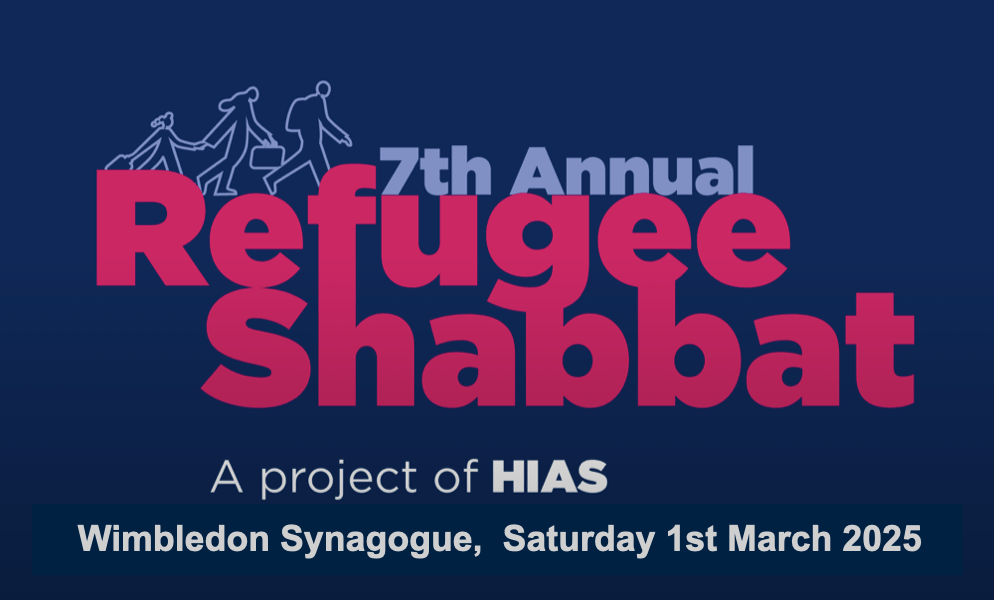
    This Shabbat, we mark Refugee Shabbat. Tomorrow, we have the privilege of hearing from HIAS about the work they do supporting refugees across the world. Their work is extraordinary. But as we listen, I hope we also remember that this responsibility does not rest solely with organisations like HIAS, or with governments, or even with Jewish charities. It is a calling placed upon all of us.

    The Torah does not say: appoint someone to care for the stranger. It says, You shall love the stranger. It is an invitation to see, to hear, and to act in whatever ways we can.

    Why Does the Torah Insist on This So Much?

    Perhaps the Torah knew that this would always be a difficult mitzvah. It’s easy to care for those we know, those we feel a natural connection with. The command to love our neighbour makes sense—we share a street, a community, a life. But the stranger? The one whose language is unfamiliar, whose customs seem different, whose presence challenges our sense of comfort or security? That requires something deeper.

    Rabbi Jonathan Sacks wrote that the real test of morality is not how we treat those who are like us, but how we treat those who are not.

    The Torah could have said, Because you were strangers, you should be wary of strangers. That would have been understandable. But instead, it turns our past suffering into a source of empathy. It says: Because you know what it means to be vulnerable, do not make others feel that way.

    And perhaps most strikingly, the Torah tells us that we must not look away. Lo tukhal lehit’alem—you cannot remain indifferent (Deuteronomy 22:3). Rashi takes this further: you must not cover your eyes, pretending not to see. The instinct to turn away is human. It can feel overwhelming to face the full weight of suffering in the world. But looking away is not an option.

    A Different Kind of Conversation

    In the UK today, the conversation around refugees is often harsh, divisive, driven by fear. Words like “crisis” and “invasion” dominate headlines. And yet, behind every policy debate, behind every statistic, there is a human being—a family, a child, a person who has left everything behind in search of safety.

    Our role, as Jews, is not only to offer support but to shift the tone of the conversation. To remind people—especially those who accept the Bible as a foundation of their moral framework—that welcoming the stranger is not an optional kindness, but a core obligation. If we believe that our sacred texts hold meaning, then we must also believe that this mitzvah holds meaning.

    This does not mean ignoring complexities. There are real questions about policy, about borders, about resources. But there are also deeper questions: How do we ensure that our laws reflect our values? How do we make space for both justice and compassion? How do we keep human dignity at the centre of the conversation?

    Being Present, Not Delegating Compassion

    HIAS is doing extraordinary work, but we cannot delegate the entire responsibility to them. Being present—truly present—means asking what we can do in our own communities. It might be as simple as changing the way we speak about refugees, challenging dehumanising language when we hear it. It might mean volunteering, offering support, or finding ways to engage politically.

    And it might simply mean listening. Seeing the people behind the headlines. Hearing their stories with an open heart. Because when we listen, we remember that every single person—regardless of their background or their journey—is created betzelem Elohim, in the image of God.

    The Mishnah teaches that if a person save a single life, it is as if they have saved an entire world. Every refugee has a world within them—the life they left behind, the life they hope to build, the life they are struggling to protect.

    I am asking you to reflect on your role in that struggle. Not because it is easy, but because it is what we are called to do. And when the world tells us to look away, to harden our hearts, to turn inward, we return to those ancient words: Lo tukhal lehit’alem. We cannot remain indifferent. We cannot cover our eyes.

    May this Refugee Shabbat open our eyes and our hearts. May we listen, may we see, and may we hold onto the vision that Torah has given us—a vision where love for the stranger is not an afterthought, but a foundation of who we are.

    Shabbat Shalom

    Sermon for Refugee Shabbat 5785 / 2025
  • A Thought for Shabbat: The Mystery of God’s Name

    A Thought for Shabbat: The Mystery of God’s Name

    Have you ever wondered about the profound mystery of calling someone’s name? Names are magical, aren’t they? They’re more than just sounds—they’re connections, bridges between hearts and souls.

    In our Jewish tradition, we find something wonderfully intriguing about God’s name. When Moses encounters the burning bush, he asks, “What shall I call You?” And God’s response? The enigmatic “Ehyeh asher Ehyeh”—”I Will Be Whom I Will Be.” It’s like a divine wink, a reminder that some mysteries are meant to be embraced, not completely understood.
    Think about how we begin our prayers: “Baruch Atah”—”Blessed are You.” We’re not just reciting words; we’re opening a conversation. It’s an intimate moment of connection, reaching out to something greater than ourselves.

    The beauty is that God’s name isn’t a simple label. It’s fluid, complex, changing. Some traditions call God “Elohim,” others “Adonai,” some “Shaddai.” Each name carries a different whisper of understanding—justice, mercy, eternity, creation. It’s as if the Divine is saying, “I’m not just one thing. I’m everything.”

    Our human languages make this even more fascinating. Hebrew, English, German—each language colours the pronunciation differently. Some sounds we can’t even replicate perfectly. It reminds us that our understanding of the divine is always partial, always evolving.

    What matters most isn’t getting the pronunciation exactly right or understanding every theological nuance. What matters is the conversation. The reaching out. The willingness to connect.

    This Shabbat, I invite you to embrace the mystery. Speak to the Divine in your own words. Listen in the quiet moments. Remember that connection matters more than perfect pronunciation.

    Shabbat Shalom, dear friends. May your weekend be filled with wonder, peace, and open-hearted conversation.

    Rabbi Adrian

    #Shabbat
    #Va’eira

  • Jewish Perspectives on the Assisted Dying Debate

    Jewish Perspectives on the Assisted Dying Debate

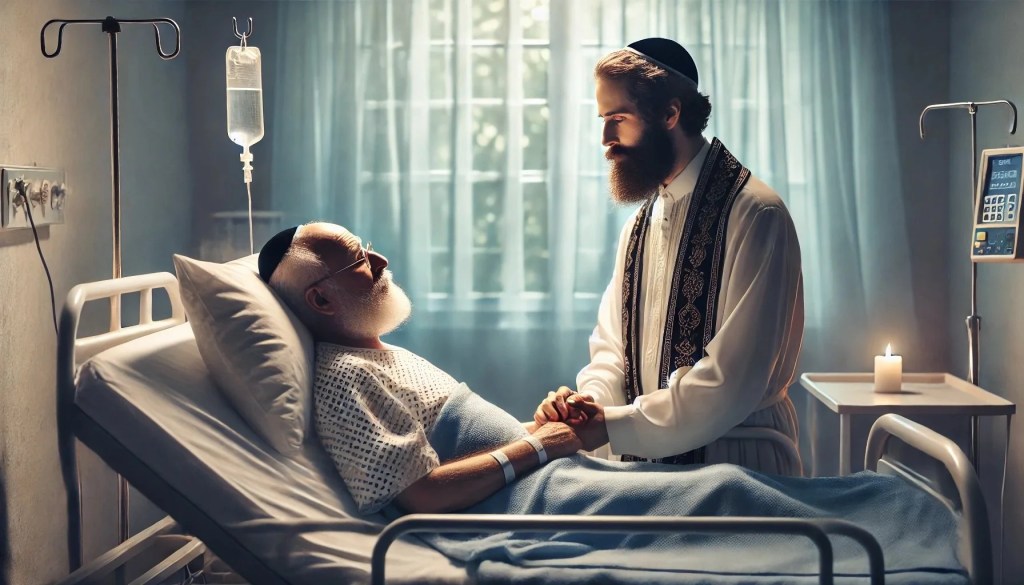
    As the assisted dying debate is currently being discussed in Parliament, I wanted to share a summary of Jewish perspectives on this important and complex topic. The attached paper offers an overview of how Judaism approaches the sanctity of life, the alleviation of suffering, and the ethical challenges surrounding end-of-life decisions.

    While this document is only a summary and cannot capture all the nuances or dimensions of the Jewish perspective, I hope it provides valuable insights and context that may contribute to the broader conversation.

  • We will dance again—Simchat Torah 5785

    On Simchat Torah, we gather,
    with hearts heavy,
    remembering those taken from us,
    in the fields where life once bloomed.
    Kibbutzim quieted by sorrow,
    echo with voices we still hear,
    their absence a wound, raw and open.

    We hold in prayer
    those still lost in the shadows,
    abducted, but never forgotten.
    In our yearning, we reach for them,
    as we have always reached for peace,
    with hands outstretched,
    with hope that refuses to fade.

    We are a people who know grief,
    but who also know resilience,
    who hold tight to each other,
    even when the world seems to unravel.
    Our Torah still speaks,
    and we still listen,
    to the ancient words that remind us
    of who we are,
    of who we will always be.

    Though the ground beneath us shakes,
    our spirit will not fall.
    We stand,
    we remember,
    we pray,
    and through tears,
    we say,
    we will dance again.