In this week’s parasha, we encounter more than a leadership challenge. Some mystical sources reveal Korach as the reincarnation of Cain, while Moses carries the spirit of Abel. That ancient sibling tale of envy, wounded entitlement, and primal rage reappears in the sands of the wilderness.
Cain’s jealousy began with offerings. His gift from the ground was rejected while Abel’s was accepted. That silent rejection twisted into violence. Korach, too, had status, wealth, and prestige. Yet he believed Moses had received too much. He framed his protest with holy language: “All Israel are holy,” he claimed. But like Cain, he disguised deep insecurity as moral principle.
Kabbalistic commentators emphasise a haunting symmetry. The earth that once covered Abel’s blood now opens to swallow Korach and his followers. This is not a dramatic coincidence. It is divine measure-for-measure justice. The earth remembers. It does not forget.
The same commentators also draw our attention to the names of Moses and Korach: Moses emerges from the water, flexible, patient, nurturing. Korach shares a root with “ice” (kerach), which is cold, rigid, and unyielding. In a personal context, this asks us: are we flowing and forgiving or hardening and withholding? Ice fractures. Water nourishes.
The reading of Parashat Korach calls for truthful courage and not for comfortable spiritual solutions. This is not a Shabbat moment to distract or defuse. Instead, it is an invitation to look into ancient patterns within ourselves and to name envy without shame, to notice where cold rigidity has replaced curiosity or compassion.
Korach refuses to release his bitterness. Moses, at great cost, does not. Which character will you echo?
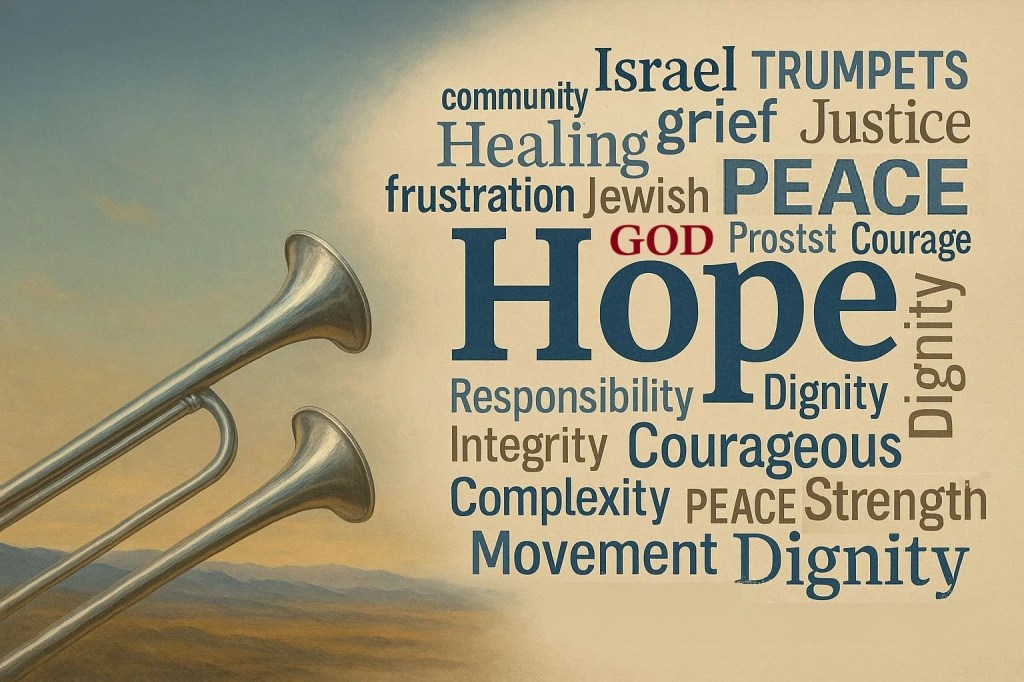
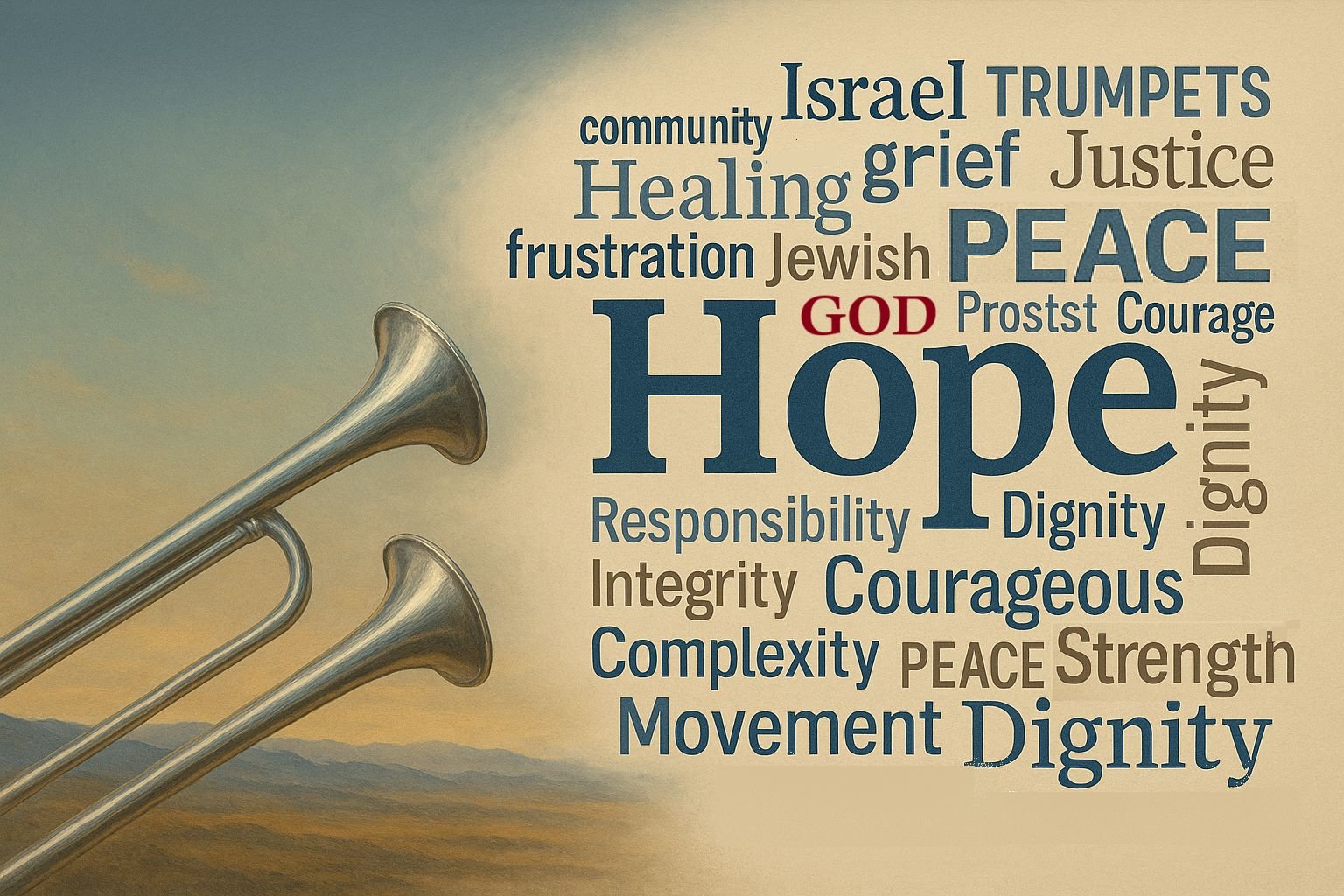
In this sermon, Rabbi Adrian Schell continues the courageous conversation taking place in his community, addressing grief, moral disorientation, and hope in turbulent times. Drawing on Numbers Chapter 10, he explores the symbolic power of the silver trumpets: tools that call to community, to action, and to memory. Just as the Israelites finally moved when the cloud lifted and the trumpets sounded, so too must we today take small, purposeful steps—together—toward justice and peace.
He reflects on the recent traumatic legacy, the needs of the hostages and victims, and the heavy responsibility of wielding power with integrity. Yet, this message is not only about confrontation or critique, it’s about cultivating spiritual resilience and moral courage. Hope isn’t naïveté; it’s the stubborn refusal to accept violence as inevitable, the belief that justice and security can coexist. He asks us to hold complexity without despair, to teach our children strength and compassion, and to answer the call of those trumpets, whether in times of movement or celebration.
It’s a call to mourn with dignity, protest without hate, and act without losing faith in a shared future. If not now, when?
Last week, Julian stood here and shared a sermon that many of us are still carrying. He gave voice to what many have been feeling for months now, grief, frustration, moral disorientation, and yes, even exhaustion. His words were generous, wise, and brave. He reminded us that love for Israel and criticism of its actions are not mutually exclusive, and that Jewish values, our values, must guide us even, and especially, when we are heartbroken.
Julian spoke not just about Gaza or government decisions, but about inherited trauma. About how conflict, once embedded in the soul of a people, can pass from parent to child like an unwanted heirloom.
He drew a line from Northern Ireland to the Middle East, from terror attacks to the silence that often follows, from despair to the thin hope that peace might one day rise.
In our Torah reading for today, Numbers 10, we’re handed silver trumpets, crafted not for music, but for memory. They gather the people, signal the journey, summon help, and declare festivals. They are tools of community, and also of clarity.
And then, for the first time in the book of Numbers, the Israelites move. The cloud lifts, and the wilderness becomes not just a backdrop, but a pathway. They march.
Isn’t it striking? After chapters of preparation, census, roles, rules, purification, positioning, finally, they just… go.
There’s no grand speech. No miraculous sign. Just a cloud lifting, and trumpets sounding.
Maybe that’s all we get sometimes.
Not certainty. Not justice, fully realised. Just a signal. A sound that tells us: it’s time. Time to take the next step. Even if we’re not sure exactly where we’re going.
The Haftarah brings us to another march. Around Jericho. Seven days of silence, then shouts and shofar blasts, and the walls tumble down.
It’s a dramatic image, powerful, victorious. But it’s also messy. What comes after the walls fall is war. Possession. A complicated promise fulfilled in a complicated world.
Still, I keep thinking about that marching. About the people walking around the city, day after day, unsure if anything is happening. It takes faith to walk when the walls don’t yet show cracks.
That’s where we are now, I think. Marching. Sometimes talking, sometimes silent.
Carrying our frustration and our heartbreak and our principles all at once. Wanting peace, demanding dignity for our people and others, and wondering if our words make a difference. If our values can still shape something in a world that feels so stuck.
Julian reminded us last week that we must not forget the hostages, the victims of 7 October, and the pain that still bleeds in Israel. That’s not negotiable. It is sacred memory. And sacred responsibility.
But he also said something harder, and just as important: that what we do with power matters. That how we wield it, politically, militarily, morally, shapes how the world sees not just Israel, but Judaism.
So here’s the pastoral voice I want to offer you this morning, building on his:
You are allowed to be torn. You are allowed to be angry. You are allowed to expect more from your leaders, on all sides. And you are still allowed to hope.
Hope is not naïve. It’s not a hashtag. In Jewish life, it’s something closer to stubbornness. The refusal to accept that violence is inevitable. The insistence that we can be both secure and just. The faith that even if the cloud lifts slowly, we still move. One step. Another. Together.
The trumpets in our parashah are not blown only in times of war. They’re also sounded on our days of joy, u’v’yom simchatchem, the Torah says.
On the festivals. At new moons, on Rosh HaShanah. When we gather not in fear but in celebration.
Imagine that. The same instrument that calls us to arms also calls us to dance.
Our challenge is to teach our children both sounds. Not to shield them from the pain, nor to let them drown in it. To help them understand what we’re fighting for, not just who we’re fighting against.
And more than that: to show them that being Jewish is not only a defence, it’s a calling. To justice. To compassion. To community. To spiritual courage.
So yes, Julian was right. We are in pain. But pain is not our only truth.
We are also capable of healing. Of holding complexity. Of lifting each other when the journey is long.
The trumpets are still sounding.
They’re calling us to speak thoughtfully. To act courageously. To mourn with dignity. To protest without hate. And to hold, deep within us, the stubborn belief that peace is possible, because justice is possible, and we have not given up on either.
There are portions in Torah that comfort. Others disturb. Parashat Naso offers us both.
Nestled among instructions about the camp and Nazirite vows, we find an ancient, bewildering ritual: the ordeal of the sotah, the trial for a woman suspected of adultery. It’s hard to read. A woman stands accused, not by witnesses or evidence, but by the jealous suspicion of her husband. She is brought before a priest, her hair unbound, a grain offering in hand. She is made to drink “bitter waters” mixed with dust from the sanctuary floor and ink from a scroll bearing God’s name.
We flinch. Rightly so. Because even if the ritual ends without punishment, the entire episode is a theatre of humiliation. And if her body swells and she suffers illness, the verdict is cast. Guilty or not, it is she who pays the cost of suspicion.
So, how do we read this text today, especially at the gates of Pride Month, a season when we affirm dignity, resist shame, and honour those who have too long been told that their love or gender makes them “other”? Let me offer not an answer, but a path.
The bitter water of the sotah is mixed with dust from the sanctuary. The holiest place. Earth and holiness stirred into a potion meant to judge a woman’s worth.
And here is the contradiction: how can something born of sacred ground become the tool of shame?
But perhaps this is the Torah’s quiet subversion. Rabbi Samson Raphael Hirsch once taught that dust is a symbol of common origin. From the dust, we are all made. From the dust, we return. (Hirsch Commentary on Numbers 5:17)
The dust of the sanctuary says: You belong here too.
Yes, the ritual is problematic. Yes, it emerges from a patriarchal world where a woman’s value was entangled with a man’s honour. But perhaps within the ritual’s dust lies a seed of truth we can reclaim , that every body brought before God carries something holy. That God dwells not only in perfection, but in pain, in process, in protest.
Imagine now, not a woman before a priest, but a young person, perhaps trans, perhaps queer, standing before a religious community. Not to be shamed, but to be seen. Not with suspicion, but with celebration.
That is the reversal Pride calls us toward.
The Torah may speak in the language of its time, but we, its readers, are called to speak in the language of our own. We name the pain of exclusion, and we respond with the rituals of affirmation. We mix our dust with hope.
This is the gift of Progressive Judaism. We do not read Torah to freeze time. We read it to transform time. And that includes calling out what wounds and blessing what heals.
Midrash Tanchuma teaches that the sotah ritual exists not because God wishes to punish, but because God wishes to heal a broken relationship. The point, say some sages, was to stop a man from taking violence into his own hands. To introduce delay, to make space for something softer than rage. (based on Midrash Tanchuma, Naso 5)
Now, imagine what it would mean if our communities applied that logic more widely. When suspicion arises about someone’s identity, or discomfort about the unfamiliar, what if we slowed down? What if we resisted judgement, made space for honest encounter? Could we turn bitterness into belonging?
The sotah text gives us a script, one that, in its time, perhaps offered protection. But Pride gives us a counter-liturgy. Where the sotah drank words erased, we speak words affirmed. Where her body became a canvas for divine punishment, we honour the body as a vessel of the divine image.
And we remember, too, those who have been made invisible: people expelled from camps, families, and sanctuaries, not because they broke a law, but because they broke a mould.
In this light, Pride Month isn’t just a celebration. It’s a sacred protest. A reweaving of the text.
So maybe the most radical message in this week’s portion is that dust can speak.
Dust, from which we were formed. Dust, mixed with holy ink. Dust that remembers every footstep, those who came in fear, and those who returned in pride.
Let us be the generation that reclaims the dust, not for bitterness, but for blessing. Let our sanctuaries be places where no one is tested for worthiness, but everyone is told: You are already whole. You are already holy.
Not long ago, in an exchange about the Torah portions Acharei Mot–Kedoshim, Adam and I discussed the following question that is still echoing in my mind: “Do you think modern communities do enough to help people return from their ‘wilderness moments’?”
It’s a question worth holding for a while.
We know the wilderness well in our tradition. It’s the place where Israel wandered, lost and disoriented. A place of testing and trial, but also of revelation. Sinai happened in the wilderness, not in the comfort of a promised land. Elijah found God not in the fire or the storm, but in the still small voice, alone, broken, and afraid in the desert.
So, what does it mean for someone today to find themselves in such a wilderness?
It might be grief. Or shame. Or addiction. A moment of spiritual dislocation. A crisis in a relationship. A political or moral misstep. Or simply a slow, quiet drift away from the centre of community life. And often, the real pain isn’t the wilderness itself. It’s the sense that no one is waiting for you at the edge of it.
In ancient Israel, the scapegoat carried the people’s sins into the wilderness and was never meant to return. But we are not goats. And our tradition doesn’t end in Leviticus. It journeys through the prophets and into rabbinic Judaism, where repentance, teshuvah, is not only possible but essential. As the High Holy Day liturgy reminds us, gates of return remain open, even when we are closed off to ourselves.
But here’s the challenge: communities often struggle to embody that. We’re good at welcoming people in. But are we good at helping people back?
Adam made a clever link to the language of cancel culture. We are right, I think, to set boundaries when harm is done. And yes, there are times when stepping away from the centre is necessary for healing, for the individual and the community alike. But exile is not the end of the story. Or it shouldn’t be.
Teshuvah is more than saying “I’m sorry.” It’s about changed behaviour. It’s about building trust again, not just with others, but with ourselves and with God. And for that journey to be possible, there must be a path home.
So, what does a compassionate path back look like?
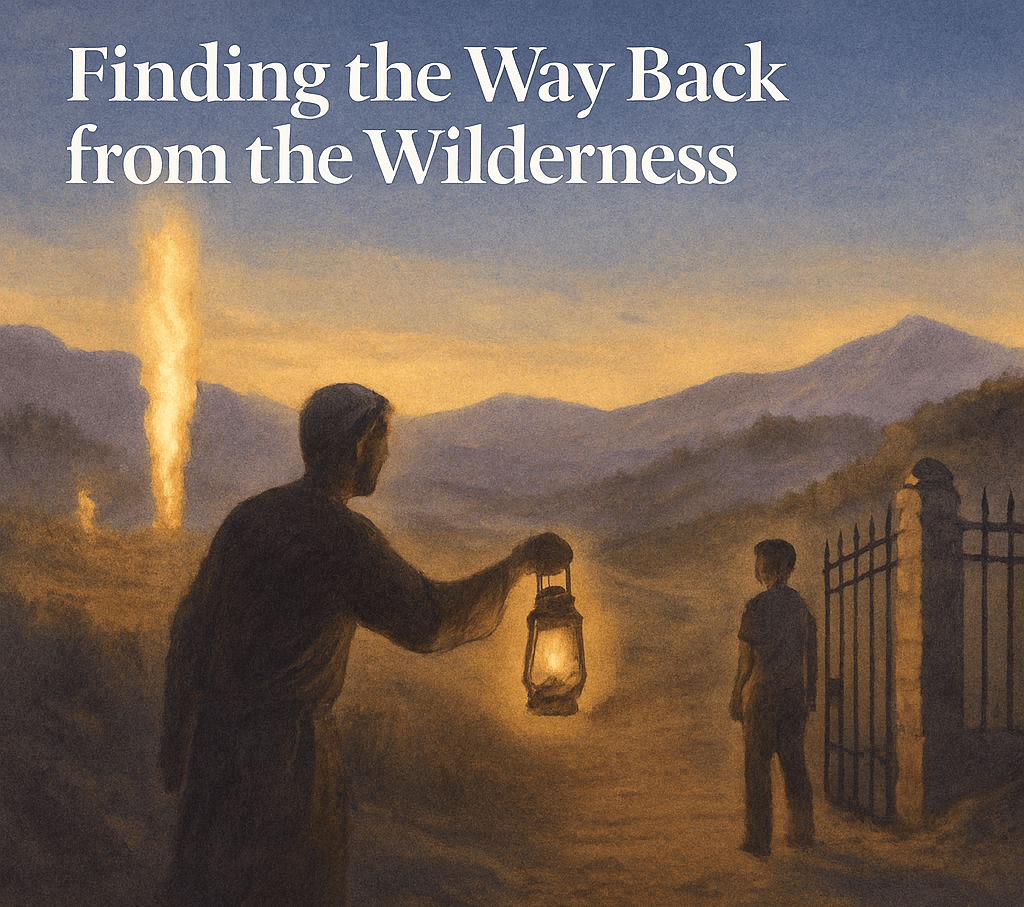
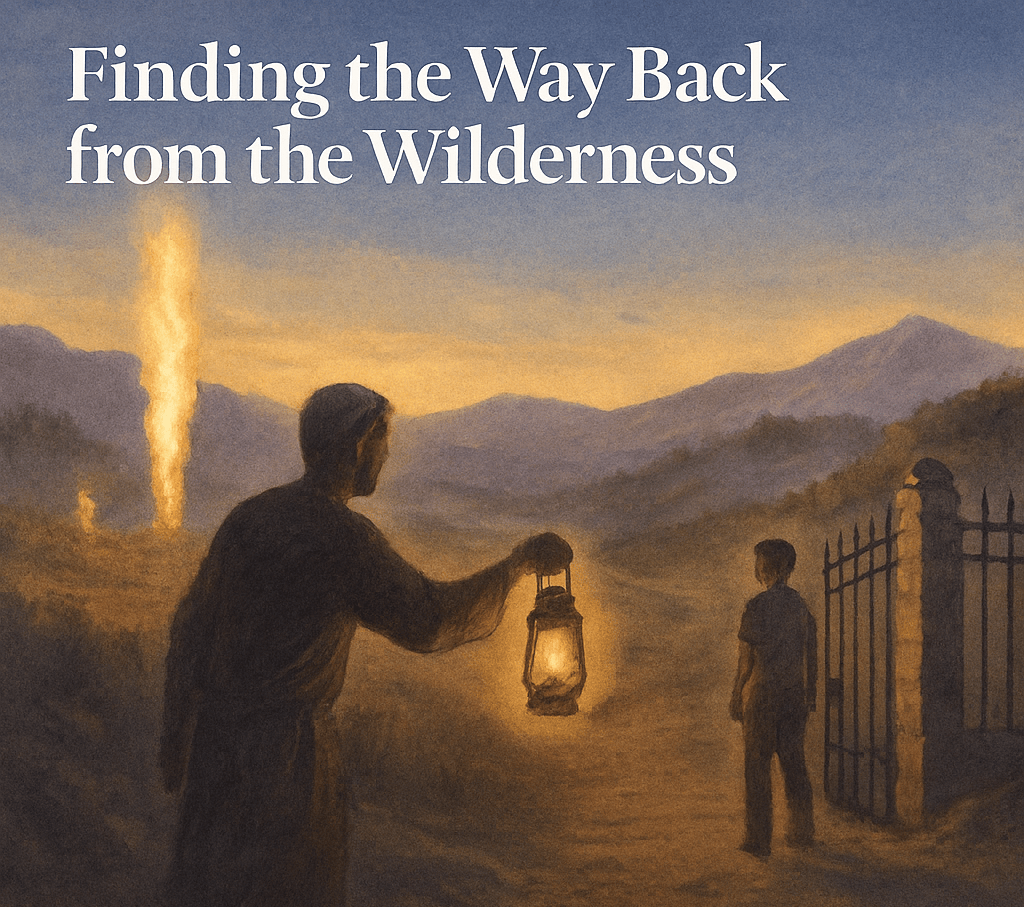
Perhaps it begins with not pretending to be surprised when people falter. Perhaps it looks like a hand gently extended, not only when someone is crawling back in tears, but even before they know they’ve lost their way. Adam offered a striking parallel. Just as God remained with Israel in the desert, not erasing their missteps, but guiding with a pillar of fire by night and cloud by day, so too might a community become that quiet presence beside someone searching for a way home. Not forcing return. Not abandoning either. It means not locking the gates behind those who step outside the camp, but standing near them, holding a lantern, saying: “When you’re ready, we’re still here.” Teshuvah is personal, but no one should have to walk it alone.
It also means accountability. Not all wounds are private. Some require public acknowledgement. Some paths back are winding and painful. But if we are to reflect the God we pray to, the One who is gracious and compassionate, slow to anger and rich in kindness, then surely, we must learn to be the same.
The prophet Micah said, “What does God require of you? To do justice, love mercy, and walk humbly with your God.” Justice and mercy. Not one without the other.
I wonder what it would feel like if every community had a visible way to accompany those in wilderness moments. Not just with slogans or ideals, but with real, lived practices of return. Quiet conversations. Restorative processes. Rituals that don’t erase the past but transform it into something teachable, even holy.
As summer begins, and our own synagogue life ebbs and flows with holidays, exams, and travels, maybe now is a good time to reflect: how can we prepare our own hearts, and our community, to be a place that believes in return? Not naively. Not recklessly. But with the dignity, discipline, and compassion our tradition calls for.
After all, Torah begins in a garden and ends on a mountain overlooking a land not yet entered. But every moment in between is wilderness. And somehow, it’s where we learned who we are.
There is something profound in how we speak of Shabbat—not merely as rest, but as a deliberate setting aside of our labours, a gentle lowering of the world from our shoulders. In Parashat B’har, we encounter Shmita, the Sabbatical year, which extends this sacred pause to the land itself. Every seventh year, fields lie fallow, debts dissolve, and our grip on ownership slackens. One might be forgiven for viewing this solely as clever economic policy or ecological wisdom—an ancient system of redistribution. Yet beneath these practical considerations pulses something far more intimate.
The concluding passages of Bechukotai offer a curious shift. After the sombre litany of warnings and consequences, God’s voice softens: “I will remember My covenant with Jacob… and I will remember the land.” (Leviticus 26:42) This inclusion of the land—not merely the people—invites deeper contemplation.
Resh Lakish offers us a striking parable. He envisions a king with three sons who are raised not by the king himself, but by a devoted handmaiden. Each time the king enquires after his children, he also asks about the handmaiden—recognising that she helped nurture them. In the same way, suggests the midrash, God remembers the land because the land has helped raise us.
This single turn transforms everything. The earth is not passive scenery against which human drama unfolds. It is not a resource awaiting conquest or exploitation. It is, rather, a caregiver. A witness. A second mother. The phrase “Mother Nature” emerges not as mere poetic sentiment but as what Resh Lakish recognises as a profoundly Jewish theological truth.
The land, therefore, is not merely the setting of our narrative but a covenant partner. It shapes our seasons, nourishes our bodies, cradles our footsteps—bearing witness to every choice we make. This is why Shmita transcends agricultural policy to become spiritual practice.
To allow the land its seventh-year rest reflects a remarkable trust—trust that sufficiency will persist, that survival doesn’t demand unceasing accumulation, and that our worth isn’t measured by our output. We matter—even when not producing, building, purchasing, earning. So too does the land.
Living this truth proves challenging. In a culture that gauges success through harvests and headlines, genuine rest becomes an act of resistance. Of faith. Of remembrance.
Shabbat offers this rhythm weekly. A chance to loosen our grip. To value presence over possession. Like Shmita, it restores balance not only to the world but within ourselves.
The parashah concludes with God recalling the land not as property but as partner. This is the heartbeat beneath the legalities, the poetry woven through the pauses: an invitation to approach the earth with dignity, to craft a life characterised not by acquisition but by care.
Perhaps when we permit the land to breathe, we rediscover our own breath. Not as owners but as kin. Not as rulers but as companions in a world yearning to be honoured and made whole.
In Parashat Emor, we find one of the Torah’s more difficult passages — a section that limits which kohanim, which priests, can serve at the altar. A priest with a visible difference — blind, lame, injured, or with a disfigurement — is instructed not to offer the sacred sacrifices.
To modern ears, this can feel jarring. It brushes up against our values of equality, inclusion, and dignity. But maybe we can approach this not as a closed door but as a doorway into deeper conversation.
The Torah’s world is not our world. It was shaped by ritual systems, by concepts of purity, and by the human longing to bring order and beauty into worship. The ancient altar was the centre of that structure, and the priests were meant to embody its wholeness — not because others were less valued, but because ritual asked for symbols. Wholeness, in this context, was symbolic.
But symbols aren’t always how God sees.
Elsewhere in our tradition, we’re reminded again and again that God’s vision is different. The prophet Isaiah declares, “My thoughts are not your thoughts.” (Isaiah 55:8-9) And in Pirkei Avot, we’re taught, “Do not look at the vessel, but at what it contains.” (4:20)
The Torah may have given the kohanim their roles, but it gives each of us our worth.
In fact, the priest who is not permitted to serve at the altar is still honoured with the title kohen. He may not perform the central rituals, but he is still part of the priesthood. Still called. Still holy.
That subtle detail matters.
We live in a world where many people carry visible and invisible differences — bodies that don’t move in expected ways, minds that work with different rhythms, faces and stories that challenge easy categories. The Torah passage reminds us not just to reflect on who served in the Temple, but to ask who serves now. Who teaches, who leads, who belongs — in our communities, our sanctuaries, our hearts?
Holiness isn’t only what we see on the outside. Often, it lives in the places we least expect — in quiet faith, in stubborn hope, and in the beauty of imperfection.
What kind of wholeness do we honour? Is it symmetry, polish, and ease? Or is it courage, kindness, and presence?
For me, holiness is where wholeness is not about appearing perfect but about being present and being cherished.
This week, our Torah portion Acharei Mot–Kedoshim coincides with the 80th anniversary of VE Day – Victory in Europe Day. There’s something profoundly moving about this conjunction: readings that speak of holiness and remembrance, paired with a date that marks both tremendous suffering and ultimate liberation.
Our double portion opens with Acharei Mot – literally “after the death” – referencing the passing of Aaron’s sons. It continues with Kedoshim – “you shall be holy.”
This progression – from death to holiness – mirrors precisely the journey our people have travelled since the Shoah.
When we think about VE Day, 8 May 1945, what images come to mind?
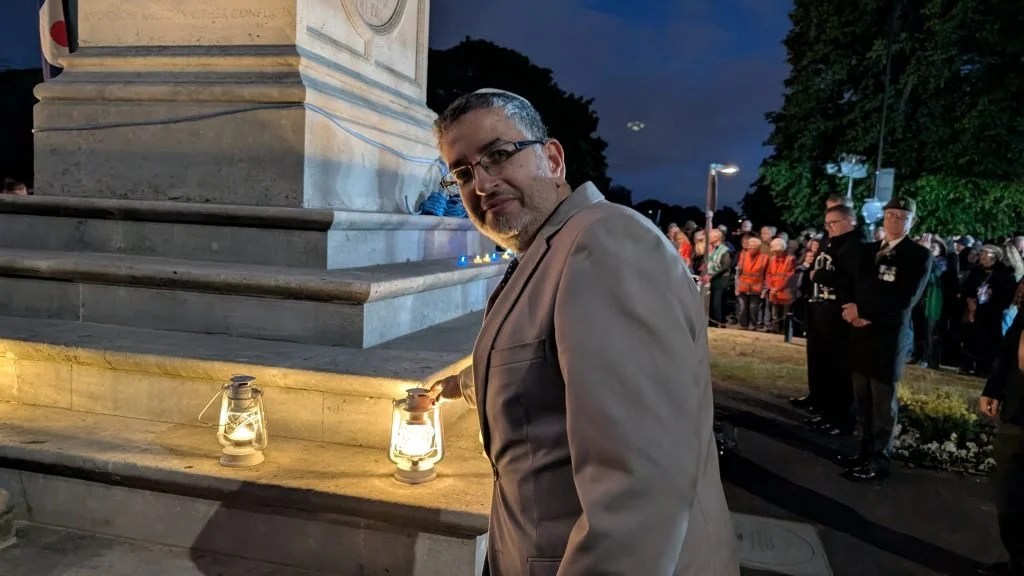
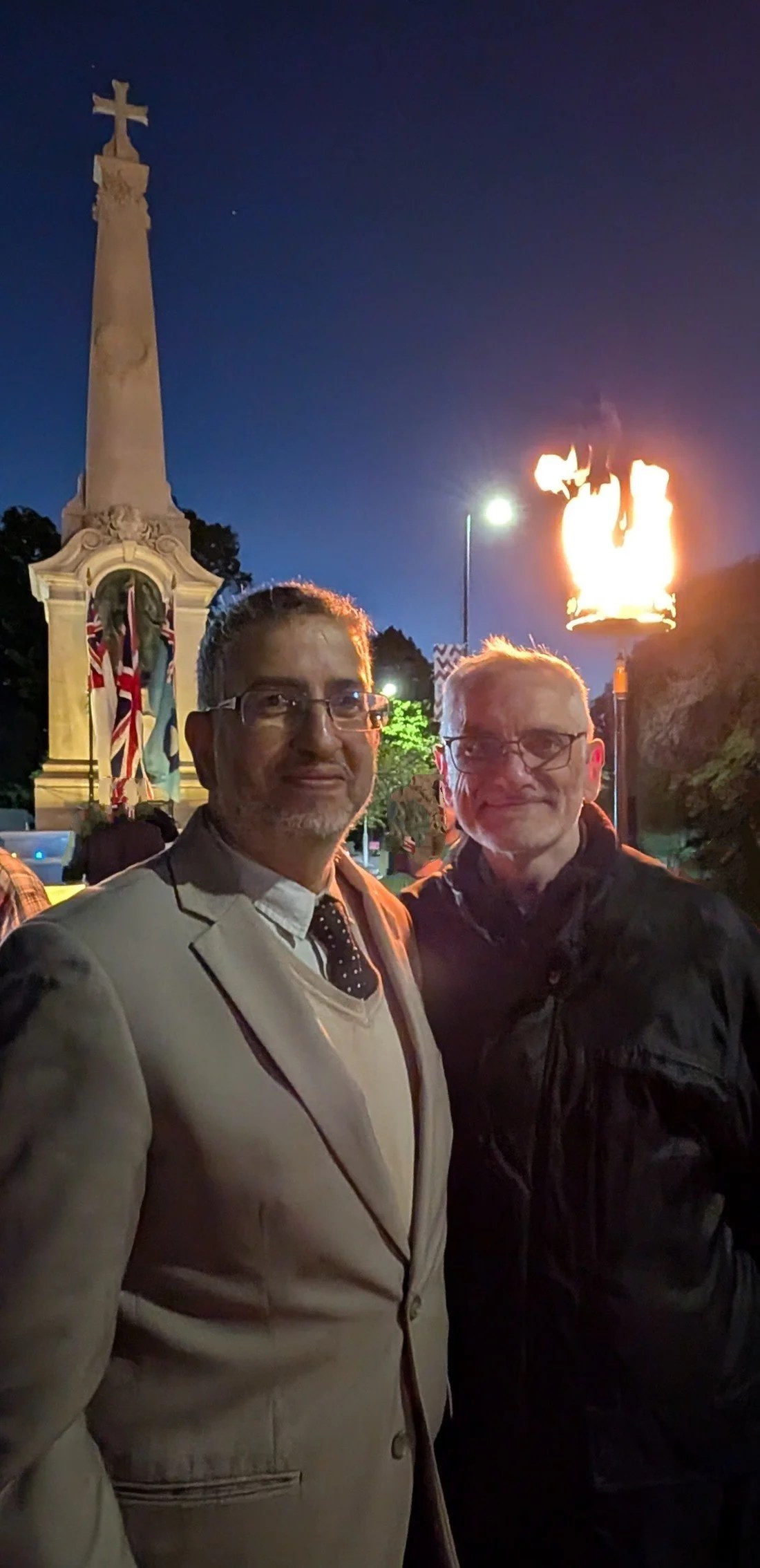
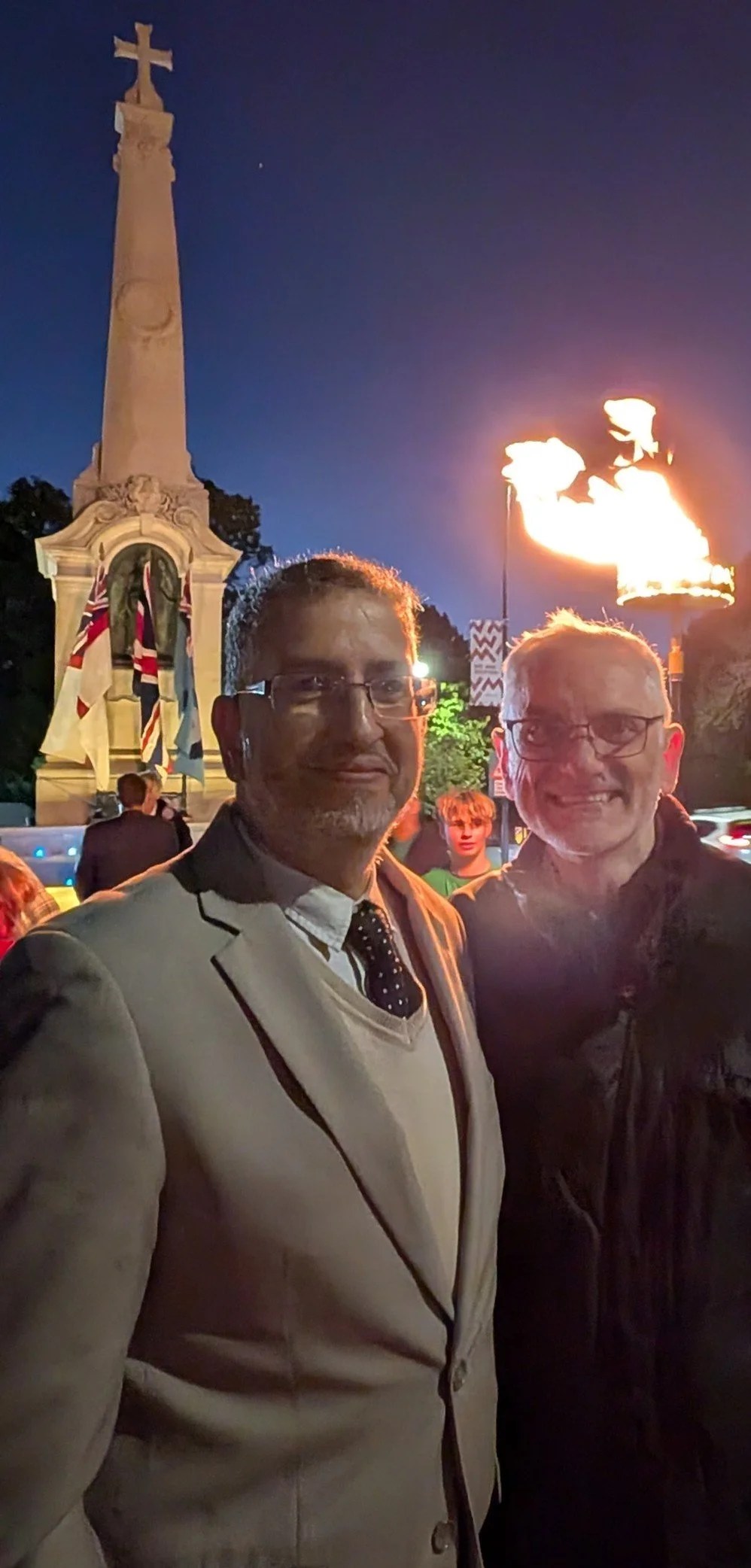
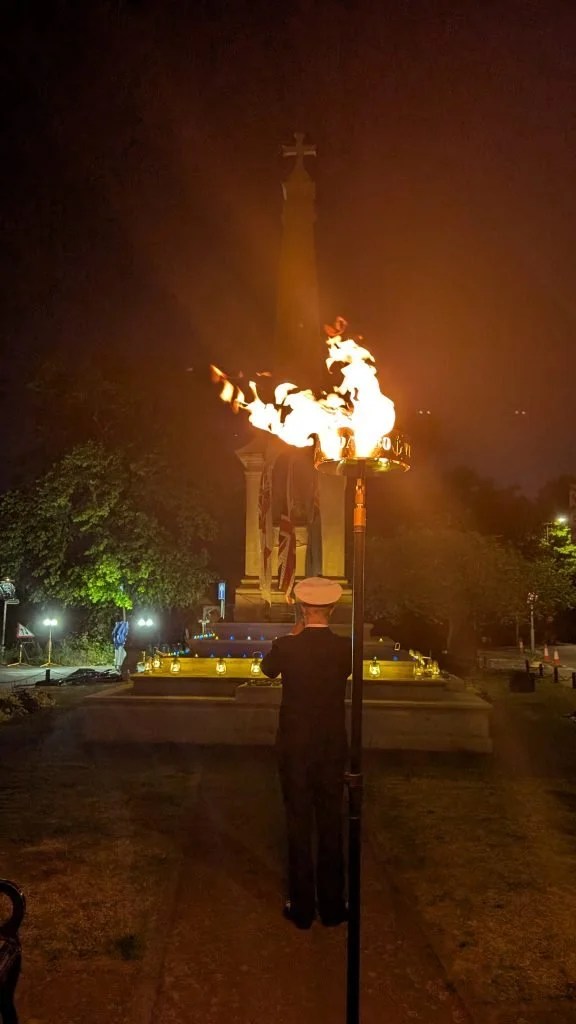
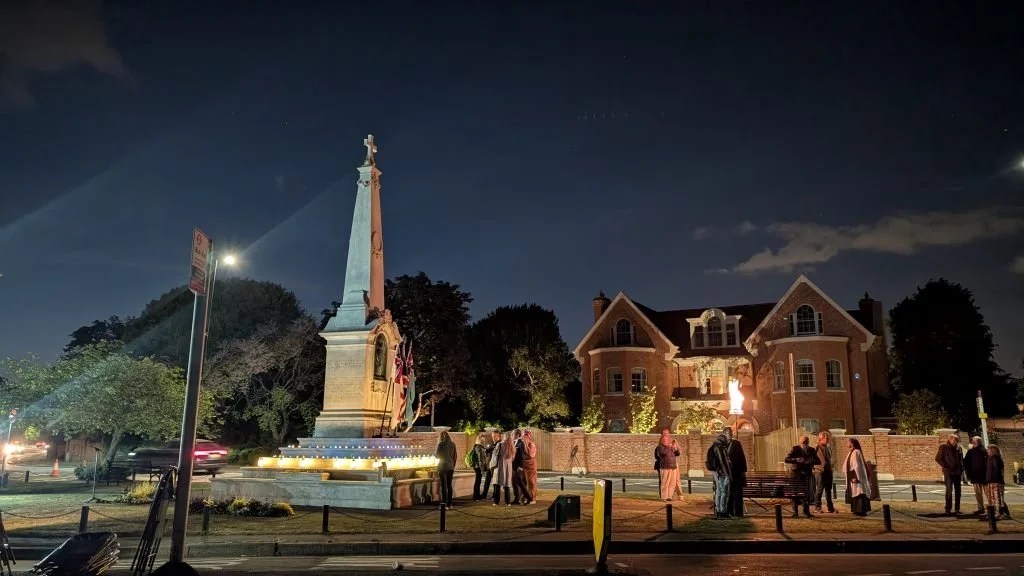
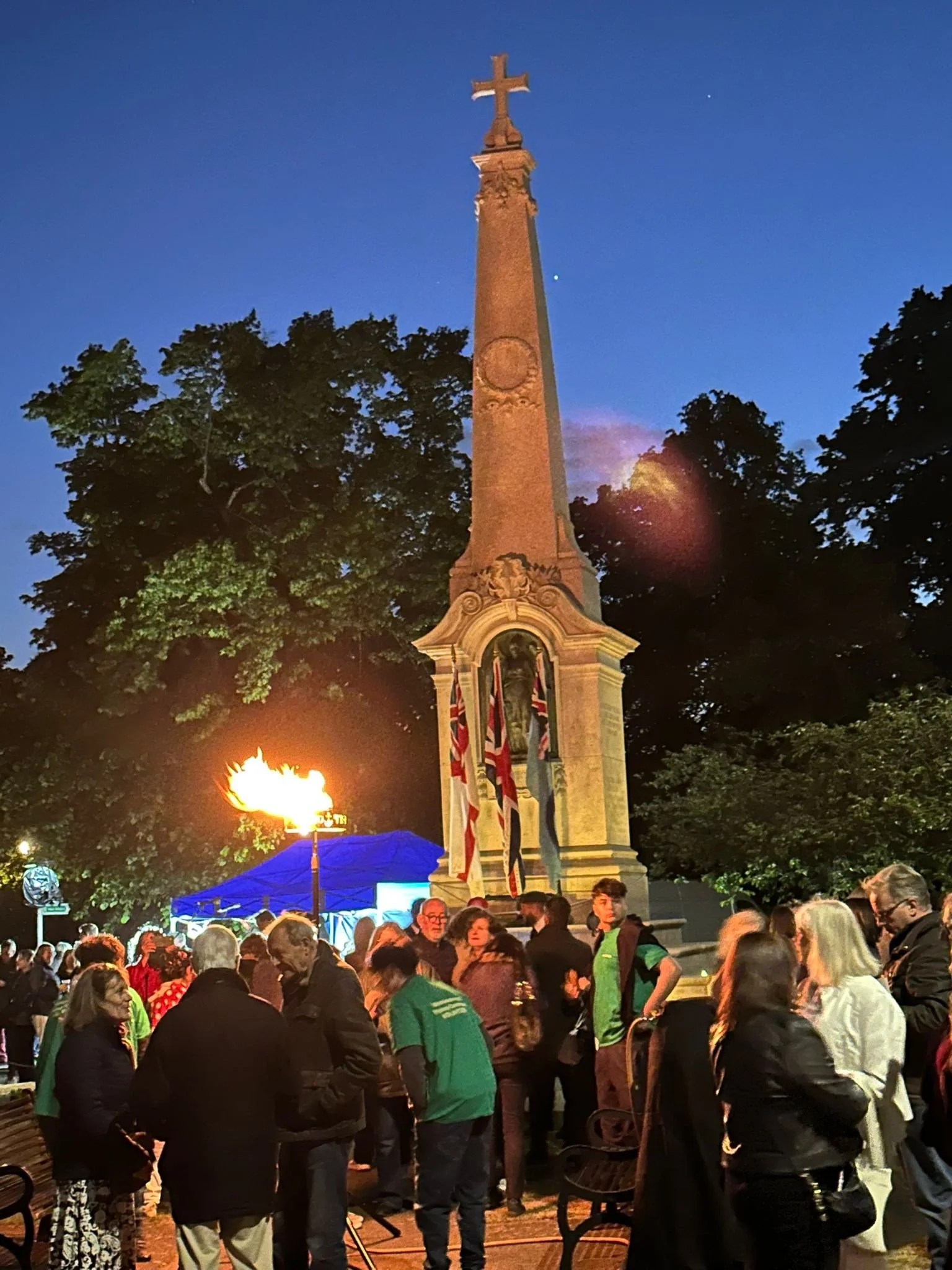
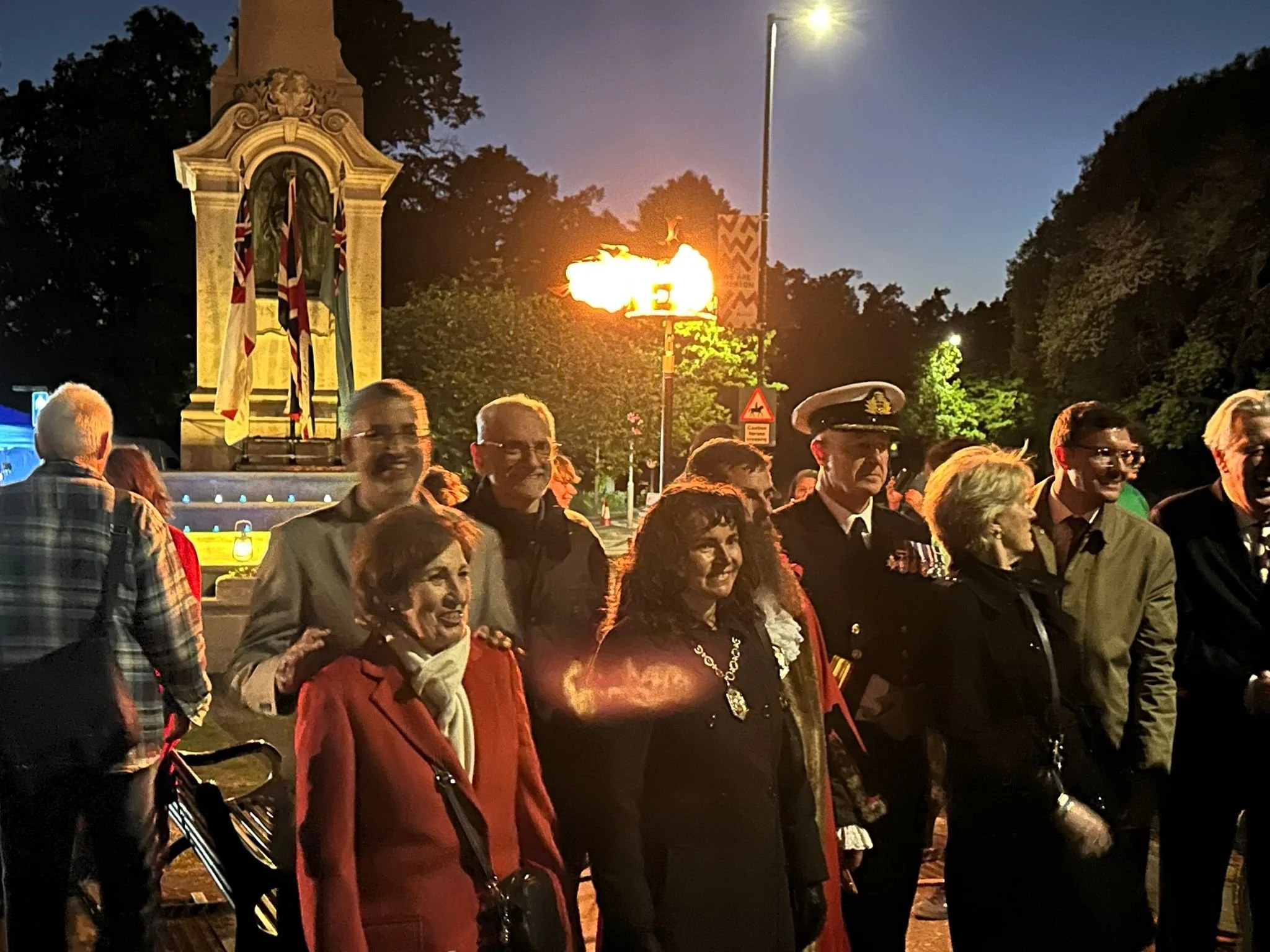
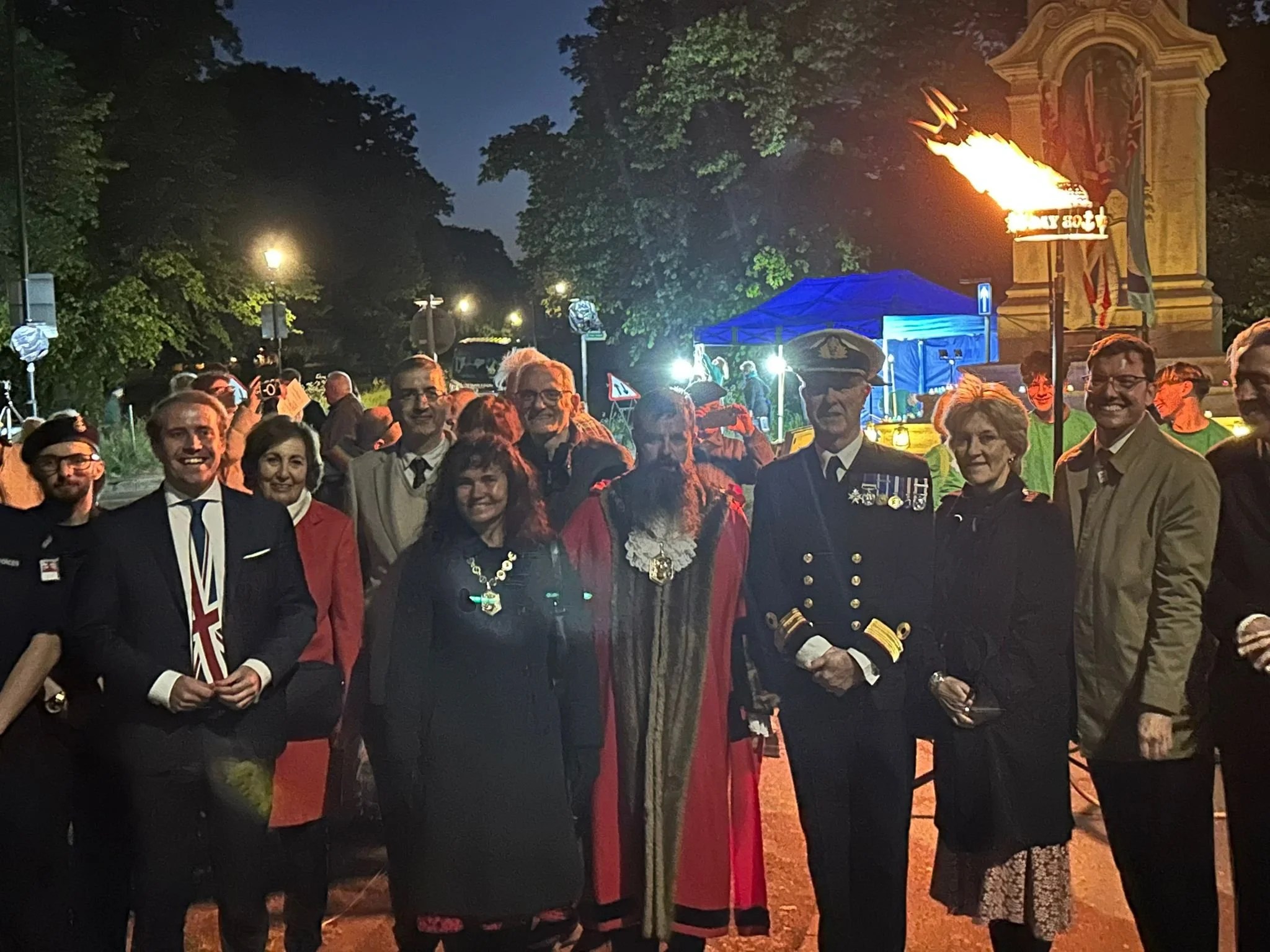
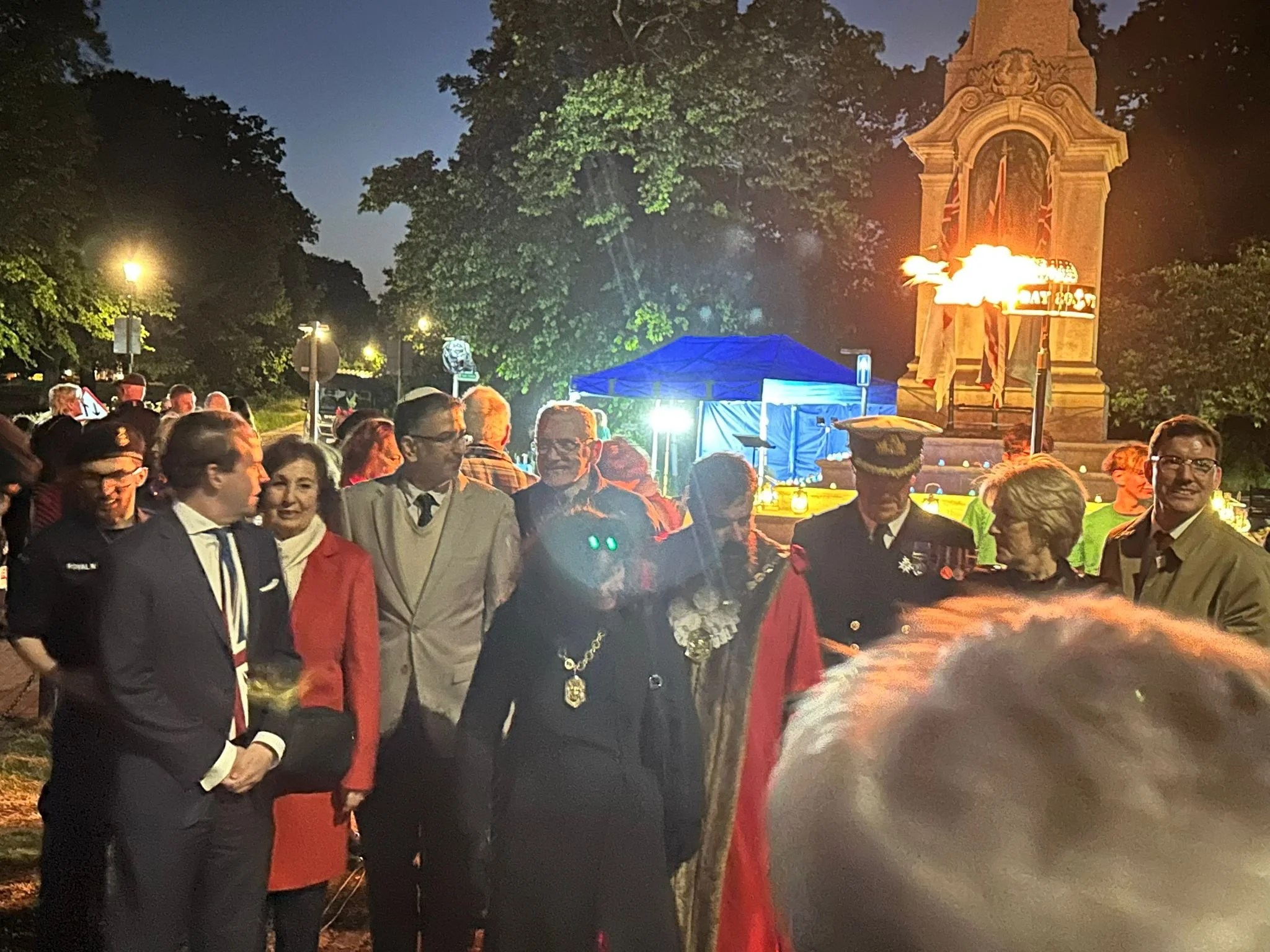
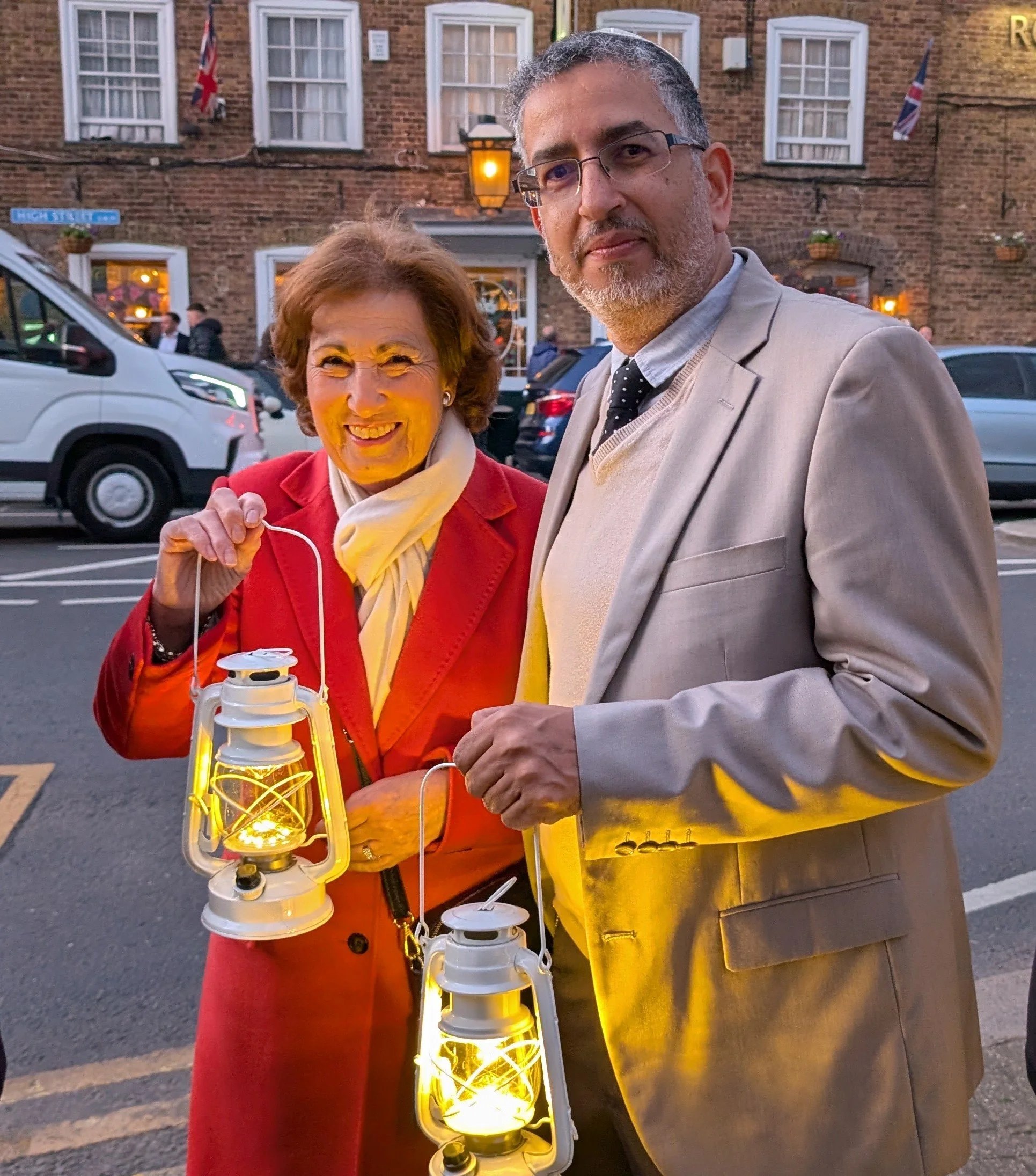
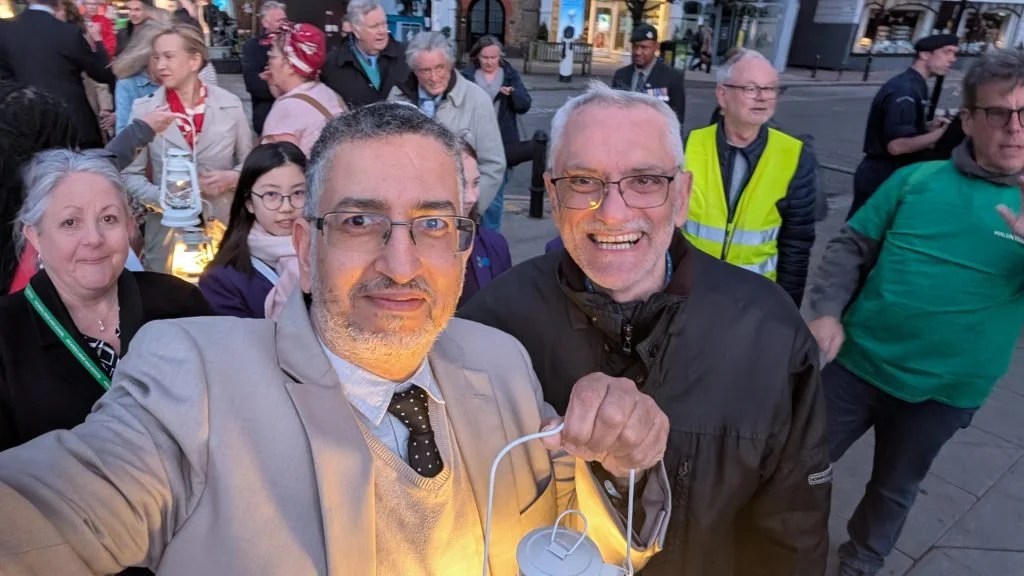
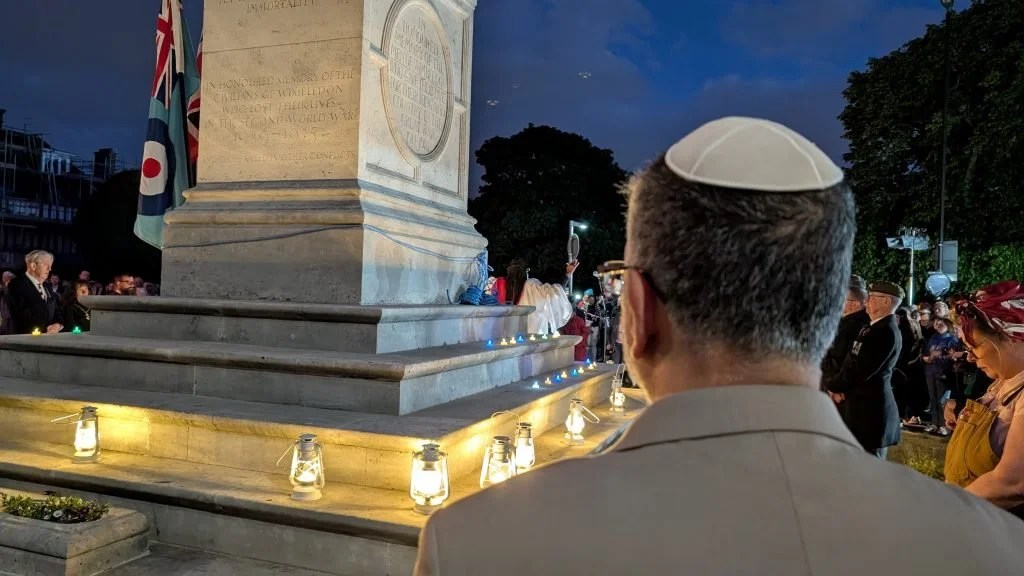
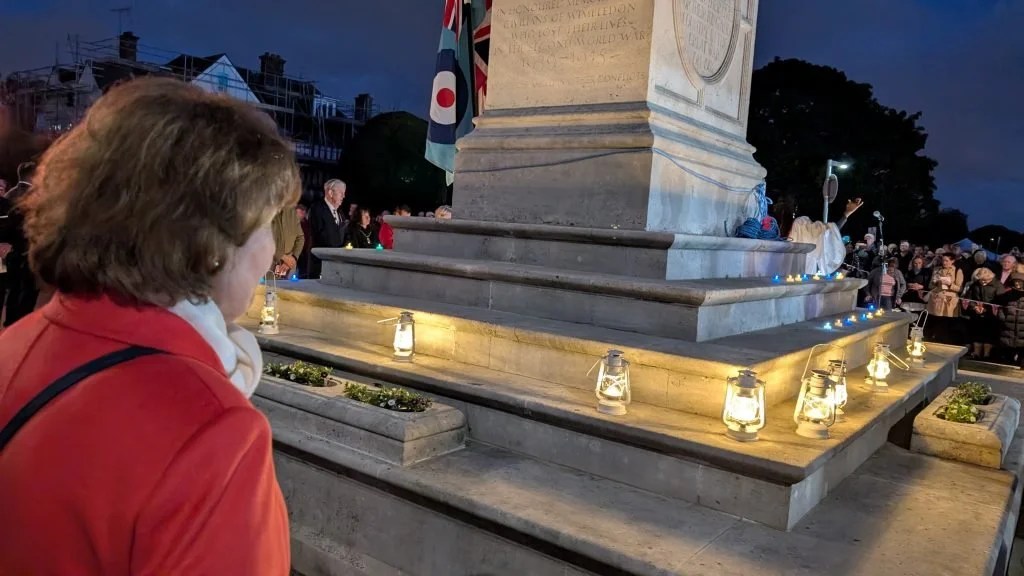
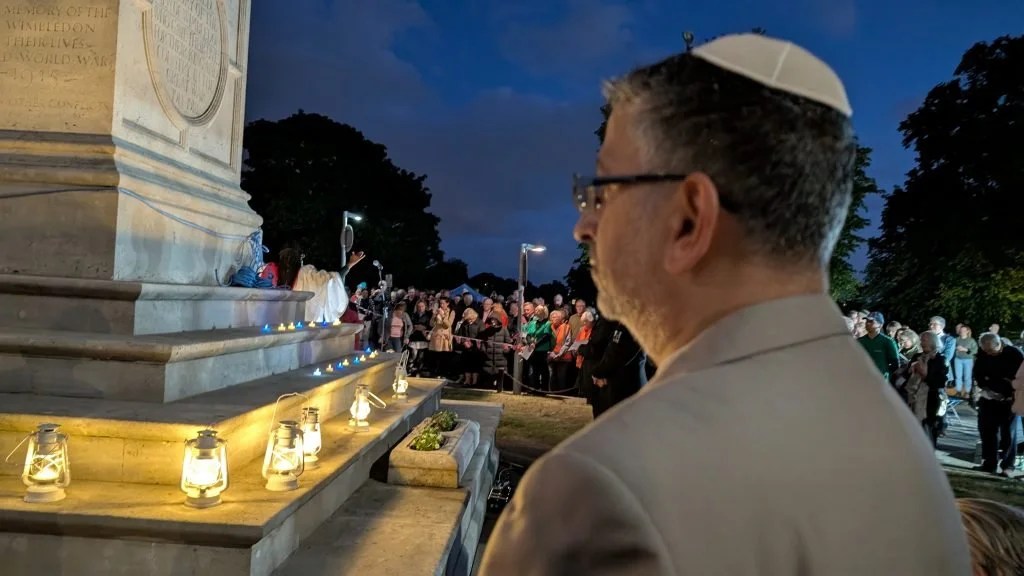
[Pictures: Marking VE80 at the Wimbledon War Memorial on May 8th, 2025]
Perhaps the iconic photographs of celebrations in Trafalgar Square, or soldiers embracing loved ones they feared they might never see again. But as Kenneth Jacobson of the Anti-Defamation League reminds us, alongside those images of jubilation were the heartbreaking photographs of emaciated Jews in concentration camps and the piles of bodies discovered in Nazi death camps.
I remember a conversation I had years ago with a survivor. “When liberation came,” she told me, “I wasn’t dancing. I was numb. I had lost everyone. Freedom meant facing what remained.” Her words stay with me – a crucial reminder that victory came too late for six million of our people.
The Allied military victory undoubtedly saved the world from tyranny. But for European Jewry, it was bittersweet. By D-Day in June 1944, approximately four million Jews had already been murdered. Our people faced what Jacobson calls “the worst possible combination of factors” – a murderous foe committed to our destruction, populations throughout Europe steeped in antisemitism, – American isolationism that gave space for Nazi aggression, and restrictive immigration policies that barred escape.
Everything, it seemed, was working against the Jewish people.
And yet.
In Leviticus 19:2, we read, “You shall be holy, for I, the Lord your God, am holy.” What follows is a remarkable ethical blueprint – instructions about caring for the poor, treating others fairly, loving your neighbour, and welcoming the stranger. In the midst of ritual law comes this profound social vision.
Isn’t that the essence of our response after the Holocaust? From the ashes of destruction, we chose life. From the depths of trauma, we rebuilt.
The survivors’ will to live, the establishment of the State of Israel, the liberation of Soviet Jewry, the flourishing of Jewish communities worldwide – all testify to our commitment to holiness, to creating a better world.
This is what Rabbi Jonathan Sacks called our “defiant hope” – not a naïve optimism, but a determined choice to build even after devastation.
One of the veterans I spoke to recently said something I hope not to forget: “We didn’t just fight against something. We fought for something. For a world where people could live in dignity.”
That idea – that we stand for something, not just against something – echoes through our Torah portion.
Kedoshim tihyu – you shall be holy – is a positive command. Holiness isn’t merely the absence of wrong; it’s the active presence of right.
After the Holocaust, Jews around the world embraced this call to positive action. We didn’t just say “never again” to hatred; we said “yes” to justice, to human dignity, to tikkun olam – repairing our broken world.
Yet today, we face troubling realities. Since October 7th, antisemitism has surged in ways unseen since World War II. The J7 Annual Report on Antisemitism highlights dramatic rises in incidents across seven major countries – Argentina, Australia, Canada, France, Germany, the United Kingdom, and the United States.
Our parasha teaches us that holiness requires vigilance. It demands that we stand up for what’s right, that we speak truth, that we protect the vulnerable.
So what does that mean for us, eight decades after VE Day, as we face new challenges?
First, we must remember. Not just with ritual observance, but with full hearts. We carry the stories of those who perished and those who survived. Their lives, their strength, their silence and their words – all are part of our sacred inheritance.
Second, we must recognise that remembering isn’t enough. Our Torah doesn’t just ask us to recall the past – it commands us to build a just society.
The ethical demands of Kedoshim are not optional; they are the architecture of holiness.
Third, we must find the balance between vigilance and hope. Yes, we must be clear-eyed about the threats we face. But we must also be dreamers, visionaries who look beyond the headlines and see the world as it could be.
There’s a Chasidic teaching most of you know, but which is most appropriate to recall at this moment. Rabbi Simcha Bunim taught that everyone should carry two notes, one in each pocket. One says, “For my sake was the world created.” The other says, “I am but dust and ashes.”
We need both truths – the humility to know our fragility and the confidence to know our worth.
As we mark eighty years since the end of the war in Europe, we stand in that tension – between remembrance and renewal, between grief and determination. The Nazis sought to destroy not just Jewish bodies but Jewish values. Our most powerful response is to live those values more fully.
Kedoshim tihyu – you shall be holy. Not just as individuals, but as a community. Not just in ritual, but in how we treat each other and all humanity. Not just in memory of what was lost, but in service of what can yet be built.
May we honour the past by creating a future worthy of those we remember.
Shabbat Shalom.
This sermon is dedicated to Margot Friedländer, a remarkable woman. May her memory be for a blessing.
I have just returned from a few days away in Germany. It was good, and it was needed. The truth is, Pesach – as joyful and rich as it is – carries with it a weight that few of us acknowledge aloud. It is one of the most intense, demanding seasons in the year of a rabbi, and this year, I could not find the pause I usually give myself after it.
And you know what? I felt it. Deeply. There comes a point when even the sweetest duties can start to scorch. When the fire meant to keep us warm begins to burn the edges of our spirit.
Acharei Mot, the portion we read this Shabbat, returns to the story of Aaron’s two sons, Nadav and Avihu. They were priests. Devoted, passionate, faithful. They entered the sanctuary with their firepans and their incense, longing to draw close to God. And yet, they died. Why? Not because they rebelled. Not because they rejected holiness. They came too close. They were consumed by the very fire they carried.
It is an old and painful truth: sometimes love, untampered, can destroy. Sometimes duty, unchecked, can overwhelm. Even service to God must have boundaries, or it risks becoming a sacrifice God never asked for. The Torah teaches us again and again the wisdom of limits. Shabbat itself is a boundary: six days you shall labour, and on the seventh, you shall rest. The High Priest, in the ritual of Yom Kippur, was commanded to draw near to God – but only once a year, and only after long, careful preparation. Even Moses, for all his closeness, was told: “You shall see My back, but My face shall not be seen.”
Holiness, it seems, requires not only passion but distance. Not only yearning but patience.
It is so easy to forget this. There is always one more task to do, one more visit to make, one more responsibility to shoulder. We tell ourselves we are needed. We tell ourselves it is good. And it is good. But it is not good if it costs us the sacred flame within.
There is a midrash that teaches: “The priests were not allowed to enter the Sanctuary barefoot.” Even the holiest ones needed a layer of protection between themselves and the ground of awe. Maybe today, we need to hear that teaching again.
Maybe the courage to search for holiness includes the courage to rest. Maybe stepping back, breathing deeply, is itself a kind of prayer. A way of saying: “I am not the fire. I am not the sacrifice. I am a vessel, and vessels need filling.”
This Shabbat, we find ourselves at a crossroads of deep reflection and joyful celebration. The Torah portions of Tazria and Metzora speak about illness, healing, isolation, and return. They tell of individuals who are cast out of the community because of tsara’at, not as punishment, but as a way to heal. And when they are made whole again, they are welcomed back with ceremony, with blessing, with love.
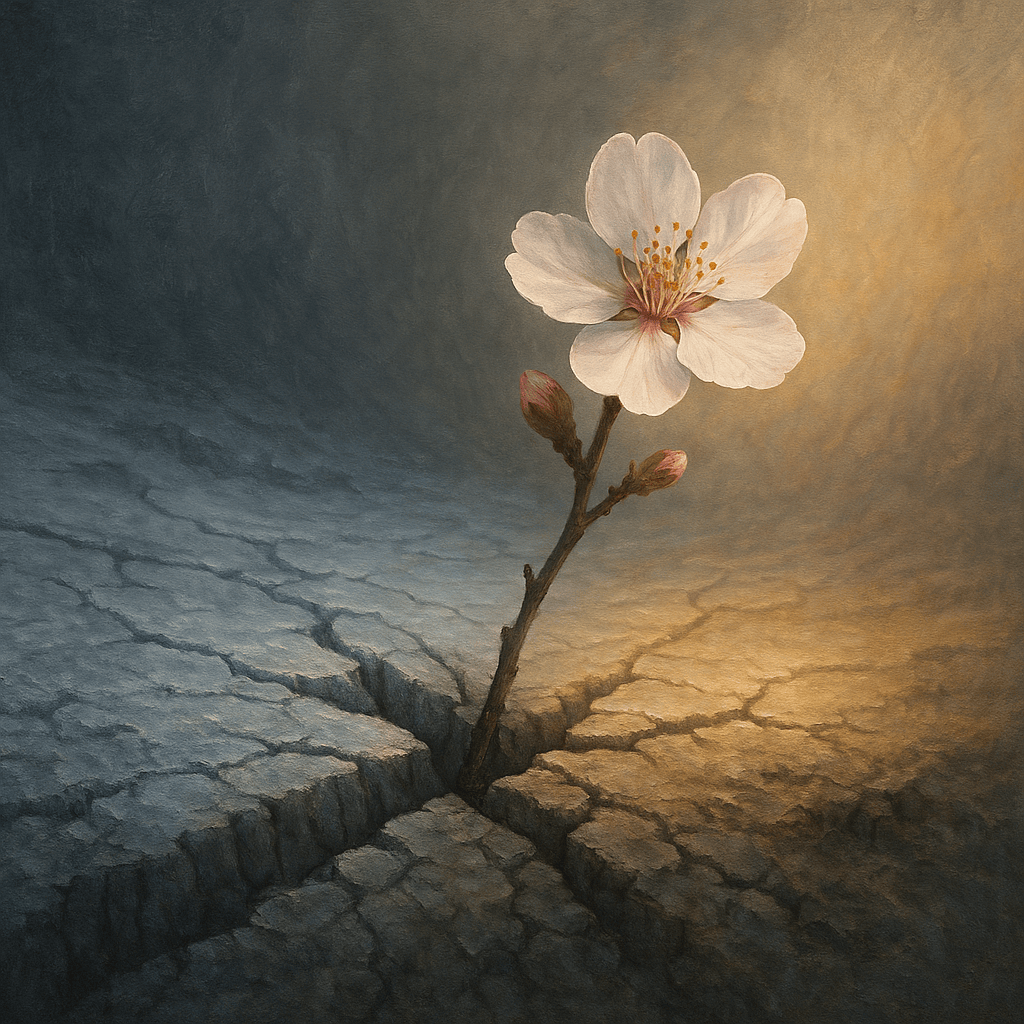
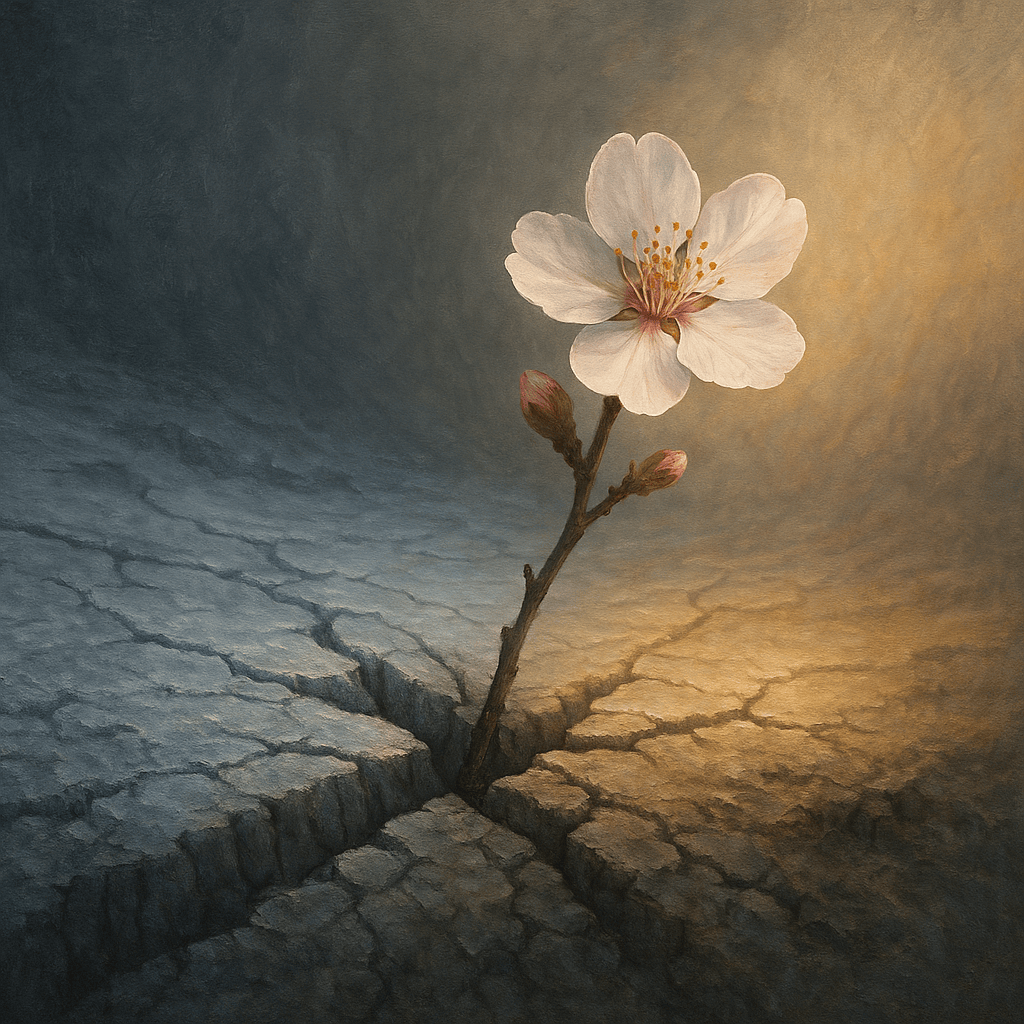
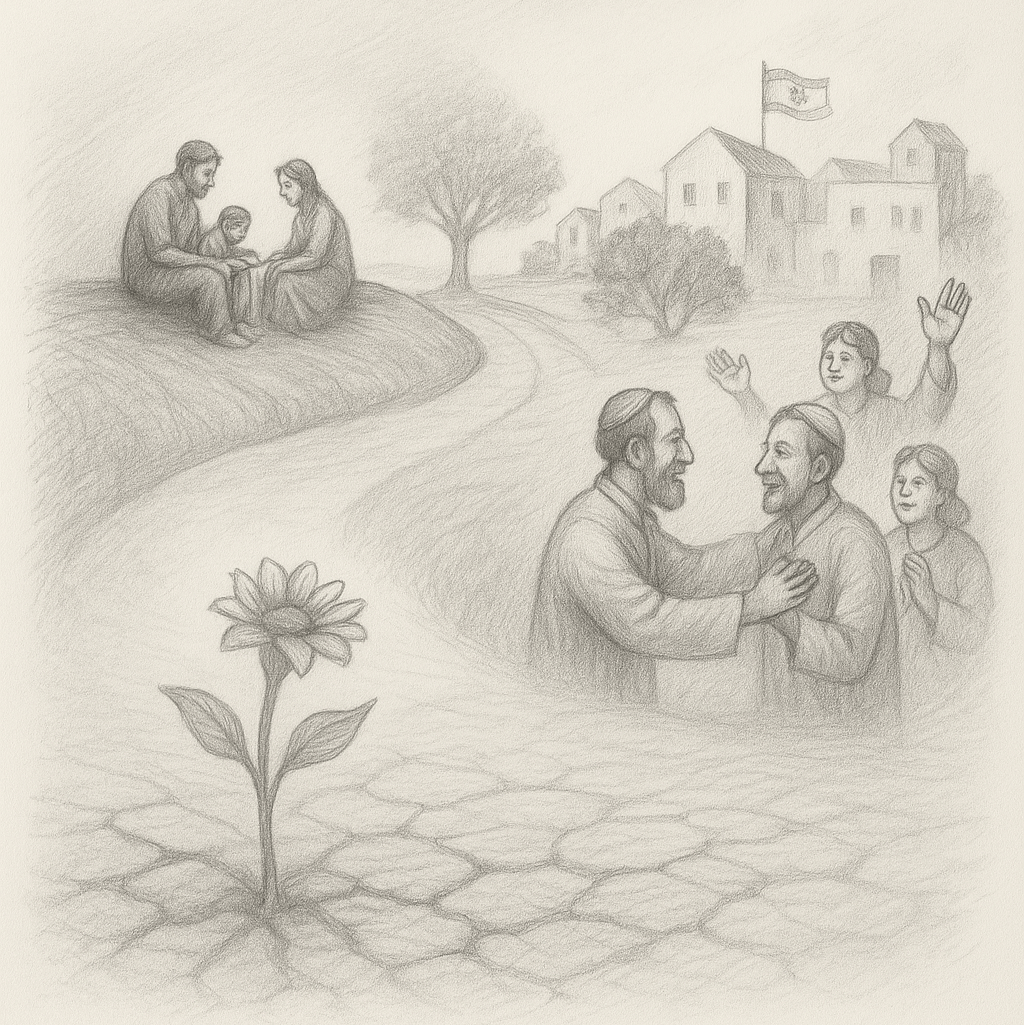
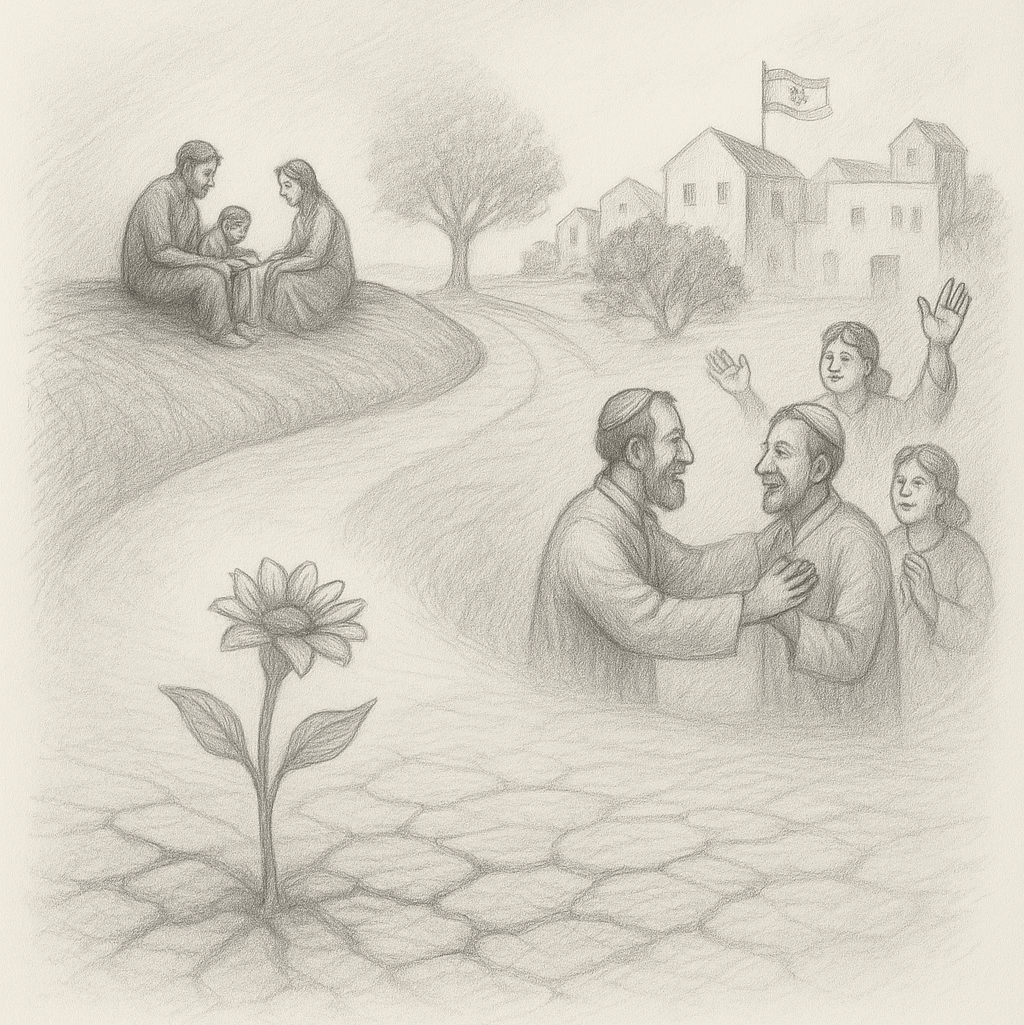
What a powerful image for Shabbat Atzma’ut, as we celebrate the rebirth of the modern State of Israel. Israel, too, was born from a place of wounds — centuries of exile, suffering, and yearning. The soil was dry and hard; the hands that planted were trembling with fear and hope. Yet out of that fragile earth, a home blossomed. A place where a people could once again stand in dignity.
Tazria reminds us that even the act of creating new life is not simple. It carries the weight of vulnerability and the promise of renewal. So, too, Israel’s creation was no simple triumph; it was a courageous leap of faith, stitched together with dreams, sweat, and sacrifice.
In Metzora, we see that healing is a process — a return that requires careful attention, a ritual of restoration. Israel’s story continues to be a story of healing: building a society that holds together many different voices, many scars, many hopes.
On this Shabbat, we give thanks not only for what has been achieved, but for the spirit that never gave up. We remember that independence is not a static gift; it is something we must nurture daily — just as we tend our own souls after times of distance or pain.
May we, like Israel, never forget the beauty that can arise from fragile soil. And may we commit ourselves anew to building a world of compassion, justice, and peace — in our Land, in our lives, and in all the places where healing is needed.
On the Seventh Day of Pesach, when the festival meets Shabbat and memory meets hope, Rabbi Adrian M. Schell offers a tender reflection from the edge of the sea—both literal and spiritual.
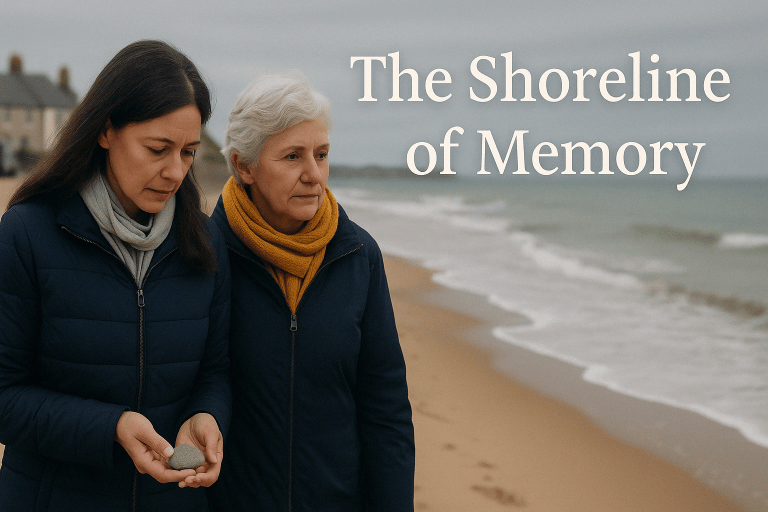
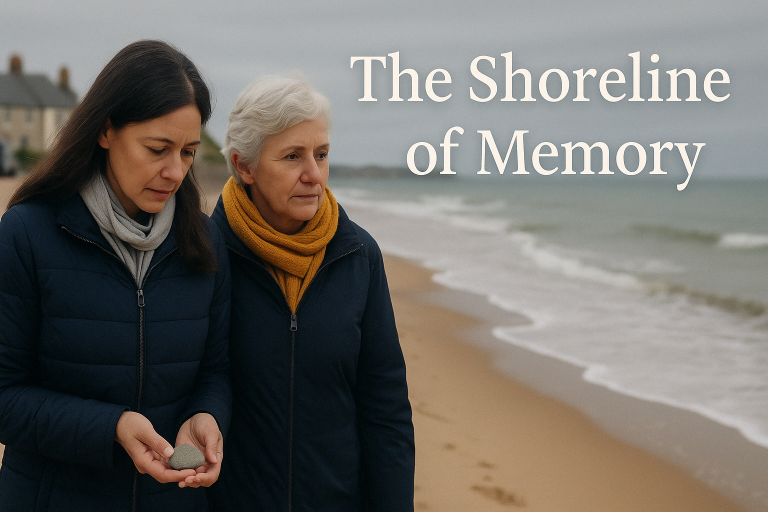
In this sermon, we walk alongside Barbara and Batya on a quiet English beach, gathering pebbles of memory and learning how even the most fragile moments can carry us. Through the Song of the Sea (Shirat HaYam) and King David’s haunting psalm in the Haftarah, we encounter a truth that lingers: transformation comes not in thunderclaps, but in song—in voices raised while still trembling.
We are invited to hold grief and gratitude like two old friends walking side by side. This sermon is a song for all of us who stand at the edge of what was and what might be—singing, remembering, and taking the next step forward.