Author: Rabbi Schell

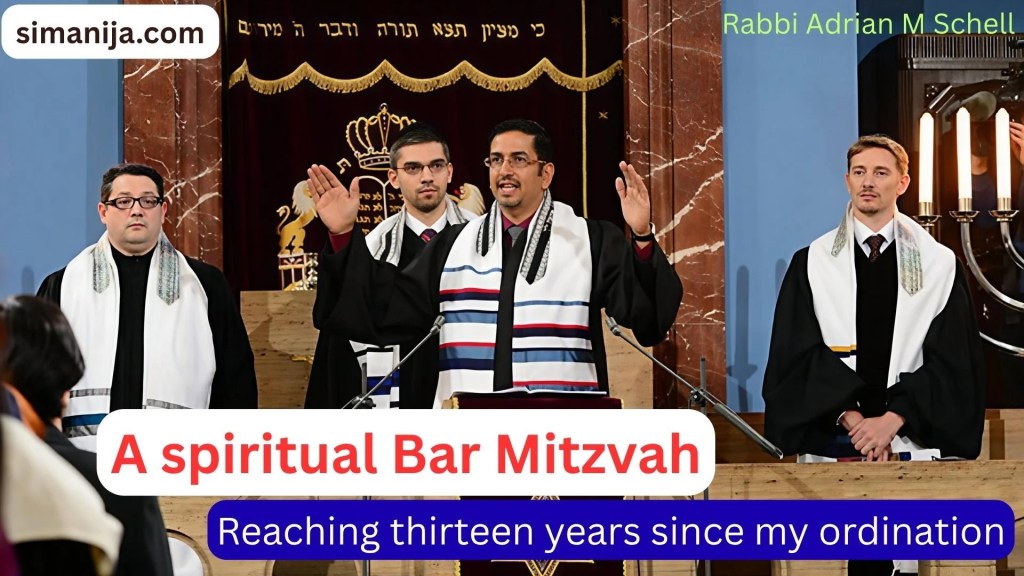
  • A spiritual Bar Mitzvah

    A spiritual Bar Mitzvah

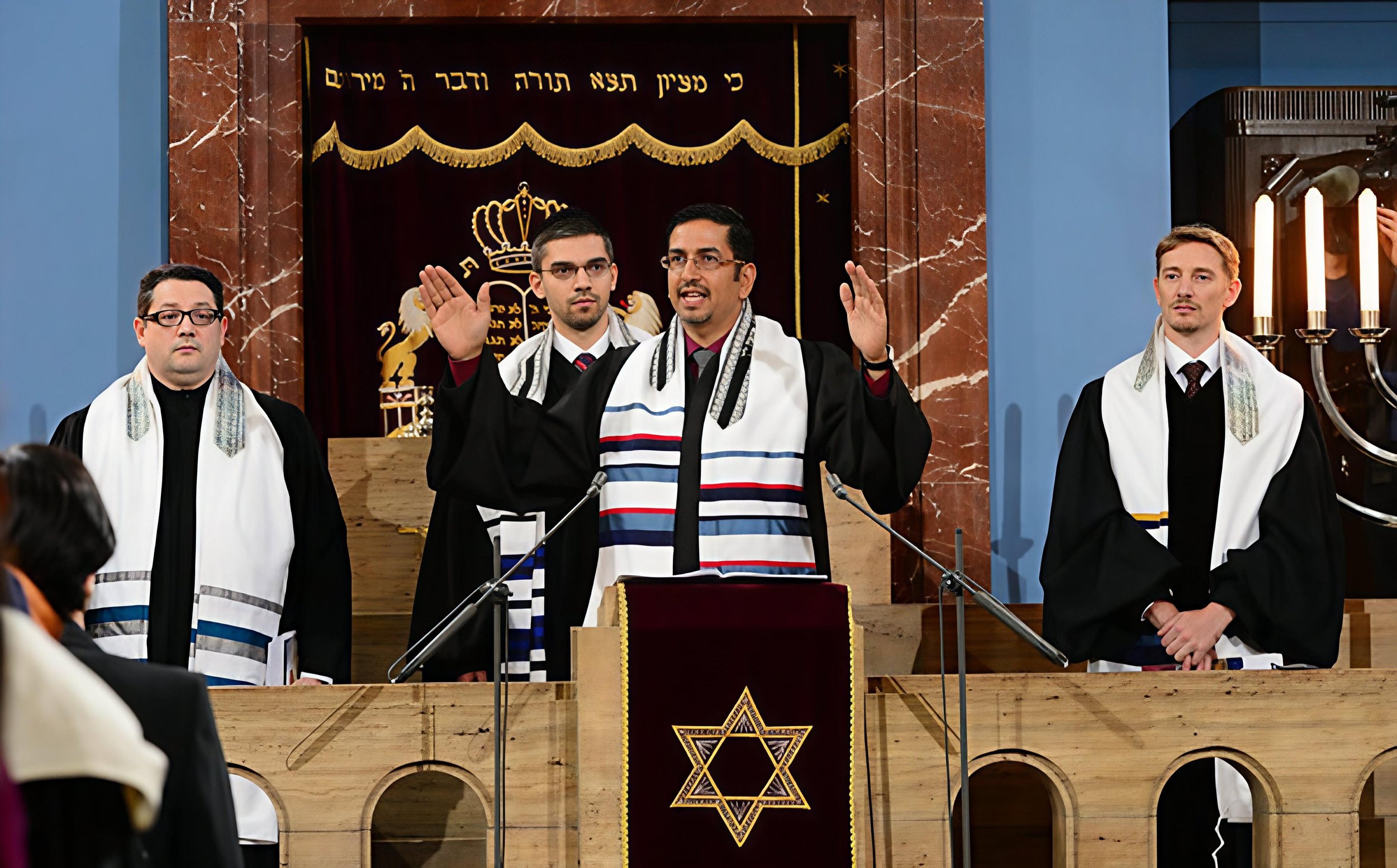
    Reaching thirteen years since my ordination

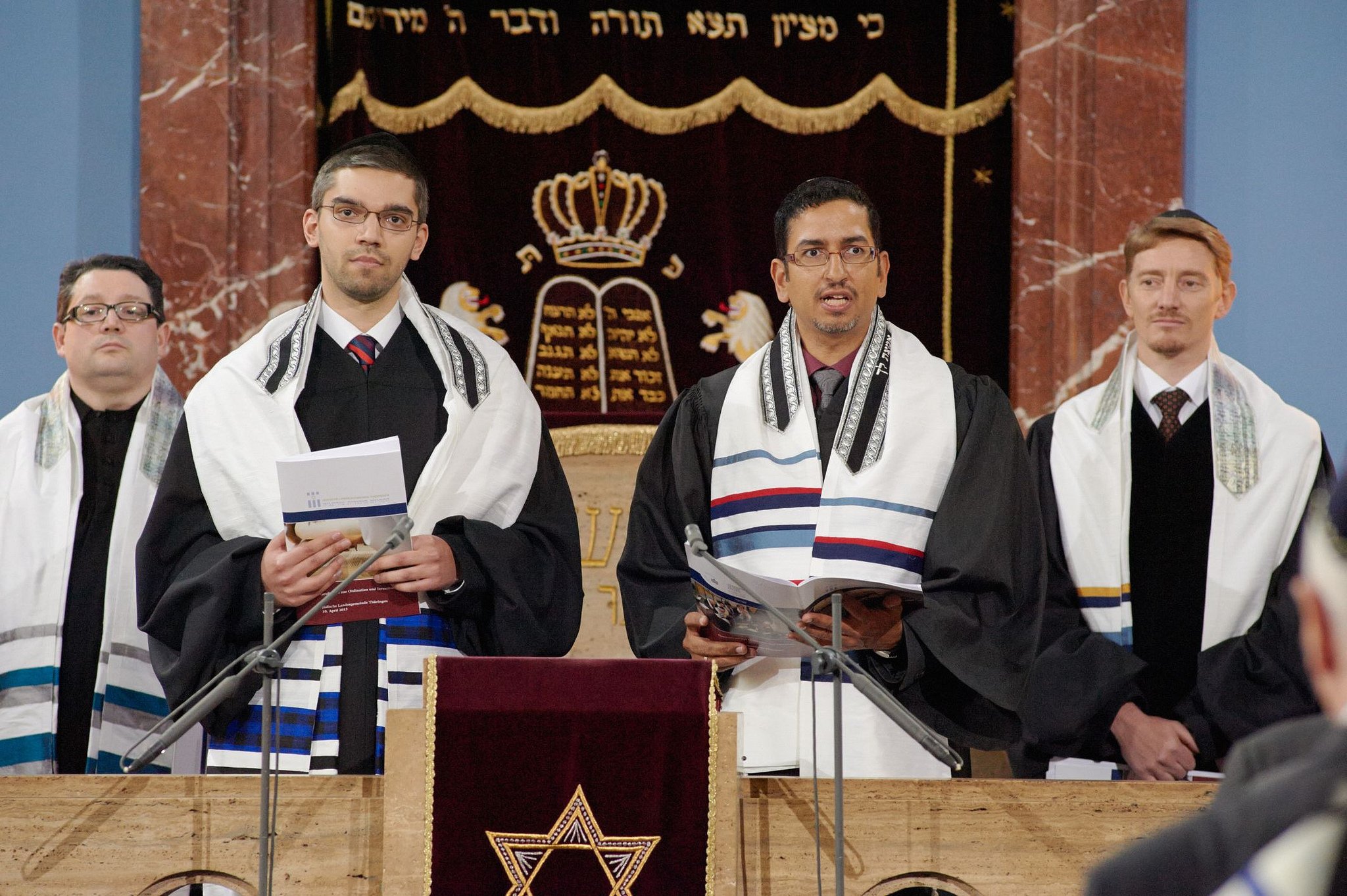
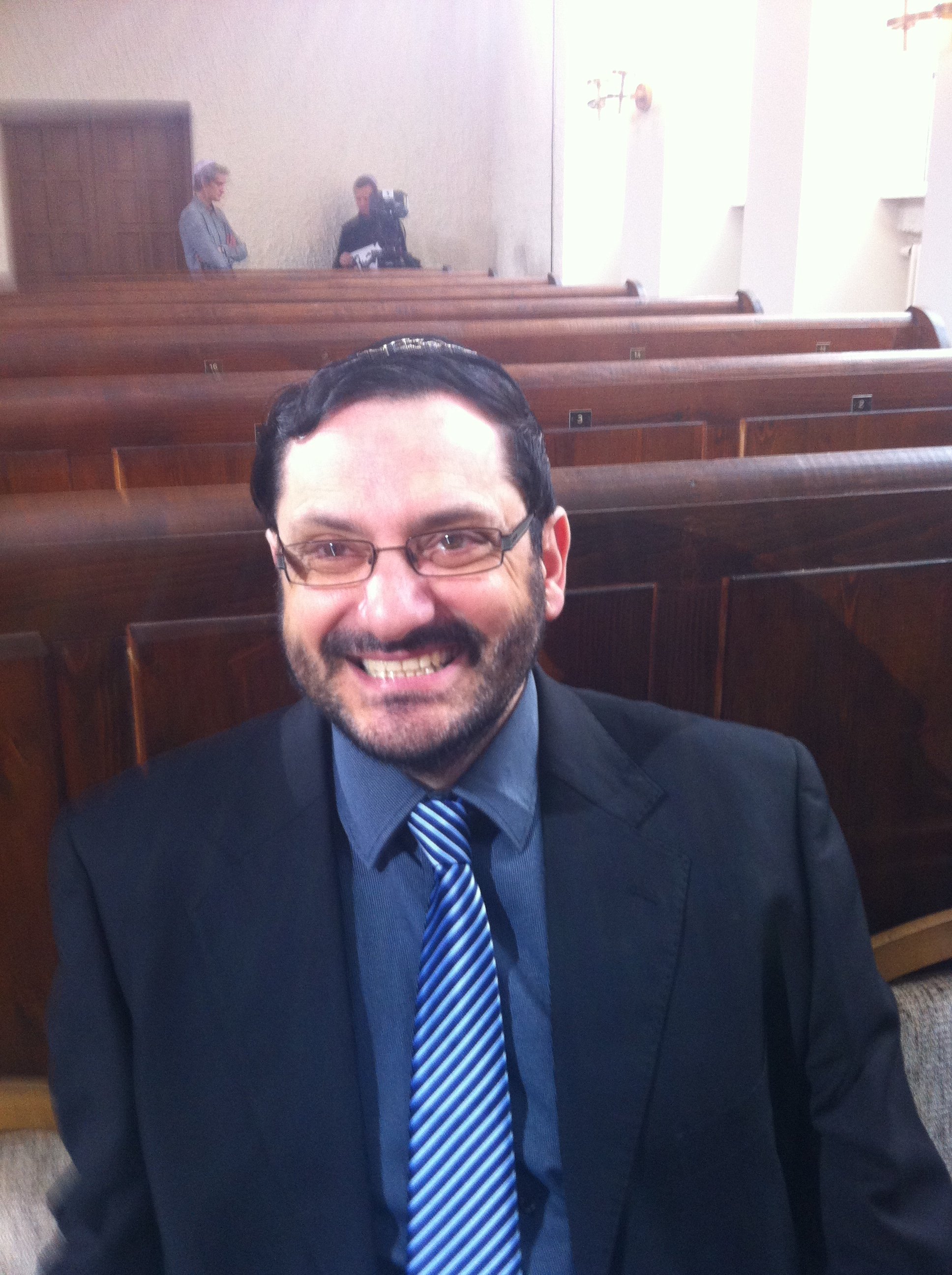
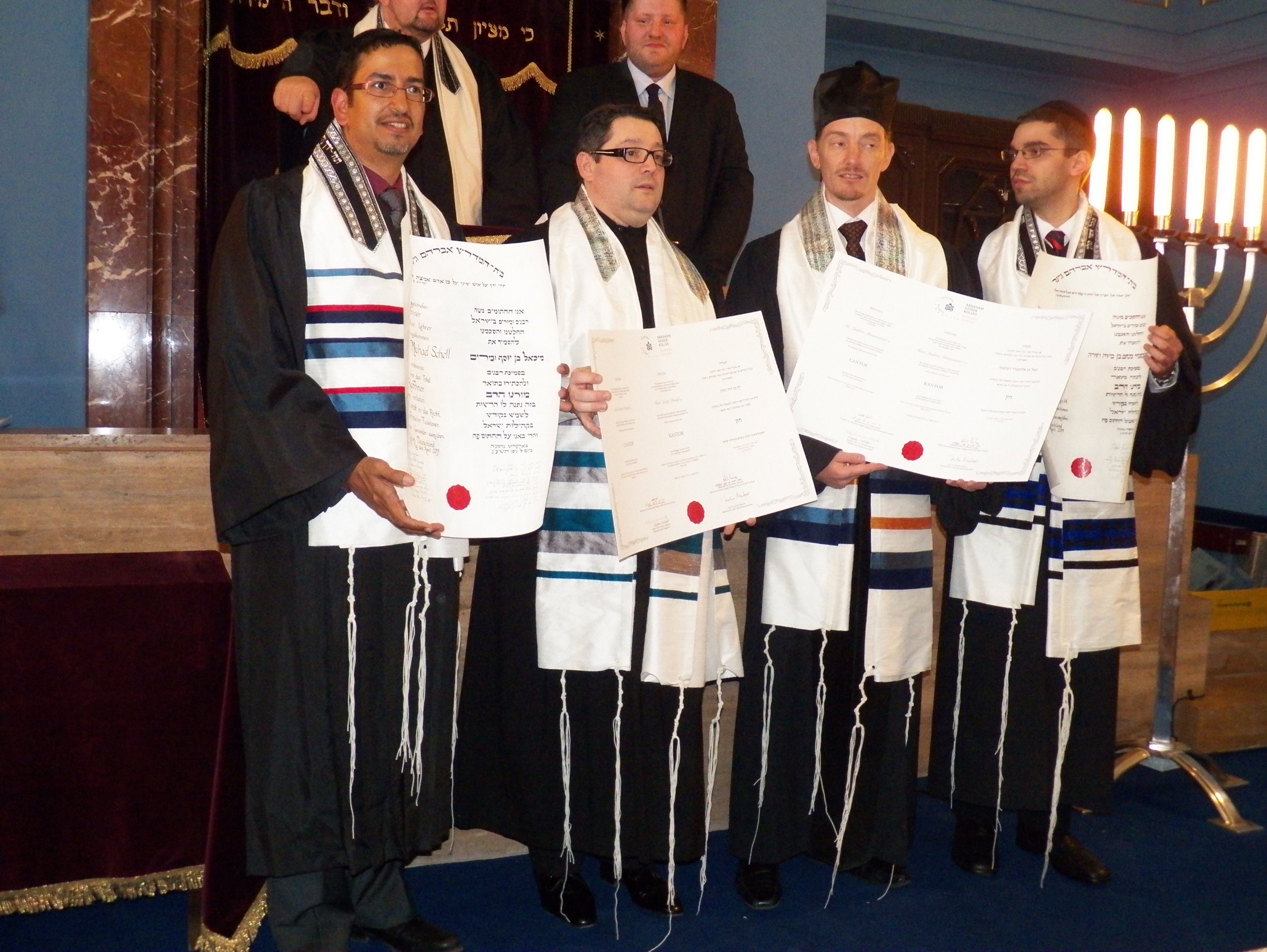
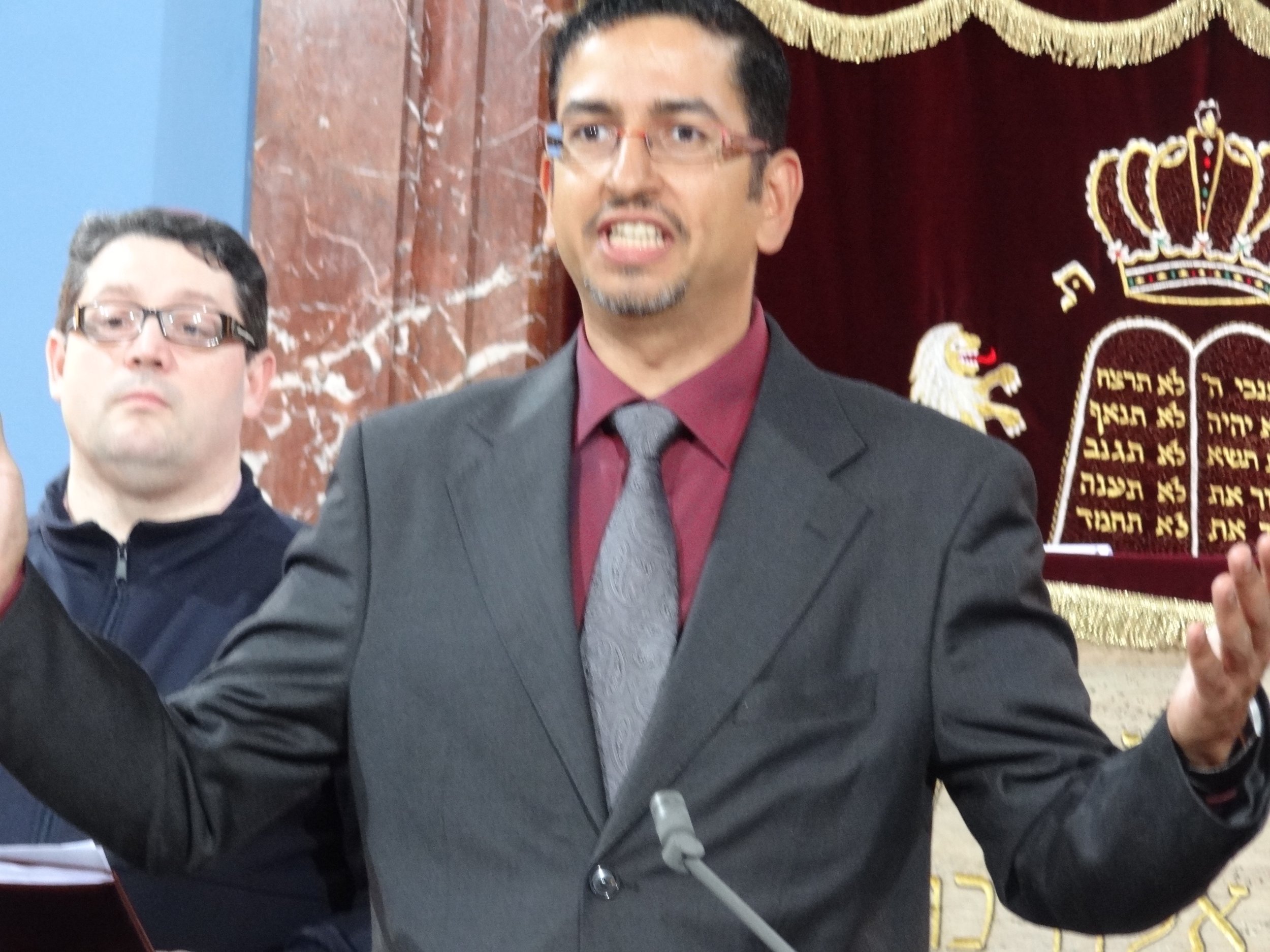
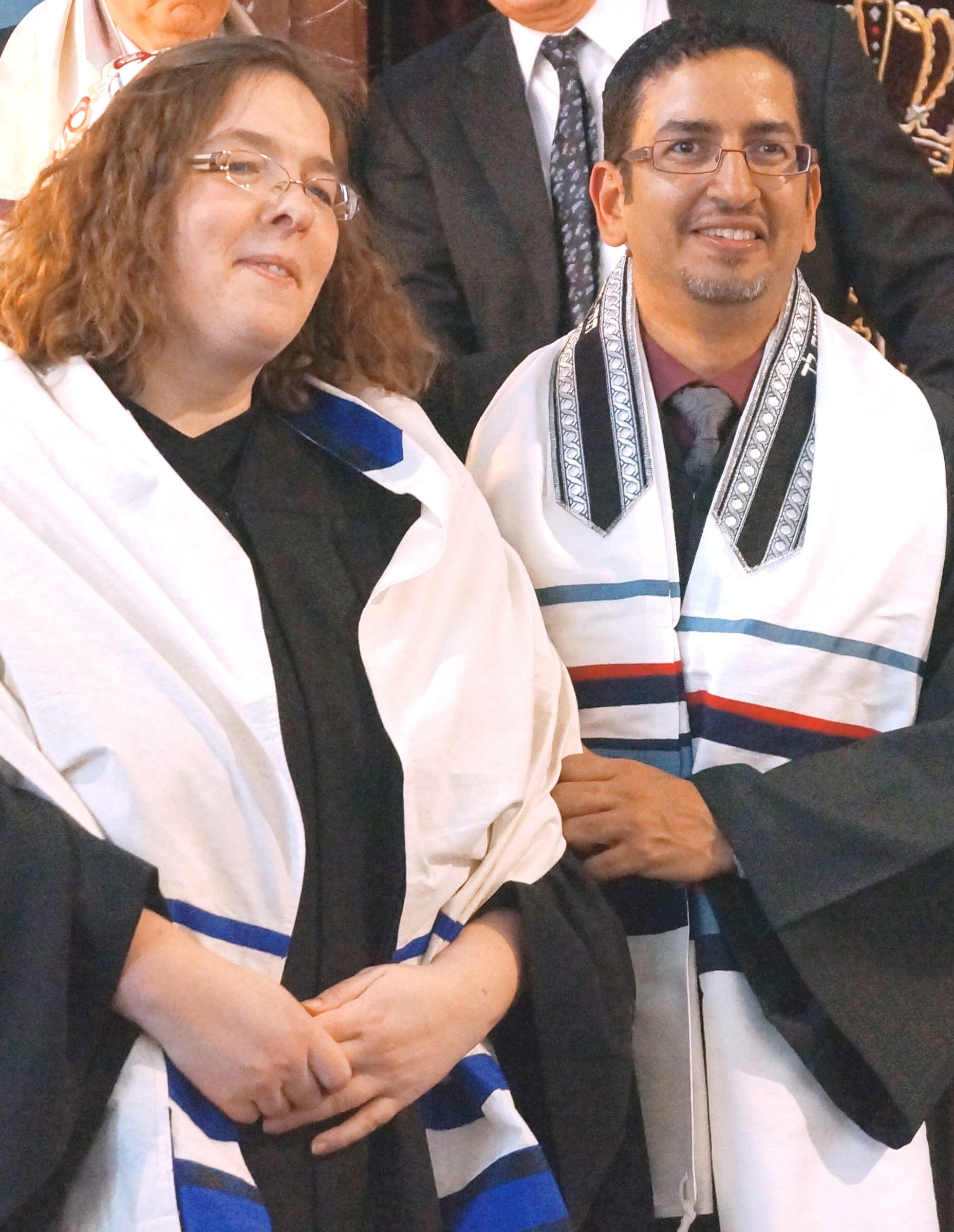
     The late Nikola David, Alexander Nachama, and Isidoro Abramowicz
    The late Nikola David, Alexander Nachama, and Isidoro Abramowicz

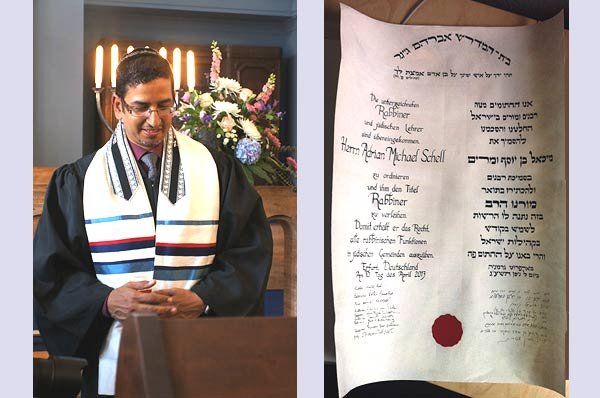
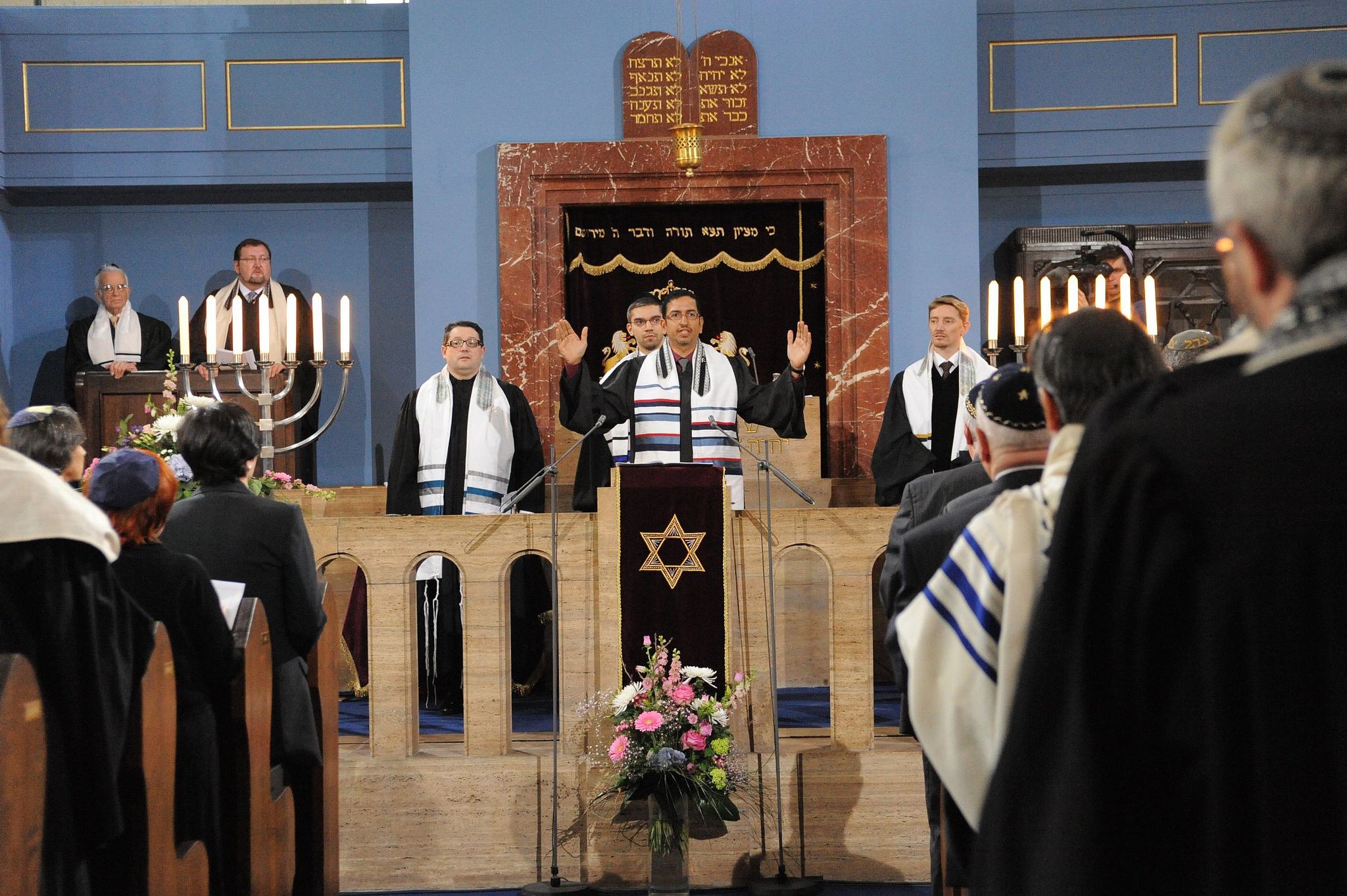
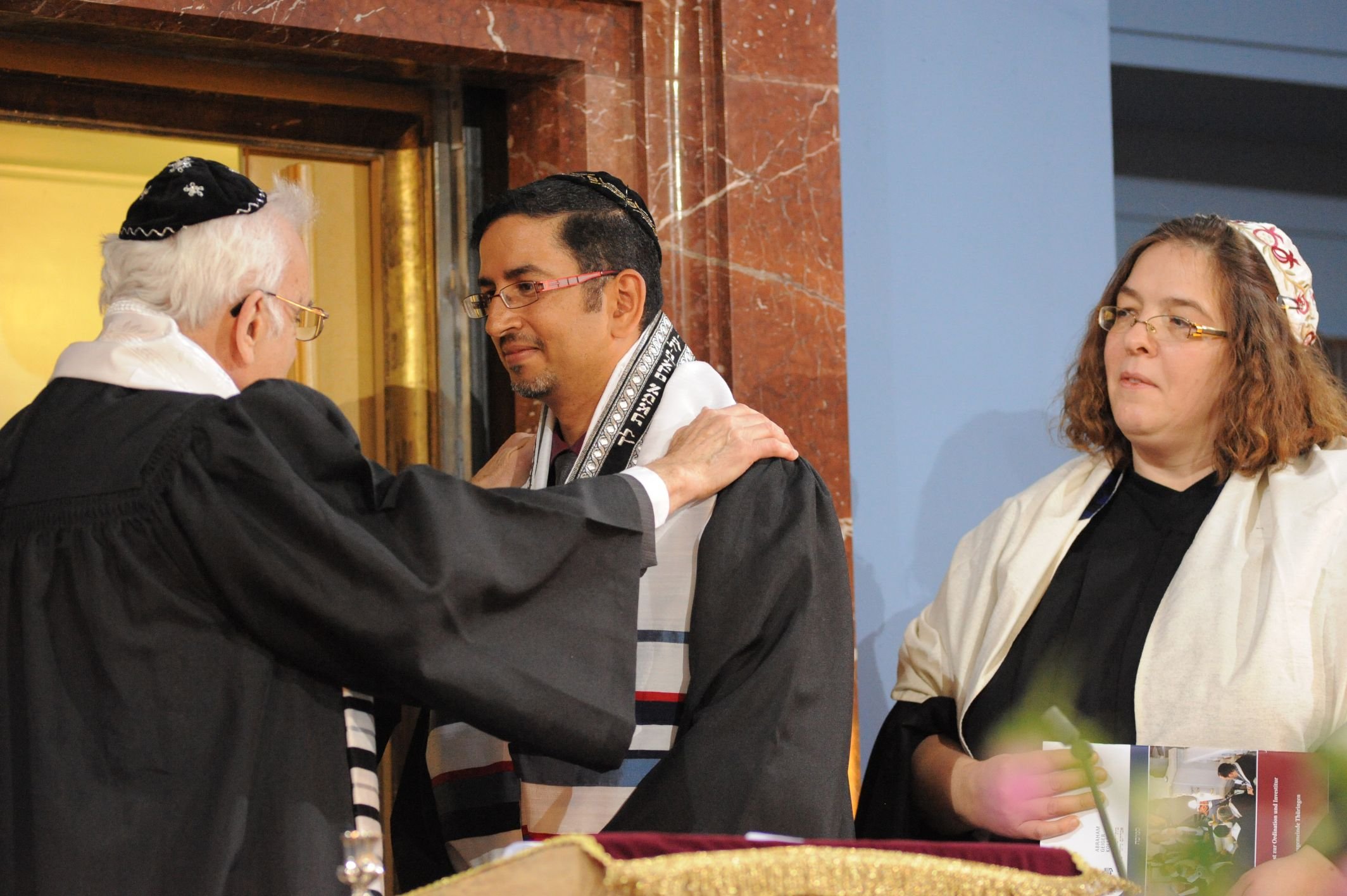
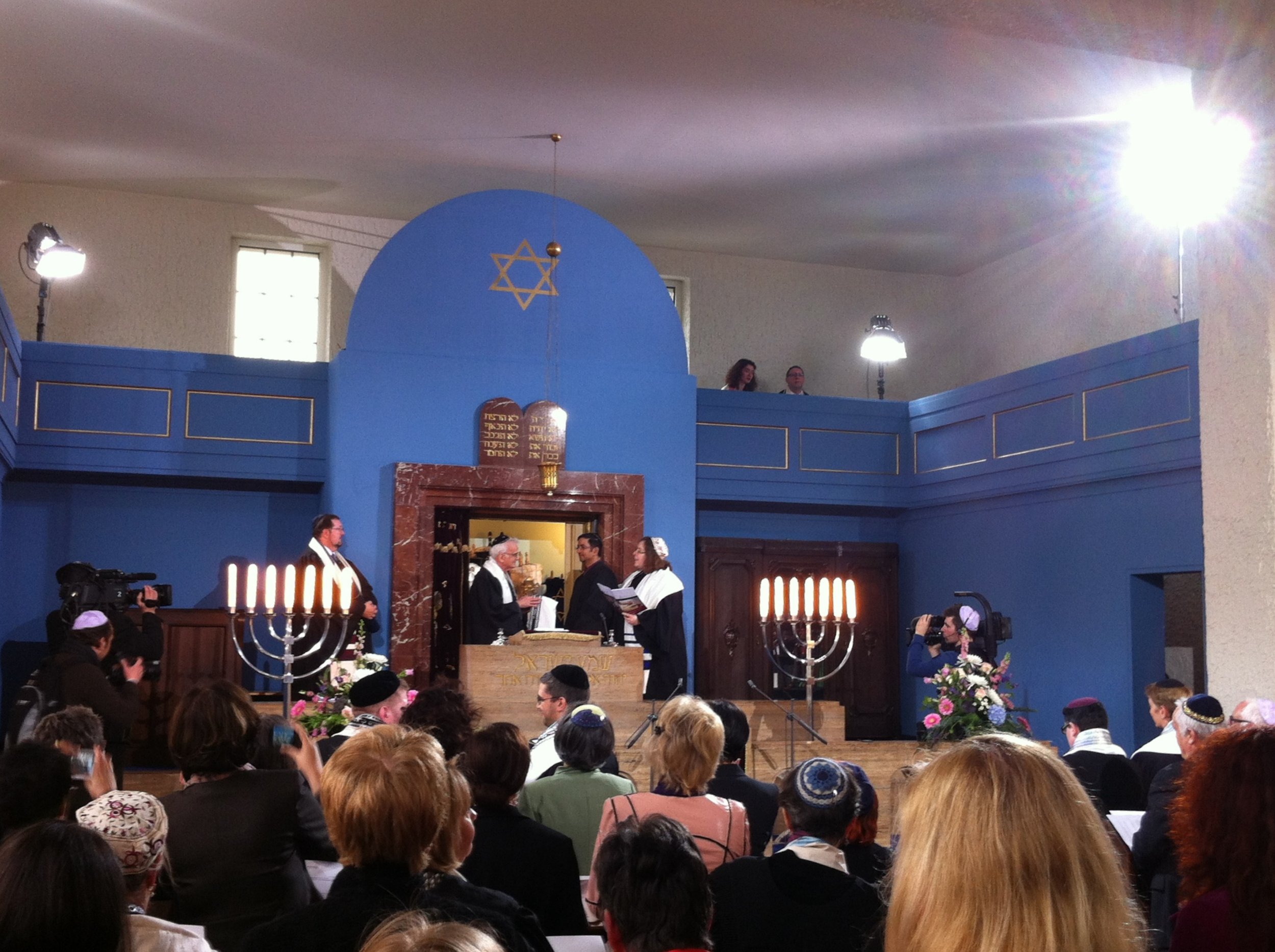
    Thirteen years ago today, on 10 April, I stood with my colleagues to begin a journey that has defined my life in ways I could never have fully imagined. This milestone feels particularly poignant because, in our tradition, the number thirteen represents a transition into a new stage of responsibility and maturity.

    Reaching thirteen years since my Smicha (Ordination) feels like a spiritual Bar Mitzvah. It raises the playful question: does this mean I am now finally an “adult” Rabbi? Perhaps it suggests that the initial years of learning and discovery have matured into a deeper, more settled understanding of what it means to serve a community. While the learning never truly ends, there is a distinct sense of pride in having reached this stage of my vocation.

    The ceremony remains vivid in my memory. I feel a deep sense of gratitude for those who guided me at the start:

    Rabbi Prof. Dr. Walter Jacobs: I remain deeply honoured to have been ordained by him. His legacy continues to influence my work every day.

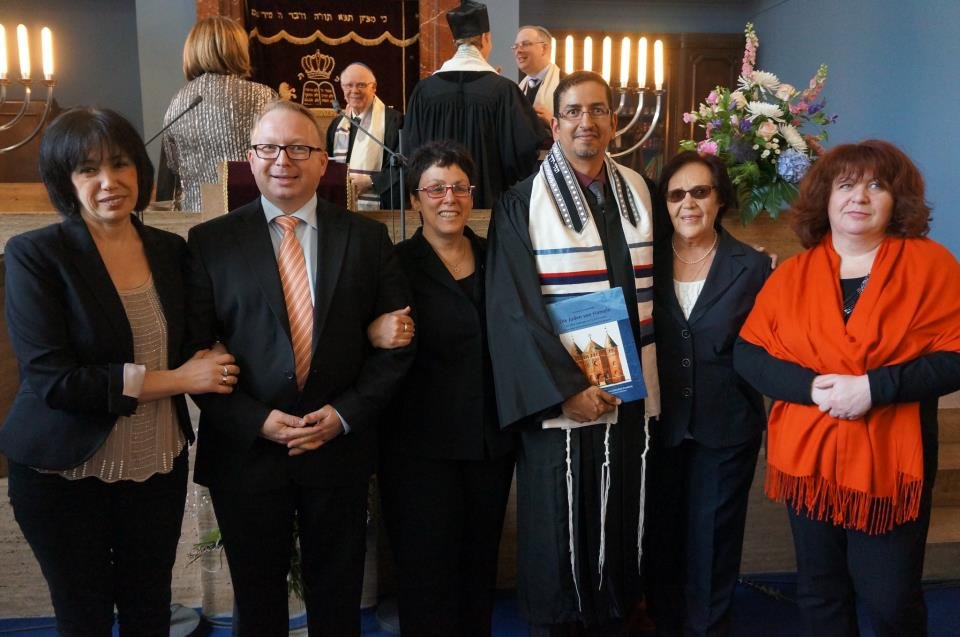
    Rabbi Gesa Ederberg: I am thankful for her presence and for the way she presented me to the community.

    My Cohort: Sharing that day with Alexander Nachama, Isidoro Abramowicz, and the late Nikola David was a gift. We started our paths together, and I carry those shared memories with me.

    My husband and best friend Chayim Schell: no words can describe how grateful I am for his support and love.

    My path has taken us across various borders and through many different communities since that day. I have travelled quite a distance, both physically and spiritually, yet the core of my commitment remains unchanged. Choosing this path was one of the most significant decisions of my life, and I look back on it with a sense of quiet joy and optimism.

    The Eternal has a way of leading us exactly where we need to be. I am grateful for every person I have met, every lesson I have learned, and every challenge that has helped me grow. Here is to the next thirteen years of service, community, and shared growth.

  • Being Alive is Reason Enough

    Being Alive is Reason Enough

    Choosing Joy in a Broken World

    Every year, on the 7th day of Pesach (Passover), we re-read the Shirat HaYam (Song at the Sea). If we take the invitation from our sederim (Passover meals) literally, then, as our ancestors sang this song with great joy, we should celebrate the liberation and praise God, too. However, a genuine question arises this year, as in the past years too: Should we really break out into joy?”

     Conflict rages between Israel and the Hezbollah in Lebanon and directly with Iran. Families across the UK are quietly suffocating under a cost-of-living crisis that refuses to break. Not to forget the war in Ukraine.

     There is a sharp contrast between the stories of deliverance we shared around our seder tables and the harsh realities waiting for us outside

     Our ancestors have crossed the waters. Pharaoh’s power is finally broken. Yet their trauma remains entirely unhealed and the future is utterly blank. They have nothing but the wet sand beneath their feet and the air in their lungs. Look closely at how the song begins. It offers no strategic analysis of the desert ahead. It bursts forth with relief and astonishment. Moses declares his intention to sing, not because every problem is resolved, but because life itself demands a voice.

     Rashi notices a grammatical oddity in the opening verse. The Hebrew reads Az yashir Moshe, meaning Moses will sing. We might logically expect the past tense. Yet, Rashi understands the future tense as capturing the precise moment the intention arose in Moses’ heart, just before it reached his lips.

      Joy begins not as a sound but as a quiet, internal decision. A human being looks at what has been preserved and chooses to mark the moment.

      Life trains us to ask hard questions. We are skilled at complicating what is good, at asking what price was paid and who is left behind. We spill drops of wine at the Seder precisely because we carry the suffering of others inside our own joy. Yet the Song of the Sea suggests a different spiritual discipline. Sometimes the soul needs the willingness to celebrate deliverance before returning to moral accounting.

     Breathing in the reality of living is not an act of cruelty. It is absolute fidelity to the truth of a fragile moment.

     Our ancestors could not be expected to carry the whole world in their arms at the precise instant they emerged from the sea. They were not denying the suffering happening elsewhere. They were claiming their personhood.

     The great twentieth-century thinker Rabbi Joseph Soloveitchik observed a profound difference between the mind of a slave and the mind of a free person. A slave cannot sing. A slave possesses no ownership of time, no relationship with a personal past, no capacity to imagine a future. Singing requires breath, rhythm, and memory. It asserts human dignity. The Israelites freed their bodies by crossing the water. The song freed something far deeper.

     Relentless news cycles press down on us today. The modern equivalent of a slave mentality is often our inability to step outside the stream of crisis long enough to notice the sheer miracle of our existence.

     Abraham Joshua Heschel taught that faith does not spring out of nothing. It comes with the discovery of the holy dimension of our existence. He called us to live in a state of radical amazement, reminding us that faith means to hold small things great, to take light matters seriously, to distinguish the common and the passing from the aspect of the lasting.

     Radical amazement means refusing to treat life as a given. It means looking at a warm spring morning and being staggered by its beauty.

     It means sitting with family around a Seder table, or standing beside friends in the synagogue, and recognising the breath in our lungs as a profound gift. Survival is only the baseline of the Exodus story. Judaism calls us to thrive, to find deep joy in community and in the faces of those we love. We must feel genuine pride that a Jewish state exists, capable of defending its people, while simultaneously holding our loved ones close and revelling in the safety of our homes.

     Ordinary moments of connection are the true substance of liberation. To ignore them because the world is broken is to surrender to the darkness. We need each other’s shoulders, the shoulders of the Jewish past and the Jewish present, a siddur and a kehillah, a prayer book and a community, to give us spiritual strength.

     Our faith, our voices, and our presence help one another to climb out of despair.

     Pausing to rejoice can feel deeply uncomfortable. We are accustomed to holding grief and gratitude in the same hand. Sometimes the most faithful response is not to explain or compare.

      Sometimes we simply need to say we lived, we crossed, we are still here to hold one another. A celebration like this is morally serious. It honours the community that endures. A people unable to rejoice in its own life gradually loses the language it will need for courage when the next trial arrives.

     The song gives sacred form to the first breath drawn after fear. Let us give ourselves permission to be a singing people. Life itself is the most honest thing we can celebrate.

     Chag Sameach

    Sources:
    Rashi, Commentary on Exodus 15:1.
    Soloveitchik, J.B. (2006) Festival of Freedom: Essays on Pesah and the Haggadah. Jersey City: KTAV Publishing House.
    Heschel, A.J. (1955) God in Search of Man: A Philosophy of Judaism. New York: Farrar, Straus and Cudahy.

  • Love, Justice, and the Soul of Israel

    Love, Justice, and the Soul of Israel

    The Spiritual Stakes of the Kotel and Death Penalty Bills

    https://youtu.be/7D7_zyiT0Vg

    Rabbi Adrian Schell, of Wimbledon Synagogue, shares a profound reflection for Pesach Chol HaMoed. He explores the intersection of sacred tradition and the modern moral challenges currently facing the State of Israel.

    By looking at the texts of Deuteronomy Chapter 10 and Shir HaShirim [Song of Songs], Rabbi Adrian argues that true liberation is not merely a memory, but a lived responsibility. Rabbi Adrian addresses the proposed Kotel bill and the movement toward a death penalty, suggesting these legislative efforts are spiritual tests of Jewish power.

    The sermon highlights how loving Israel involves honesty and the courage to speak when laws threaten human dignity or narrow the public soul. He calls for a Judaism that identifies with the vulnerable and makes room for all who seek to pray at our holiest sites.

    The message invites us to move beyond simple pity toward true identification with the stranger, recognising our own history in those who stand at the edges of our systems. Love, as depicted in the Song of Songs, is an active force that must leave the sealed room to enter the world.

    爱、正义与以色列的灵魂

    艾德里安·谢尔 [Adrian Schell] 拉比在这篇逾越节 [Pesach (Passover)] 讲道中,反思了以色列灵魂所面临的道德考验 。他结合《申命记》[Deuteronomy] 与《雅歌》[Song of Songs] ,讨论了西墙 [Kotel (Western Wall)] 法案 和死刑法案 。

    他主张,真正的解放包含了守护异乡人的尊严 以及犹太国家的灵魂 。对以色列真正的爱,意味着当正义与包容受到威胁时,应当勇于发声 。

    讲道语言: 英语 视频链接: https://youtu.be/7D7_zyiT0Vg

  • The Wilderness Was Always The Point

    The Wilderness Was Always The Point

    We have been telling the Exodus story wrong. Not factually: the liberation is real, the sea splits, the people go free. But the moral weight of the narrative, the question of where the story actually lives, has been quietly misplaced. We tend to hold in mind a tale of departure and arrival, bondage and promise, as though the whole point were the land at the end. Open the Torah and count. Four of its five books unfold in movement, in the in-between, in the terrain the Hebrews call midbar. The fourth book doesn’t even reach for a metaphor. Its English title, Numbers, reflects a census. In Hebrew, it is simply B’midbar: in the wilderness. The Promised Land is a horizon, glimpsed at the very end. Everything else is desert.

    For a community navigating its own complicated present, that asymmetry is worth sitting with. Not because difficulty should be celebrated, but because the frame we use to understand where we are changes entirely what we think we are supposed to be doing there.

    The rabbis understood the wilderness as more than geography. Bamidbar Rabbah asks, directly enough, why the Torah was given in the desert rather than in the land the Israelites were moving towards. The answer is disarmingly precise: “Anyone who does not make himself hefker, ownerless, like the desert, cannot acquire Torah.”¹ In Jewish law, hefker describes property formally relinquished, belonging to no one and therefore open to all. To make oneself hefker means releasing the defended, organised self, letting go of the insistence on certainty that prevents anything new from entering. The wilderness was not where revelation was forced to happen by circumstance. It was where revelation became possible.

    So the expectation of a stable, secure world as a precondition for real life, for serious community, for spiritual depth, is, in the Torah’s own terms, a category error. Safety as a precondition is not available. What is available is vulnerability, and a community that knows what to do with it.

    Rabbi Jonathan Sacks spent years clarifying a distinction that carries particular weight at this moment. In To Heal a Fractured World, he drew it plainly: “Optimism is a passive virtue, hope an active one. It needs no courage to be an optimist, but it takes a great deal of courage to have hope.”² No Jew who knows the shape of Jewish history, he argued, can rationally be an optimist. But the Hebrew Bible is nonetheless, as Sacks put it, “one of the great literatures of hope.”² The difference is not semantic. Optimism waits. Hope constructs.

    Spring 2026 has not been short of things to wait anxiously about. The war in Iran and its effect on Israel, the new, inflamed cost of living crisis, the fracturing of civic discourse, the resurgence of antisemitism across Britain and Europe, the ongoing reverberations of October 2023: none of these sits at the margin of communal experience. But the posture of waiting, of looking towards some restored normality that will finally permit real life to begin again, misreads not only the present but the Torah’s own logic of time.

    The Mishkan, the portable sanctuary the Israelites built and carried through the desert, is described across thirteen chapters of Exodus with a level of detail that startles most readers. For a temporary structure, the attention is extraordinary. Sacks identified why. The language of its construction deliberately echoes the language of Genesis. In the creation narrative, God builds a home for humanity. In Exodus, humanity builds a home for God. “God fills the space we make for His presence,” Sacks wrote in his Covenant and Conversation on Vayakhel. “His glory exists where we renounce ours.”³ Sanctuary is not delivered. It is constructed by frightened and imperfect people, from whatever materials are available, in conditions far from ideal.

    The succah makes the same argument from the inside. Its roof must be made of organic material through which the stars remain visible; the walls are impermanent by design. Not a fortress. A dwelling, candidly fragile, in which people gather and eat and sing. The festival does not celebrate safety or suffering, but the discipline of not confusing the two.

    Between Pesach and Shavuot, the counting of the Omer traces a movement from liberation to revelation: forty-nine days of becoming the kind of people capable of receiving Torah. Between now and the High Holy Days, we move through the longest, quietest stretch of the Jewish year, with no major festival to anchor it. Just the steady, unspectacular work of living, and of building.

    There is a Talmudic story of Honi the Circle Maker, who encountered a man planting a carob tree whose fruit was seventy years away. He asked why bother. The man’s reply was both practical and theological: “Just as my ancestors planted for me, I too am planting for my descendants.”⁴ Not patience, exactly. Perspective. The structures of sanctuary we inhabit now, the communities, the liturgies, the hard-won spaces of inclusion, exist because someone else did the planting when the ground was difficult and the harvest invisible.

    The question facing us today is not when the wandering ends. The wandering is the condition. The question is what we are building within it: how we carry the Mishkan forward, for whom we pitch it, and whether what we are raising now will give shelter to people not yet here.

    The Torah’s own map has us in the wilderness for a very long time. It does not, however, leave us without instructions for what to do there.

    Wishing you all a good Pesach, Shavuot, and a good summer.

    Rabbi Adrian

    Endnotes

    1. Bamidbar Rabbah 1:7; see also Tanchuma, Bamidbar §6.

    2. Rabbi Jonathan Sacks, To Heal a Fractured World (Continuum, 2005), as cited at rabbisacks.org/quotes/optimism-and-hope/

    3. Rabbi Jonathan Sacks, “Encampments & Journeys,” Covenant and Conversation on Parshat Vayakhel, rabbisacks.org/covenant-conversation/vayakhel/encampments-journeys/

    4. Babylonian Talmud, Tractate Ta’anit 23a. See Sefaria.org source text at sefaria.org/Taanit.23a.

    旷野始终是核心

    4月1日

    我们一直以错误的方式讲述出埃及记 [Exodus] 的故事。并非事实有误:解放是真实的,红海分开了,子民获得了自由。然而,叙事的道德分量,即故事真正栖息之处,却被悄然错放了。我们倾向于将其视为一个关于出发与抵达、束缚与应许的故事,仿佛终点处的土地才是全部意义。翻开托拉 [Torah] 数一数。五卷书中有四卷是在移动中、在“之间”的状态里、在希伯来人称之为旷野 [Midbar] 的地带展开的。第四卷书甚至没有使用比喻。它的英文标题《民数记》 [Numbers] 反映了人口普查,但在希伯来语中,它简称为 B’midbar:在旷野中 [In the wilderness]。应许之地只是地平线,直到最后才隐约可见。其余的一切都是沙漠。

    对于一个正在应对复杂现状的社群来说,这种不对称性值得深思。并非因为应当歌颂困难,而是因为我们理解自身处境的框架,全然改变了我们认为自己应当在那里做些什么。

    拉比们明白,旷野不仅仅是一个地理概念。《旷野大米德拉什》 [Bamidbar Rabbah] 直接问道,为什么托拉 [Torah] 是在沙漠中赐予的,而不是在以色列人正前往的土地上。答案精准得令人震撼:“任何不让自己像沙漠一样成为无主之物 [Hefker (Ownerless)] 的人,都无法获得托拉 [Torah]。”¹ 在犹太法律中,Hefker 指的是正式放弃、不属于任何人因而对所有人开放的财产。让自己成为无主之物 [Hefker],意味着放下那个时刻防御、高度组织化的自我,不再坚持那种阻碍新事物进入的确定性。旷野并非因环境所迫才发生启示的地方。它是让启示成为可能的地方。

    因此,将一个稳定、安全的世界视为真实生活、严肃社群或精神深度的前提,从托拉 [Torah] 自身的术语来看,这是一种范畴错误。作为前提的安全感并不可得。可得的是脆弱性,以及一个懂得如何应对脆弱性的社群。

    乔纳森·萨克斯 [Jonathan Sacks] 拉比多年来致力于阐明一种在当下显得尤为重要的区分。在《医治破碎的世界》 [To Heal a Fractured World] 一书中,他直白地写道:“乐观是一种被动的美德,而希望是一种主动的美德。做一个乐观主义者不需要勇气,但拥有希望需要巨大的勇气。”² 他认为,任何了解犹太历史走向的犹太人,理智上都不可能成为乐观主义者。然而,希伯来圣经 [Hebrew Bible] 依然如萨克斯所言,“是伟大的希望文学之一”。² 两者的区别并非语义上的。乐观是等待。希望是建设。

    2026年的春天,并不缺乏令人焦虑等待的事情。与伊朗的战争及其对以色列的影响、新一轮剧烈的物价危机、公民对话的破裂、在英国和欧洲卷土重来的反犹主义,以及2023年10月事件持续不断的余波:这些都不是社群经历的边缘问题。但那种等待的姿态,那种期待某种恢复的“正常状态”以便让真实生活最终得以重启的想法,不仅误读了当下,也误读了托拉 [Torah] 自身的时间逻辑。

    会幕 [Mishkan],即以色列人在沙漠中建造并携带的便携式圣所,在《出埃及记》 [Exodus] 的十三个章节中有着令大多数读者惊叹的详尽描述。对于一个临时结构来说,这种关注度是超乎寻常的。萨克斯拉比指出了其中的原因。其建造语言刻意呼应了《创世记》 [Genesis] 的语言。在创世叙事中,神圣者为人类建造了一个家。而在《出埃及记》中,人类为神圣者建造了一个家。“神圣的存在充满了我们为其预留的空间,”萨克斯在《契约与对话:聚集篇》 [Covenant and Conversation on Vayakhel] 中写道,“神圣的光辉存在于我们放弃自身光辉的地方。”³ 圣所并非从天而降。它是由充满恐惧且不完美的人们,利用任何可得的材料,在远非理想的环境下建造而成的。

    住棚 [Succah] 从内部提出了同样的论证。它的屋顶必须由天然材料制成,透过这些材料依然可见星空;其墙壁在设计上便是临时性的。它不是堡垒。它是人们聚集、进食与歌唱的居所,坦率地展现出其脆弱性。这一节日庆贺的既不是安全,也不是苦难,而是一种不将两者混淆的操练。

    在逾越节 [Pesach] 与七七节 [Shavuot] 之间,数算俄梅珥 [Counting of the Omer] 追踪了一场从解放走向启示的运动:那是成为能够领受托拉 [Torah] 的子民的四十九天。从现在到至圣日 [High Holy Days] 之间,我们正穿过犹太历法中最长、最平静的一段时光,没有任何重大节日可以作为锚点。只有稳定、并不耀眼的生活与建设工作。

    《塔木德》 [Talmud] 中有一个关于画圈者霍尼 [Honi the Circle Maker] 的故事。他遇到一个人正在栽种一棵要七十年后才能结果的角豆树。他问为什么要费这份劲。那人的回答既务实又富有神学意味:“正如我的祖先为我栽种,我也正在为我的子孙栽种。”⁴ 这不完全是耐心。这是一种眼界 [Perspective]。我们现在居住的圣所结构、这些社群、礼拜仪式以及艰难赢取的包容空间之所以存在,是因为在土地贫瘠、收获无望之时,曾有人在那里栽种。

    我们今天面临的问题不是流浪何时结束。流浪本身就是一种常态。问题在于我们在其中建设什么:我们如何带着会幕 [Mishkan] 前行,为谁搭建它,以及我们现在所建立的一切是否能为尚未到来的人们提供庇护。

    托拉 [Torah] 的地图让我们在旷野中停留了很久。然而,它并未在如何于旷野中行事方面留下空白。

    祝愿大家逾越节 [Pesach]、七七节 [Shavuot] 快乐,并度过一个美好的夏天。

  • They Burned Our Ambulances, Not Our Resolve

    They Burned Our Ambulances, Not Our Resolve

    A thought for Shabbat Hagadol – Tzav

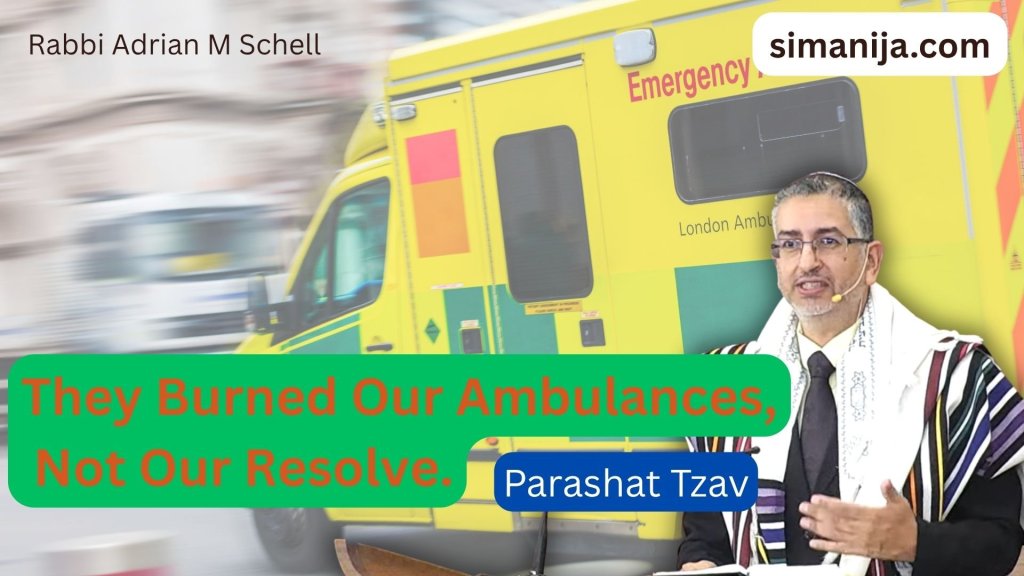
    On Monday morning, we woke to images that turn the stomach. Four ambulances, vehicles whose absolute sole purpose is to save lives, were reduced to charred, twisted metal in Golders Green. The shattered glass and the blackened frames speak of a profound, targeted hatred. To attack a Jewish volunteer emergency service is not simply an act of vandalism. It is an assault on the very principle of preserving human life. It is entirely natural to feel outrage, vulnerability and a deep, aching exhaustion when confronted with such blatant antisemitism on our streets. We are allowed to be angry. We are allowed to be horrified by this violation of our community’s safety.

    Yet, as we confront this darkness, our tradition offers us a vital counter-narrative. In this week’s Torah portion, Parashat Tzav, we are given a starkly contrasting image of fire. The text commands us: “A perpetual fire shall be kept burning on the altar, it shall not go out” [1]. The priests are instructed to tend this eish tamid, this eternal flame, with meticulous care. They must add fresh wood and clear away the suffocating ashes every single morning.

    The arsonists in North London used fire as a weapon of terror, a crude tool designed to intimidate, to silence and to erase. The fire of our Jewish tradition is entirely different. Our fire is the warmth of community, the light of Torah and the burning, uncompromising passion for justice and compassion.

    When those who hate us try to define our Jewish presence in the UK through acts of violence, they drastically underestimate the stubborn resilience of our flame. We absolutely refuse to let our identity or our future be dictated by those who wish us harm.

    The burnt shells of those ambulances are a devastating sight. But look at what happened next. The community did not retreat into the shadows. The volunteers did not walk away from their calling to heal the sick, regardless of who needs help. If anything, the resolve to care for others, to fiercely protect our democratic values and to live proudly and openly as Jews has only deepened.

    This is the true meaning of the perpetual fire. It does not burn on miracles alone. It burns because ordinary, courageous people make the conscious, daily choice to add fuel to the flames of solidarity and hope.

    Keeping this fire alive in the face of such raw hatred is demanding work. If we try to carry the weight of this outrage alone, we risk being consumed by the very anger we are fighting. We must share the vigil. We must stand firm together, helping each other clear away the ashes of despair, so that the embers of our shared values have the oxygen to breathe. Let those who seek to frighten us see that our light is not diminished. Let them see that our commitment to life, to democracy and to one another burns brighter than ever.

    Shabbat Shalom,

    Rabbi Adrian M. Schell

    [1] Leviticus 6:6.

  • Finding Holiness in a Fractured World

    Finding Holiness in a Fractured World

    Parashat Vayikra

    Parashat Vayikra begins with a paradox. The book opens with Vayikra [and He called], a word of intimacy, of summons, of relationship. Yet the first world it enters is that of korbanot [offerings], a system that can feel remote, severe, and at times almost foreign to us. The Torah does not begin by pretending that human beings are naturally aligned with the Divine.

    It begins by admitting that closeness is hard. We do not always know how to approach holiness, how to repair what is damaged, or how to give voice to gratitude, fear, guilt, and longing.

    That admission matters. A great deal of spiritual language can sound as though faith should be simple, tidy, and continuous. Vayikra refuses that. It understands that life is fractured, and that a human being often comes to the holy place carrying contradiction.

    Sometimes we arrive with devotion. Sometimes we arrive with numbness. Sometimes we arrive because something inside us has gone wrong, and we do not quite know how to begin again. The sacrificial system, for all its ancient distance, begins from exactly that truth.

     It is not a fantasy of perfection. It is a grammar for imperfection.

    That is the first depth in this portion. Korbanot [offerings] are not only about ritual. They are about the human need to move from distance towards presence.

    The word korban itself comes from the language of drawing near. That means sacrifice is never only about loss. It is also about movement. Something is brought forward. Something is placed in the sphere of the holy. Something of the self is made available to God.

    For a progressive Jewish ear, that matters because it allows us to read Vayikra without pretending that the Temple system is still our practice, while also refusing to dismiss it as spiritually irrelevant. The question is not whether we still bring a bull, a ram, or a bird. The question is what we do now when the soul needs to draw near. What is our equivalent of offering? What does it mean to come before God honestly, with what we have, not with what we wish we had?

    That leads me to a second point.

     The sacrificial system can be read as a disciplined language of responsibility. A great deal of modern life trains us to avoid responsibility by fragmenting it.

    We can blame structures, history, politics, family, or mood. Some of those explanations may be true, yet Vayikra insists on a different spiritual habit. It asks the person to name what has happened, to acknowledge it, and to bring it into a form that does not merely cover over the wound, but faces it.

    The deepest work of religion is not the preservation of ancient forms for their own sake. It is the cultivation of a life that can answer truthfully to the Divine and to one another. Prayer, study, repentance, acts of justice, and acts of lovingkindness have become the main vessels through which we do that work now. Yet the underlying pattern is the same. A human being recognises that life is not whole, and chooses to respond rather than to ignore.

    That is an especially urgent message in the world we are living in now, in this unsettled atmosphere.

    Many hearts are carrying fear, grief, anger, and exhaustion. No doubt, the News from Israel, from the wider region, and from so many other places leave all of us feeling spiritually scattered.

    Our Torah portion, and actually the whole book of Leviticus, does not offer easy comfort. It does something more serious. It says that holiness begins precisely where wholeness has been interrupted.

    The book’s teaching is not naïve. It is built for brokenness, just remember that the most holy sections in the book are called together Acharei Mot Kedoshim Emor, After death, holiness speak.

    Seen that way, korbanot [offerings] are not a primitive religious system that we have outgrown. They are a witness to something enduring: human beings need forms through which they can bring what is disordered in life into the presence of the holy. Some of those forms were once physical sacrifices. Our own forms are different, yet the inner task remains. We still need ways to say, “I am here, I am not complete, I am responsible, and I am willing to begin again.”

    We do that when we tell the truth. We do that when we apologise. We do that when we give time, care, and attention. We do that when we refuse despair. We do that when we stand with the vulnerable and do not let fear harden us into silence.

    So, when we read Vayikra this morning, perhaps we should hear not only the strangeness of the sacrificial system, but its challenge. The Torah is asking what it takes for a human life to become available to holiness. It is asking how a person, in a world that is never fully settled, can still move towards God.

    That is a very contemporary question. It is also a deeply Jewish one.

    May this Shabbat help us draw near with honesty, with courage, and with a renewed sense that even in fractured times, a life can still become an offering.
  • Touching the Edge of Life

    Touching the Edge of Life

    The Sacred Art of Care (Sermon for Shabbat Parah)

    The Torah recognises that death and pain change the texture of the air around us. In this sermon for Shabbat Parah, Rabbi Adrian explores the ancient ritual of the Red Heifer (Parah Adumah) from Numbers 19. While we often focus on the bereaved, the Torah highlights a striking paradox: those who help others become “pure” are themselves changed by the process.

    Proximity to the fire inevitably leaves you smelling of smoke. Whether you are caring for a parent, a spouse supporting a partner, or a volunteer performing the holy work of the Chevra Kadisha or Care Group, this reflection is for you. Rabbi Adrian discusses the sacred weight of gemilut chasadim (acts of lovingkindness), the reality of compassion fatigue, and why the community must hold those who spend their lives holding others.

    Recorded at the Wimbledon Synagogue.

    Key themes in this video:

    The spiritual meaning of Shabbat Parah and the Red Heifer.

    Recognising the “secondary trauma” and exhaustion of carers.

    The significance of Zayin Adar (7th of Adar) and the Chevra Kadisha.

    Why chesed shel emet (true kindness) is the highest form of giving.

    How a community can better support its comforters and chaplains.

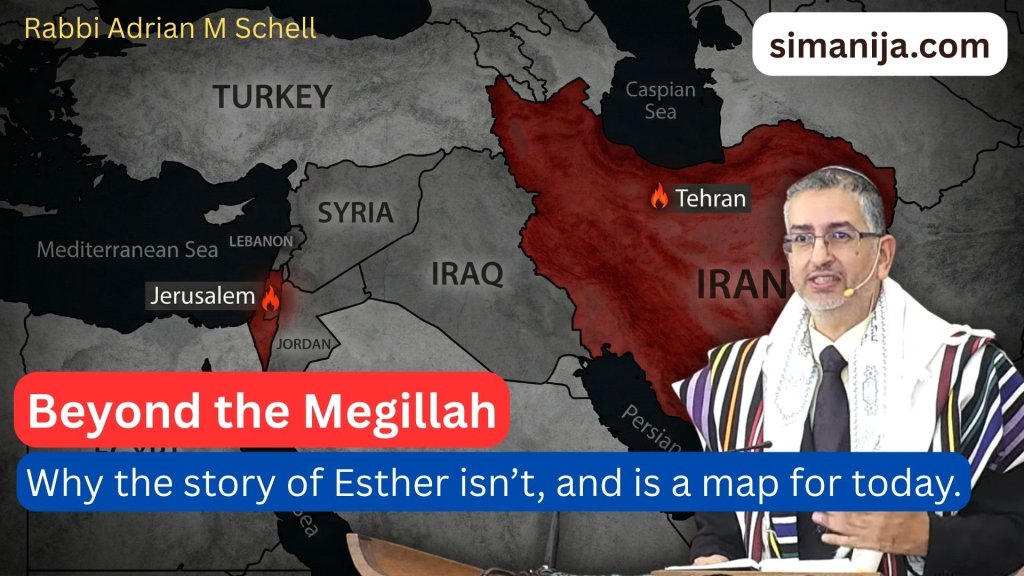
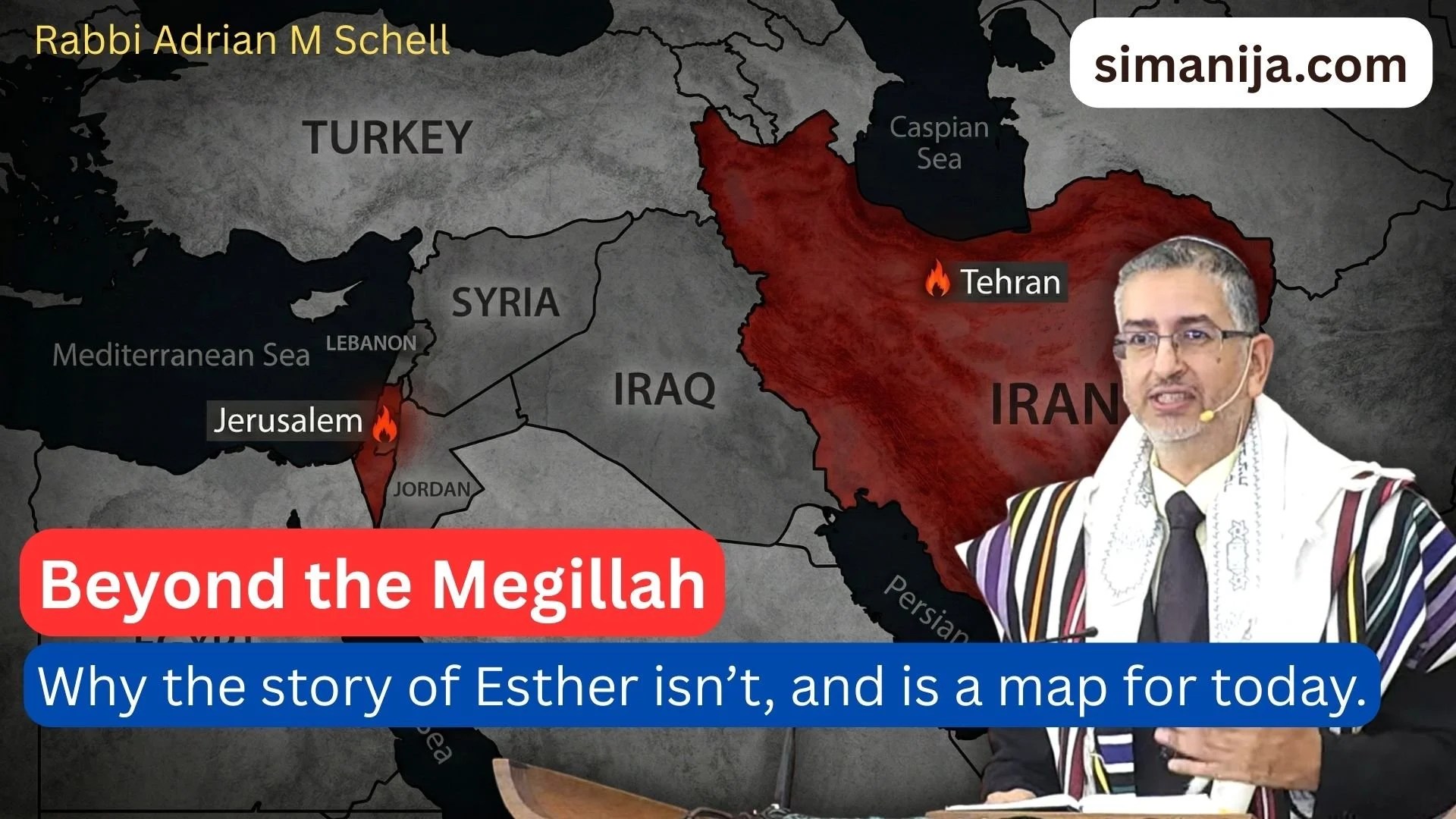
  • Beyond the Megillah

    Beyond the Megillah

    Why the story of Esther isn’t, and is a map for today.

    It is very unusual for me to give a sermon on Purim, but the news from the Middle East once again completely overshadowed our festival preparations. Between the military escalation and reports concerning the death of the modern-day Haman, feeling the weight of global uncertainty is entirely natural. I view the sudden fall of the dictator and the potential end of a regime, which has long threatened Israel and destabilised the region, with cautious, and some complex feeling of relief.

     Yet, that relief is immediately tempered by deep anxiety. Questions about what happens next, whether the situation will escalate further, and how this threatens our own security here in the UK are taking away most of the joy I usually feel this time of the year. I know people are frightened, and I share that concern with you.

    In times of such upheaval, the temptation to look for direct parallels in our sacred texts is remarkably strong. We might want to treat the Book of Esther as a predictive map for the evening news, neatly casting today’s figures into the roles of Haman or Ahasuerus.

    I am wary of such easy comparisons. The world of the Megillah is not the world of 2026. Treating it as a simple mirror risks flattening the complexity of the human lives caught in the crossfire today. As I wrote last week, history too often reminds us that we rarely learn from history.

    Instead of seeking a blueprint for geopolitics, I want us to focus on the timeless ideals the Esther story protects: hope and courage.

    At the beginning of last month, our community had the privilege of welcoming Shanta from the local Baha’i community. She spoke to us with such grace about the situation in Iran and the immense courage shown by those who still live in the birth country of their faith despite systematic persecution. When the news of the military action broke over the weekend, my first thought was for our Baha’i friends. I reached out to them to send our greetings of solidarity and our prayers that their families and friends would remain unharmed.

    Their response was simple and humbling: gratitude and hope. Even amidst fear, they spoke not of revenge or despair but of prayer and endurance. Their resilience is a modern testament to the quiet strength we see in the Purim story:

    the ability to maintain one’s identity and faith even when the surrounding environment feels hostile.

    At the same time, my thoughts and prayers are actively with our own families and friends in Israel. I had a short conversation with Hannah, who made Aliyah 1 ½ years ago.  After a few short months of relative quiet without the sound of air raid alarms, she and other Israelis have once again retreated into safe rooms, waiting for the storm to pass. The sudden shift from a sense of normalcy back into the grip of fear is a toll no one should have to carry.

     For her and all our family in Israel, Purim’s joy comes with a heavy measure of anxiety, the laughter mingling with worry.

    But even in their fear, there is something profoundly Purim-like: the courage to live, to celebrate life, and to affirm faith in the face of absolute uncertainty.

    When we read the Megillah now, we do more than recount a tale from long ago. We enter into a conversation with our ancestors about what it means to be human, vulnerable, and yet capable of courage. The Al ha-nissim prayer of the Amida, reminds us of a time when a wicked leader sought to destroy us, and how those designs were ultimately overthrown. Yet, the true miracle we celebrate is not just the fall of an enemy. It is the endurance of a people.

    Esther’s courage was not found in a lack of fear, but in her willingness to address injustice despite it.

     She reminds us that our voices matter, especially when they are raised in support of those who are vulnerable, which are for me the people in Iran, who have suffered far too long. Purim teaches that courage is rarely grand or dramatic. Most often, it is the quiet decision to act with integrity when fear would silence us. It is reaching out to comfort another, even when we feel powerless ourselves. It is holding fast to hope, that fragile, unreasonable hope that despite all evidence, humanity is capable of change.

    We recite in the blessings after the Megillah that God is our hope in every generation. My hope for this Purim is that the story we tell serves as a bridge to a better future. I pray for a time when future generations will come together to celebrate this festival with only a distant remembrance of persecution.

     I hope they will look back at our history as a time when we had to defend ourselves, only so that they could live in a world defined by lasting peace.

    Until then, let us hold onto one another, stay engaged in our community, and continue to hope for quieter days ahead.

    Purim Sameach.

    Endnotes

    1. Seder haTefilot, Calendar of the Year, p. 384. Contains the text of the Al ha-nissim prayer detailing the plot of Haman and the deliverance of the Jewish people.

    2. Seder haTefilot, Calendar of the Year, p. 385. Contains the concluding blessing for the Megillah reading, affirming God as the source of salvation and hope.

    3. Tagesschau.de and other news outlets. 


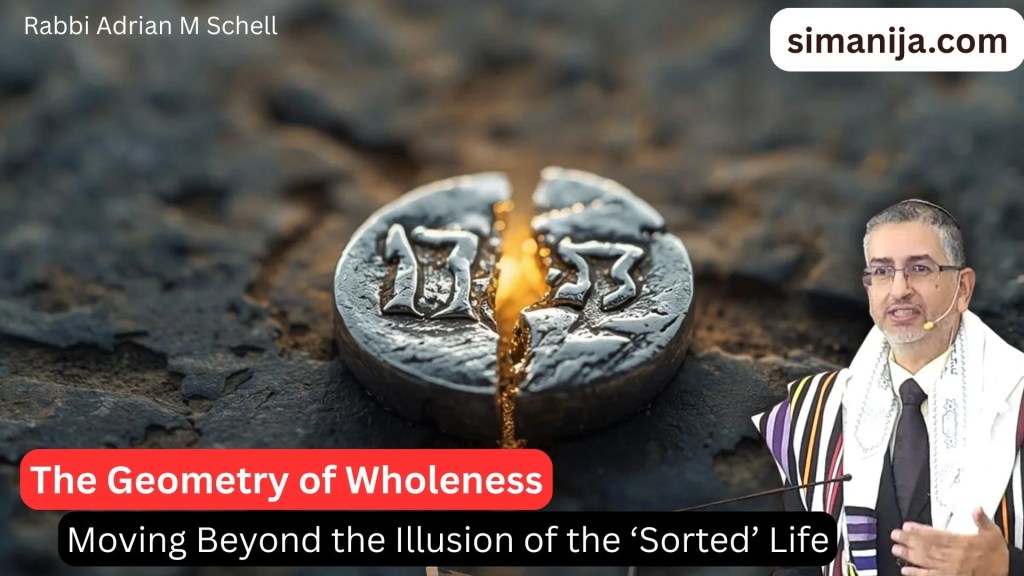
  • The Geometry of Wholeness

    The Geometry of Wholeness

    Moving Beyond the Illusion of the ‘Sorted’ Life

    I spent some time this week thinking about the peculiar weight of being “sorted”. In a city like ours, we often treat self-sufficiency as the ultimate goal. We work hard to ensure our lives are curated, our finances are stable, and our problems are managed behind closed doors. There is a certain pride in saying, “I can handle it myself.” And yet, if we are honest, there is a quiet, persistent loneliness that often hides inside that ideal of the entirely independent person.

    Against this backdrop of modern self-reliance, the Torah offers a commandment that sounds almost provocative. As we mark Shabbat Shekalim, we recall the ancient census where every adult contributed exactly half a shekel to the Sanctuary. Not a whole coin, but a half. The rich were not permitted to give more, and the poor were not allowed to give less.

    I find it striking that Maimonides, when codifying this mitzvah, insists that even the most impoverished person, someone who might literally need to sell their only shirt, must still find a way to contribute that half. It sounds harsh until you realise the underlying message: in the eyes of the community, and in the eyes of God, no one is too grand to be included, and no one is too marginal to matter. We are all essential to the count.

    But why a half-shekel? Why not a whole one?

    A whole coin would suggest that we can arrive before the Divine complete in ourselves. A half-shekel suggests something far more beautiful: that each of us is, by design, incomplete. The “geometry” of this mitzvah is that wholeness does not live inside my own heart or your own home; it lives in the space between us. It is only when my half joins your half that the Sanctuary can actually stand.

    We see this same rhythm play out in the granular detail of our Torah portion, Mishpatim. After the cinematic thunder of Sinai, the Torah suddenly shifts to the “mundane” reality of civil law: property, injury, lending, and the treatment of workers. These are the places where our lives rub up against one another. When we pay a worker on time, or tell the truth in a difficult situation, or refuse to exploit someone’s vulnerability, we are acknowledging that our lives are inextricably bound together.

    We shouldn’t see these laws as dry legalism, but as the very grammar of connection. Holiness is not a private experience we have in isolation; it is the medium through which we build a society.

    The message is a powerful challenge to the “sorted” life. The Torah does not flatter our fantasy of being whole on our own. It blesses us instead with the dignity of being needed and the humility of needing others. To stand together as a congregation of “half-shekels” is to admit that my gifts are not enough without yours, my insight is not complete without your story, and my strength is only real when it is in service to you.

    In a world that praises the finished individual, let us instead revel in our holy incompleteness. May we bring our “half” to the kiddush table, to our committees, and to our quiet acts of care, knowing that God’s presence chooses to dwell exactly where our lives meet.

    Shabbat Shalom.

    Rabbi Adrian

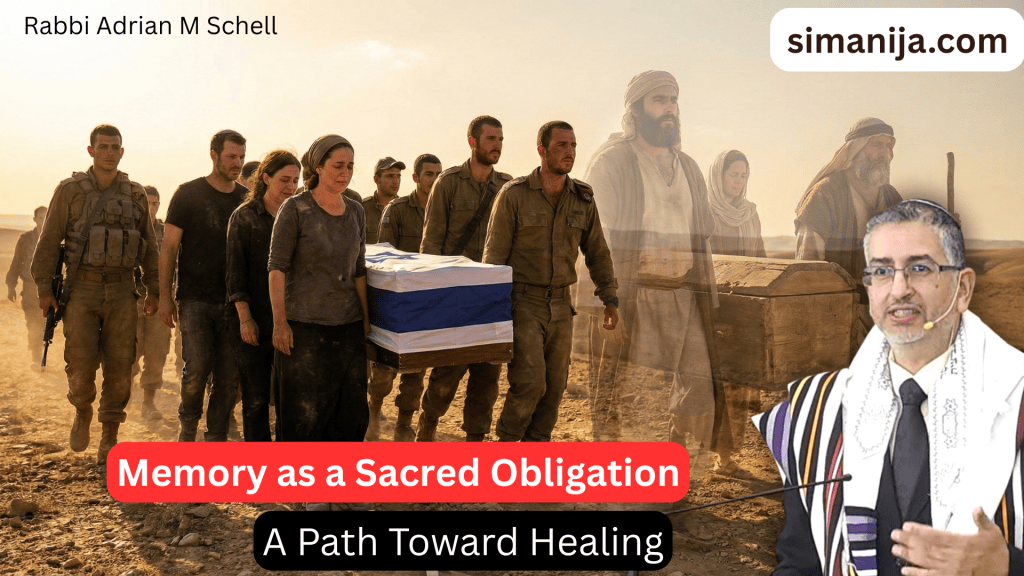
  • Memory as a Sacred Obligation

    Memory as a Sacred Obligation

    A Path Toward Healing

    For eight hundred and forty-four days, a digital heartbeat pulsed in the centre of Tel Aviv. It was a countdown clock that did not count down to a celebration, but rather counted up, marking every second, every minute, and every hour that our people were held in the dark. This week, that clock finally stopped.

    The silence it leaves behind is not the joyous quiet of a struggle won, but the heavy, complicated stillness of a cycle closed. With the return of the remains of Ran Gvili, the final hostage of that terrible October day in 2023 has been accounted for. He was brought home to be buried in the earth of our homeland.

    For his family, and for the House of Israel, the period of agonising uncertainty has ended, replaced by the profound, ancient weight of grief.

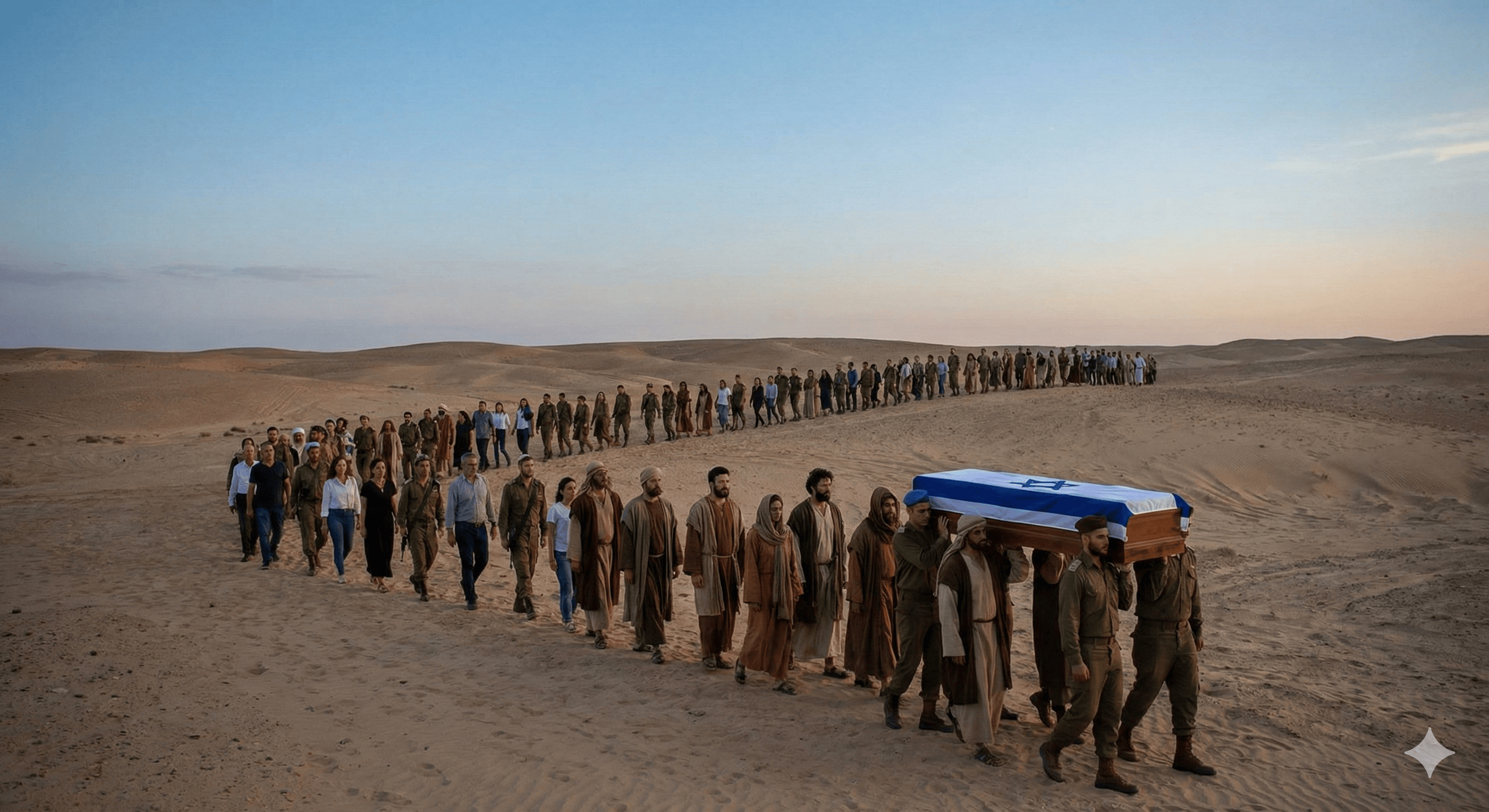
    Tomorrow morning, we open the Torah to Parashat Beshallach. Most of us, when we think of this portion, see the towering walls of water at the Sea of Reeds. We hear the triumphant song of Moses and Miriam after the Israelites reach the other side of the sea. But tucked away in the opening verses of our portion is a line that feels remarkably quiet, but so deeply resonant today. The Torah tells us that “Moses took the bones of Joseph with him” (Exodus 13:19).

    Imagine the scene. The Israelites are fleeing for their lives. They are carrying dough that has no time to rise, their children, and their few belongings. Yet, in the middle of this life-or-death escape, the leader of the people stops to ensure they are carrying a coffin. Joseph had made his brothers swear, centuries earlier, that when God finally led them out of Egypt, they would not leave him behind. He did not want to be a monument in Mitzra’im; he wanted to be a part of the journey toward home.

    This act of carrying Joseph’s bones makes a statement that is deeply engraved in our souls: a Jewish future is only possible if we are willing to carry the weight of our past.

    We do not leave our dead in the narrow places. Moses understood that the soul of the nation would be incomplete if a single promise remained unfulfilled. By carrying those remains through the wilderness, the Israelites were saying that every individual matters, that memory is a sacred obligation, and that home is not just a destination for the living, but a resting place for those we have lost.

    In these recent days, we have seen a modern echo of this ancient devotion. We have read of the IDF units and forensic teams who combed through the ruins of northern Gaza, not for tactical advantage, but to find Ran Gvili.

    They were, in a very real sense, the students of Moses. They operated under the conviction that the mitzvah of Pidyon Sh’vuyim, the redemption of captives, does not end when a heart stops beating.

    Week after week, we recited a prayer in our prayerbook, no one of us ever thought we would ever need to read, the prayer for the return of hostages. While we prayed and hoped for a long time that all of the hostages would return alive, the return of Ran fulfils a core communal promise. We did not forget. We did not move on. By bringing him home for Kever Yisrael, a Jewish burial, we have refused to let his story be erased by the darkness of captivity.

    We have ensured that his name remains etched into the soil and the memory of our people, rather than being lost in the wilderness of the unknown.

    This sense of responsibility mirrors our feelings and words during this week’s Holocaust Memorial Day. We know, perhaps better than any other people, what it means to have no grave to visit. We know the haunting trauma of names without resting places. The stopping of the hostage clock on the heels of Holocaust remembrance serves as a stark reminder of our resilience. We are a people who insist on memory. We are a people who insist on the dignity of the individual, even when the world around us seems to have lost its moral compass.

    As we transition into the beauty of Shabbat, we might ask ourselves what it means to “stop the clock.” For the families of the hostages, the internal clock of trauma never truly stops, but the community can now shift its energy. We move from the frantic rhythm of advocacy and anxiety into a space of sustained support and collective mourning. We move from the “Song of the Sea” to the long, steady trek through the desert.

    The wilderness ahead of us is still vast and uncertain. There are still many “bitter waters” to navigate, much like the Israelites at Marah later in our Parashah. But we take comfort in the fact that we are walking together.

    Just as Moses did not walk alone with Joseph’s bones, we do not carry our collective grief in isolation. We carry it as a congregation and as a global family.

    This Shabbat, let us hold space for the silence of that stopped clock. Let us offer a prayer of strength for the Gvili family and for all those whose lives have been forever altered by these past years. May we find the courage to carry our history with us, both the triumphs and the tragedies, as we seek a path toward healing.

    May the memory of Ran Gvili, and all those who did not return to us as we hoped, be a blessing and a revolution in our hearts.

    May we be inspired by the persistence of our people to never leave anyone behind, and may we work toward a day when no more clocks need to count the seconds of our sorrow.

    Shabbat Shalom.

    Notes and Citations

    • MRJ Siddur (Forms of Prayer). “A Prayer for the Release of Captives,” Community Prayers and Passages, page 367.

    • Exodus 13:19. “And Moses took the bones of Joseph with him; for he had straitly sworn the children of Israel, saying: ‘God will surely remember you; and ye shall carry up my bones away hence with you.’”

    • Mishnah, Pirke Avot 2:1. “Be as heedful of a light mitzvah as of a weighty one, for you do not know the reward for each.” The dedication to Pidyon Sh’vuyim reflects the ultimate weight of the mitzvah of dignity.

    • Holocaust Memorial Day Trust. Reflecting on the theme of “Fragility of Freedom” and the importance of naming the lost. (January 2026).