Author: Rabbi Schell

  • Have You Only One Blessing?

    Have You Only One Blessing?

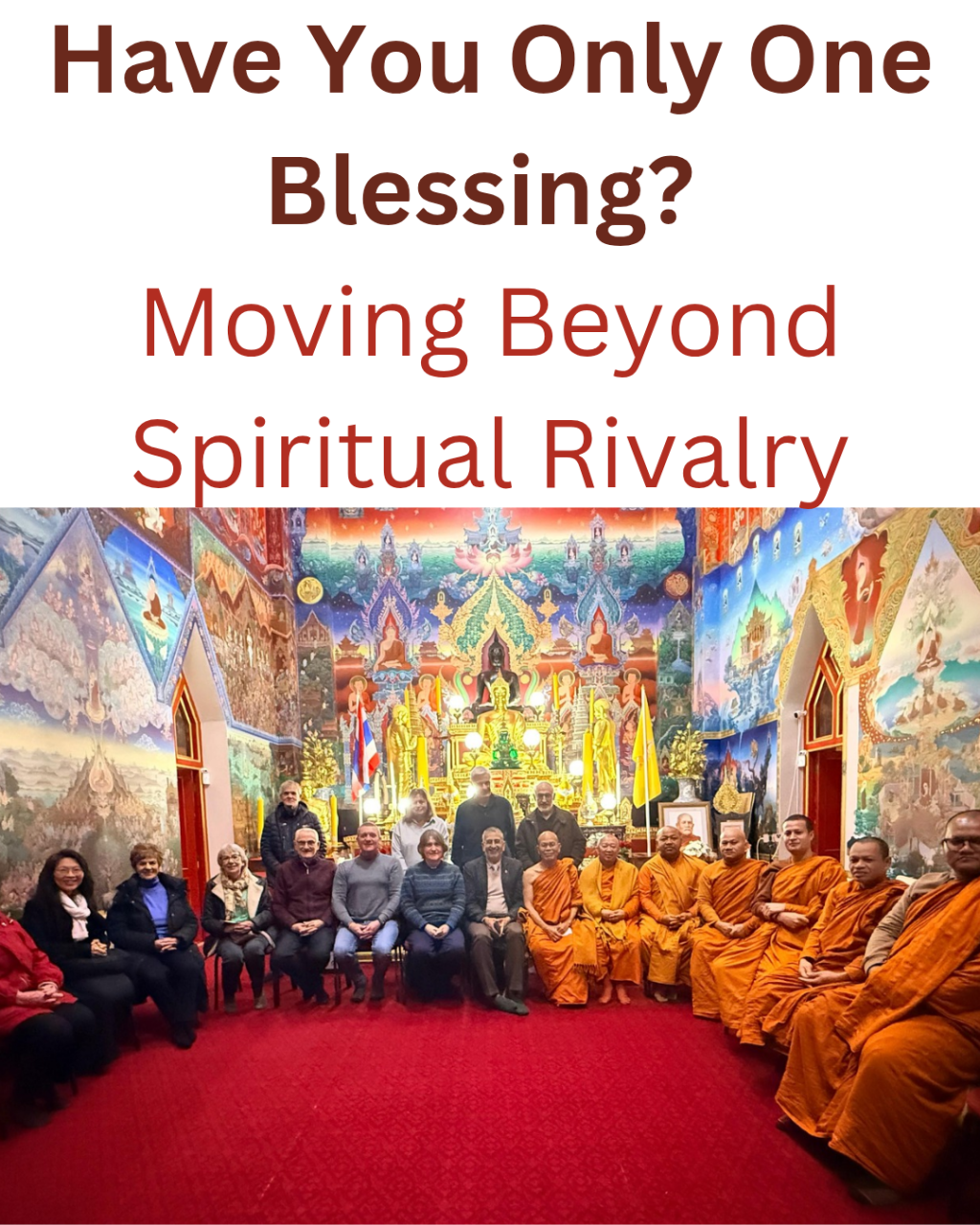
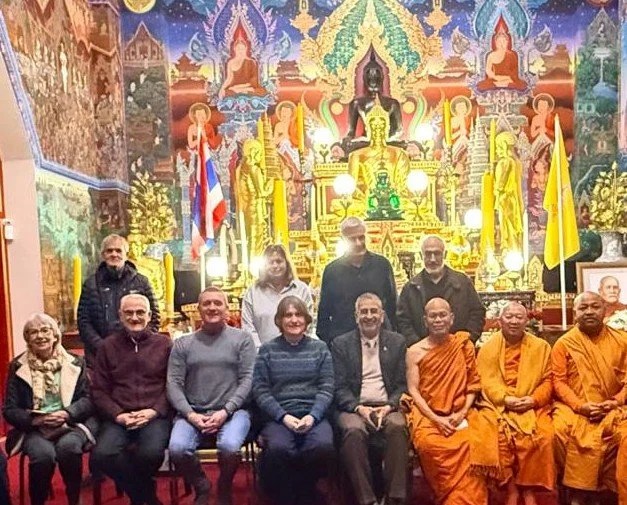
    Standing yesterday amidst the vivid golds and reds of the Buddhist temple just around the corner, the immediate sensation was one of overwhelming abundance. It was a sensory immersion into a way of seeking the Divine entirely distinct from the Jewish path of text, law and history. It was visual, silent and undeniably rich. It served as a fitting conclusion to a month of interfaith encounter, a journey that began with our Civic Shabbat and moved through various moments of shared dialogue.

    Carrying that feeling of openness back to the Torah reading for this Shabbat, however, creates a jarring dissonance.

    The narrative of Parashat Toldot is well known. The soup, the disguise, the deception—these are the mechanics of the plot. But beneath the family drama lies a deeply tragic understanding of our covenant with God. It is a worldview governed by a terrifying sense of scarcity.

    The entire narrative rests on the premise that there is simply not enough to go around. There is not enough birthright. There is not enough love. And most devastatingly, the characters seem to operate on the belief that there is not enough holiness.

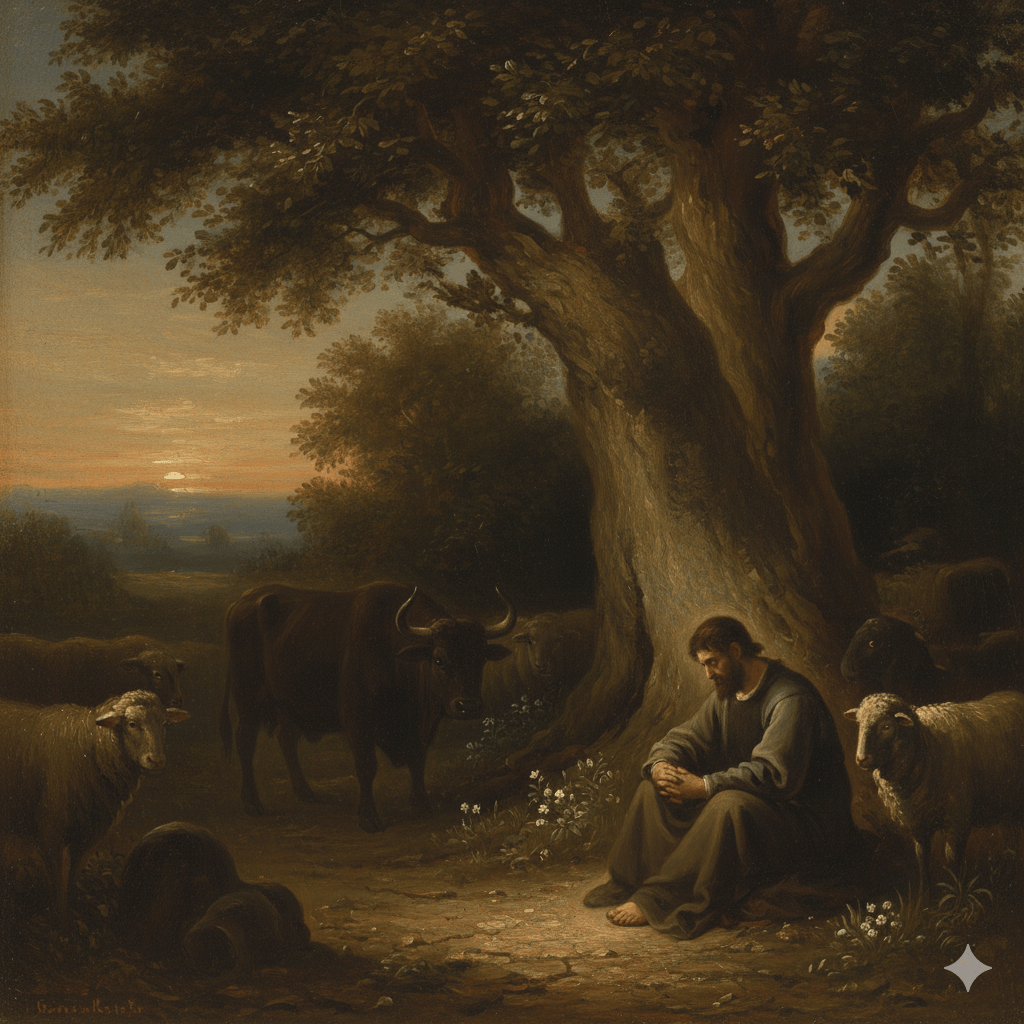
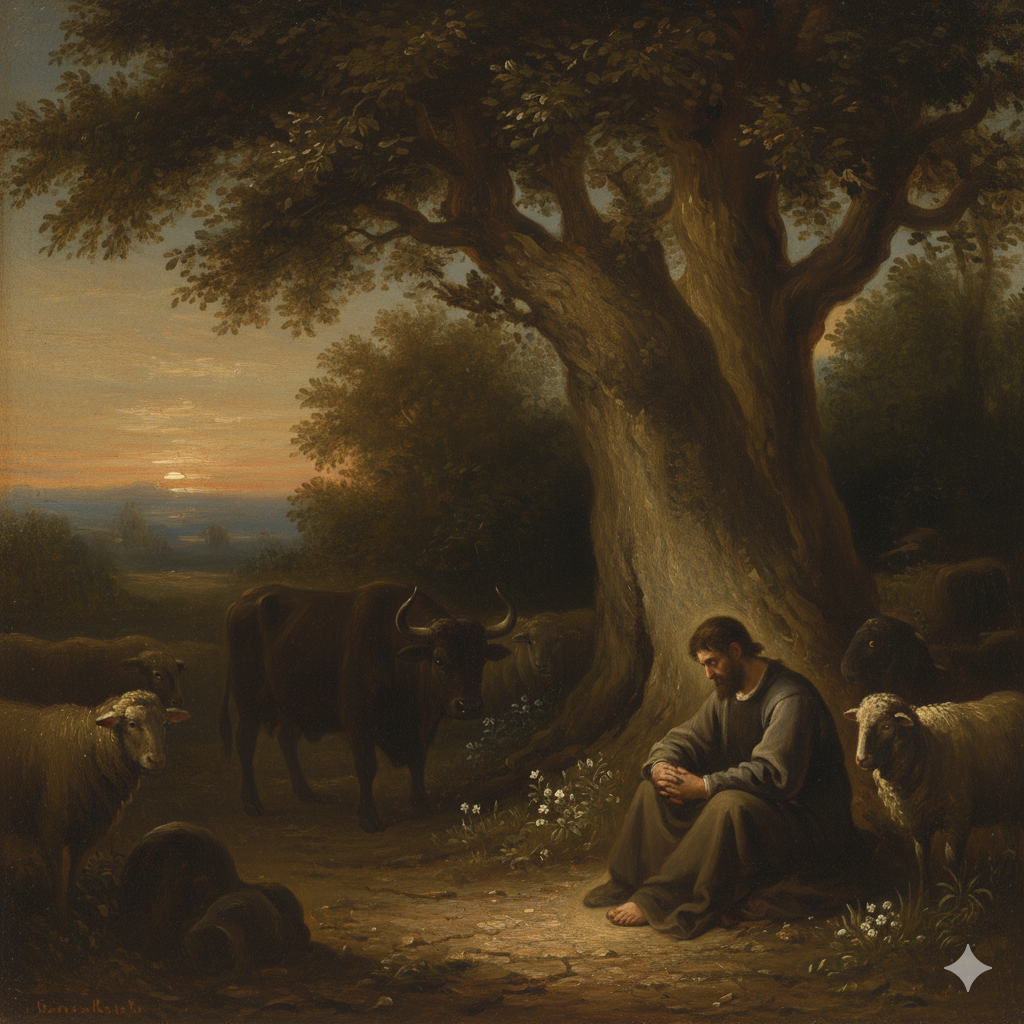
    When Esau discovers that Jacob has received the blessing, he assumes that there is not another blessing for him, that the spiritual bank is empty. He lets out a cry that mirrors the pain of anyone who has ever felt there is no room for them in the sanctuary:

    ‘Have you but one blessing, my father? Bless me, me also, O my father’ (Genesis 27:38).

    Isaac’s trembling reaction seems to confirm Esau’s fear. In that ancient moment, the blessing is viewed as a finite resource, a pie that can be sliced only so many times before it is gone. If Jacob wins, Esau must lose. If one is chosen, the other is cast aside. It appears to be a zero-sum game of spiritual survival.

    This is a heavy inheritance. For centuries, much of the religious world has operated on this default setting. The assumption has been that truth is exclusive. Communities are often trained to guard their covenant jealously, harbouring a quiet fear that ‘validating the truth of another’ somehow diminishes their own. If one admits the beauty of the temple around the corner, does it somehow tarnish the aura of one’s own sanctuary?

    This scarcity mindset creates a fortress mentality. It suggests that God is small, limited and easily exhausted.

    But here is a different theological response. One that moves from scarcity to abundance, to a God who is truly infinite. And this God, the Infinite one, cannot run out. The Source of Life cannot be depleted by the election of one people or the revelation of one Torah. To believe that the prayers of neighbours compete with one’s own for God’s attention is to misunderstand the nature of the Divine.

    I want to draw your attention for a moment towards the Aleinu, our concluding prayer in nearly each service. In the first paragraph, the prayer praises God who ‘has not made us like the families of the earth’. Historically, this has often been interpreted through that lens of scarcity, drawing a sharp, potentially painful line between ‘us’ and ‘them’.

    A comment on it in our prayerbook offers a gentle corrective, saying that ‘to assert our uniqueness in a world of many peoples and faiths does not require the denigration of others but a recognition of our diversity as itself a gift of God’.

    This is the theology of abundance. It suggests that uniqueness is not a weapon of superiority but a specific gift brought to the table of humanity. One can be fully, passionately, deeply Jewish without needing to invalidate the path of the Buddhist, the Christian, or the Muslim standing nearby.

    The tragedy of Esau was that he was told there was no room for him. The scarcity mindset dictates that for one to be right, others must be wrong; that for one to be blessed, others must be cursed. This logic breeds the fear and ‘groundless hatred’ that tears communities apart.

    The counter-narrative we have been sharing is sometimes difficult, but necessary, because it requires the confidence to say that the tent of meeting is wider than Isaac believed. When the text presents the heart-wrenching question, ‘Have you only one blessing?’, the answer from a place of spiritual maturity must be clear: ‘There is never only one blessing. The Infinite has enough for all.’

    Shabbat shalom
  • Our Civic Covenant: Faith and Democracy

    Our Civic Covenant: Faith and Democracy

    Civic Shabbat Sermon – Parashat Lech Lecha – Genesis 12:1-9 / Micah 4:1–5

    Rabbi Adrian M. Schell

    A moment in our Torah, the five books of Moses, changes everything. God calls to Abraham: “Lech lecha – go forth.”

    It is not only a summons to travel, but an invitation to begin something extraordinary. While Abraham is asked to leave behind what is familiar and to walk into the unknown, he is also carrying within him a promise that is larger than any one nation or faith. From that moment, a covenant is born – not a contract of privilege, but a moral bond, a partnership between humanity and the divine. It is a call to become guardians of goodness, to keep alive the spark that God has placed within every human being.

    That spark is where my sermon begins, because it is where everything begins. It is the sign that, despite all we do to wound one another, there remains something in us that leans towards light. It is fragile, but it is there. It is what makes each human life sacred, what allows us to imagine justice, mercy, and peace. The covenant with Abraham is a universal covenant, for it rests on the conviction that the divine presence dwells within all people. It is this truth that must guide our civic life.

    In recent years, and perhaps even more painfully in recent weeks, we have seen how easily that divine spark can be dimmed. The attack on the synagogue in Manchester on Yom Kippur was not the act of one person alone. It was the final link in a chain of words – words that inflamed, words that excused, words that turned suspicion into hatred. And when words are left unchallenged, when prejudice becomes normalised, violence is never far behind.

    We stand at a dangerous crossroads in our public life. Across this country, the moral vocabulary that once held us together is being eroded. Populist voices have learned to weaponise grievance, wrapping exclusion in the language of patriotism. Debates about the English flag, the identity of the nation, and the purity of its culture have become a stage upon which decency itself is tested.

    In public spaces, such as universities, places of work, city centres, and social media, words have been placed that strip away the humanity of others, that single out Jews for scrutiny while excusing hatred if it comes from one’s own side. These are not isolated lapses of judgement, they are warning lights flashing on the dashboard of democracy.

    Antisemitism today often hides behind political conviction. It dresses itself in the language of justice, but its message is ancient and familiar. When only Israel is singled out as uniquely evil, when there are calls to arrest Israeli football fans at the airport, when Jewish citizens are asked to apologise for the actions of a foreign government, when centuries-old myths are recycled under new slogans, it is not activism. It is prejudice reborn.

    And as Jews, we know that when any society begins to tolerate such double standards, it corrodes not only its politics but its soul.

    This is not merely a Jewish concern. It is a British concern. The civic covenant that has bound this nation together – respect for truth, fairness, compassion, and freedom – is being tested. The danger is not only in those who preach division, but in the fatigue of those who grow silent before it. When we stop believing that moral clarity matters, when we shrug and say that all sides are equally wrong, we abandon the very idea of a shared conscience.

    Against this tide, we must reclaim a different vision.

     It is the vision of Micah, the prophet of our second reading this morning. Micah saw beyond war and hatred. He imagined a world in which the nations of the earth would come together to learn the ways of peace. He spoke of people who would beat their swords into ploughshares, turning the tools of harm into the tools of life. His dream was not naïve. It was revolutionary, because it rested on faith in the spark of goodness. Micah believed, as we must, that within every person there is something capable of turning towards peace.

    Liberal democracy, at its heart, is a civic expression of that same faith. It trusts that human beings, when given freedom and dignity, can govern themselves with conscience. It believes that persuasion is stronger than coercion, that diversity enriches rather than weakens, that truth, though fragile, is worth defending. These are not secular ideals; they are sacred ones. They are the political form of our covenant with God, translated into the language of human society. To defend democracy, then, is a form of faithfulness.

    But democracy does not survive by habit. It must be renewed by courage. When we allow the loudest voices of anger to dominate, when leaders seek applause instead of truth, when communities retreat into suspicion, we risk extinguishing the very light that sustains us. The true test of our time is not whether we can win arguments, but whether we can protect the moral space in which disagreement itself remains possible.

    Our task, therefore, is not to echo the rhetoric of those who divide, even in opposition. We must not fall into the trap of shouting their words more loudly, painted in a different colour. To do so would only feed their vision of a world split between tribes. Instead, we must offer another language – one that reassures rather than threatens, that calls people back to “the better angels of their nature” (Abraham Lincoln *). We must speak of a society that does not fear difference but draws strength from it, that does not mistake loudness for conviction or cruelty for courage.

    The covenant that began with Abraham reminds us that every generation must choose again whether to be a blessing or a curse. The promise of Micah reminds us that the path to peace is not built by force but by faith – faith in the spark that still burns within us.

    And these two truths meet here, on this Shabbat, here in South London, among all who have chosen to stand together. Thank you to all of you for being here.

    The attack in Manchester was meant to frighten us, to drive us apart. Yet here we are, gathered not in fear but in defiance of fear. Civic leaders, faith leaders, neighbours – together we are writing a different story. Each act of solidarity, each word spoken with honesty and compassion, adds oxygen to that divine spark. And as long as that spark endures, darkness will never have the final word.

    Perhaps this is what God meant when calling to Abraham:

    Lech lecha – go forth, not only to find a land, but to find the courage to build a society worthy of divine trust. Go forth, not to conquer, but to kindle hope. For every generation must hear the same call anew – to go forth into the world, carrying the light of that first promise, to protect it, to nurture it, and to pass it on.

    And if we do, then perhaps the words of the prophet Micah will come a little closer to truth: that one day, all people will again walk together in peace, and no one shall make them afraid.

    Shabbat Shalom

    * Abraham Lincoln: First Inaugural Address, delivered on March 4, 1861

  • The Lonely God and the Creation of Relationship

    The Lonely God and the Creation of Relationship

    There is a strange tenderness in the second creation story.
    The first chapter of Genesis is full of grandeur and order: light and darkness, sea and sky, evening and morning. Everything unfolds with rhythm and precision, and when it is done, God looks at the world and calls it very good.

    Then the tone changes. The second chapter begins not with perfection but with need. The earth is dry; the human has no companion. Creation pauses, and the narrative slows from cosmic scale to intimate detail. We are not looking at galaxies now, but at a garden, a breath, a beating heart.

    It is here that we first hear God say that something is not good.
    “It is not good for the human to be alone.”

    The first imperfection in creation is not sin or violence. It is loneliness.

    The rabbis were intrigued by that moment. What does it mean for God to notice loneliness in another? And more radically, where did God learn what loneliness feels like? Some midrashim suggest that even before the first day, God was surrounded by silence. A unity so complete that there was no dialogue, no other voice to answer back. So God began to speak. “Let there be…” And each act of creation became not only formation but conversation, a call hoping for a response.

    When God says, “Let us make the human in our image,” the words sound almost hesitant, plural, reaching outward. To whom is God speaking? Angels? The heavens? The divine imagination? The grammar itself betrays yearning. The Creator, who could do all things alone, chooses not to. Creation begins as an act of self-limitation, of making room for another consciousness.

    Perhaps that is why we exist at all, not to obey, but to answer.

    In this light, the human being is not simply the crown of creation, but its conversation partner. God, the infinite, longs for encounter. And so, when Adam sits alone among the animals, unable to find one who can meet his gaze, that ache is more than personal. It is theological. The loneliness of the human mirrors the loneliness of God.

    Judaism has never worshipped a solitary deity lost in abstraction. The God of our tradition speaks, listens, remembers, and sometimes waits. A God who walks in the garden at dusk, calling out, “Where are you?” not because the Almighty has lost track of a creature, but because relationship has been broken, and silence has fallen where dialogue once lived.

    To be made b’tzelem Elohim, in the image of God, is therefore to carry that same need for connection within ourselves. Our longing for companionship, for understanding, is not weakness. It is the trace of divinity woven into human life. When we seek another person’s presence, we are imitating God’s own first gesture toward creation, the decision not to remain alone.

    The Torah’s image of the first human finding another is striking in its simplicity. There are no trumpets, no divine proclamation. Adam looks upon Eve and says, “This at last is bone of my bones, flesh of my flesh.” It is recognition, not possession. Until this point, Adam has named every living thing, yet remained wordless. Only in the face of another human being does speech emerge. The first words spoken by a person are an act of encounter. The human voice awakens through relationship.

    The story that follows is not one of perfect harmony. Distance and misunderstanding enter immediately. The two hide from one another, and from God. They will argue, grieve, and wander. Yet even outside the garden, the thread of connection endures. The divine image in them is not purity, but the capacity to keep reaching out, again and again, to build, to love, to forgive.

    This reading changes how we see the moral centre of Torah. The highest imitation of God is not power or knowledge, but relationship. To share a meal, to listen, to be present when another person speaks, these are acts of holiness. The prophets later make this explicit: “Is this not the fast I choose,” says Isaiah, “to untie the cords of oppression, to share your bread with the hungry?” To be godlike is to turn outward.

    Every relationship, friendship, family, community, is a small echo of that first dialogue between God and the world. Even disagreement and struggle carry divine potential, because they require that we stay in relation, that we refuse to retreat into isolation.

    The Jewish mystics describe creation as a series of contractions, tzimtzum, God drawing back to make space for something other than God. That is the pattern of love itself, to make space within ourselves for another to exist freely. When we do that, when we create room for another person’s joy or pain, when we let another’s story stand beside our own, we are continuing the act of creation.

    Our tradition calls this being a partner with God in the work of life. Not because we can match divine strength, but because we can share divine empathy. The world’s repair does not begin with vast plans, but with presence, with the simple courage to say, “I see you. You are not alone.”

    Perhaps this is the quiet truth the opening chapters of Genesis are trying to tell us. The world begins not with command but with conversation. God’s first gift to us was not certainty, but relationship, the possibility of being known.

    The story of creation, then, is not finished. It is renewed each time we answer that divine yearning in one another. When two people meet with honesty, when forgiveness softens what has hardened, when laughter returns to a silent room, these are not small things. They are glimpses of Eden restored.

    And if, at times, God still feels far away, perhaps it is because the Holy One is still listening for an echo, for the sound of human voices answering back across the garden, saying, in their own way: We are here.

  • How Can We Rejoice? A Sukkot Message Two Years After October 7th

    How Can We Rejoice? A Sukkot Message Two Years After October 7th

    My sermon for Erev Sukkot addresses a direct and painful collision in the Jewish calendar: the beginning of ‘z’man simchateinu’, the season of our joy, falls on the exact second anniversary of the October 7th atrocities. It explores how the sukkah itself, with its flimsy walls and lesson in vulnerability, will not let us hide from this echo. This year, those walls are a stark reminder of the vulnerability imposed on so many. The sermon grapples with how we can possibly celebrate in the face of this memory, the ongoing hostage crisis, and the fresh grief from the recent antisemitic attack in Manchester. The message redefines Sukkot’s joy not as a distraction, but as an act of defiance, resilience, and sacred memory—a way to honour those who can no longer, by choosing to build, gather, and sing because we remember.

  • Probabilities Don’t Hug You Back: A Neilah Sermon for a World Without Guarantees

    Probabilities Don’t Hug You Back: A Neilah Sermon for a World Without Guarantees

    As the final gates of Yom Kippur close, how do we face a new year when we cannot be certain of what it holds?. My Neilah sermon addresses this question directly, beginning from a place of profound honesty. It acknowledges that for many, the past year has been a companion to doubt, fear, and uncertainty. The message affirms that being true about where you stand—even if it is a place of anger or confusion—is itself a powerful and honest form of prayer.

    Rather than offering easy answers or proofs, this sermon suggests a different path. It argues that while we cannot have certainty, we can have integrity. We can choose how we meet an unforgiving world, holding fast to our values and insisting that conscience is not cancelled by fear. Using a memorable story about two types of wisdom, the sermon asks a crucial question: at this final hour, do we let our need for calculation lead us, or do we follow the conviction that a good life is lived through our actions?. This is a message about keeping faith with hope, not as a prediction, but as a courageous decision for the year to come.

  • The Town of Stopped Clocks: A Kol Nidrei Message on Forgiveness and Time

    The Town of Stopped Clocks: A Kol Nidrei Message on Forgiveness and Time

    This sermon for Kol Nidrei begins with a story of a town where every clock is stopped at the precise moment of a deep personal hurt. This powerful metaphor explores how we all carry “stopped clocks” in our own hearts—frozen moments of resentment where we have defined ourselves, and others, by their worst mistakes. The service of Kol Nidrei and the work of teshuvah (turning) are presented as the spiritual keys to restarting time. This is a message not about forgetting the past, but about finding the courage to believe that change is possible, to allow our stories to move forward, and to take the small, brave step of winding just one clock.

  • What Do You Hear When the World Comes In?

    What Do You Hear When the World Comes In?

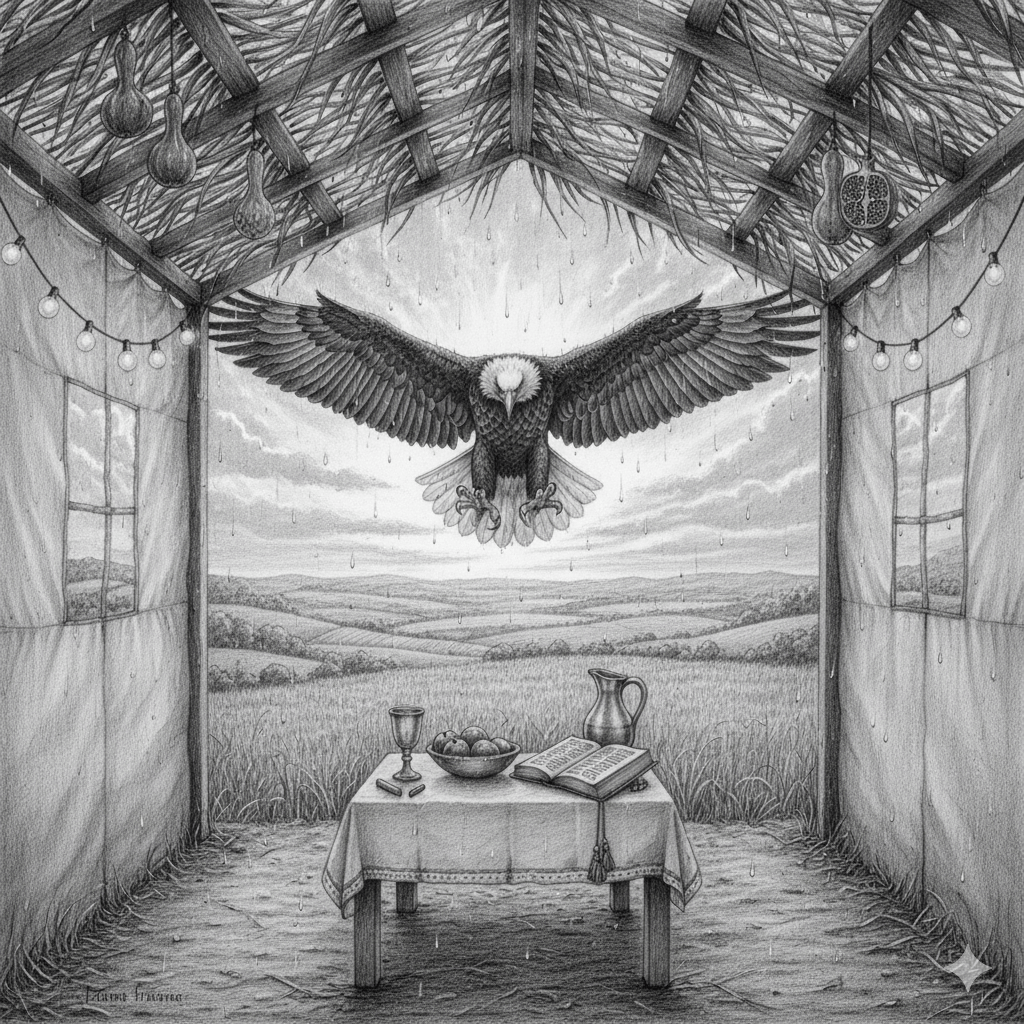
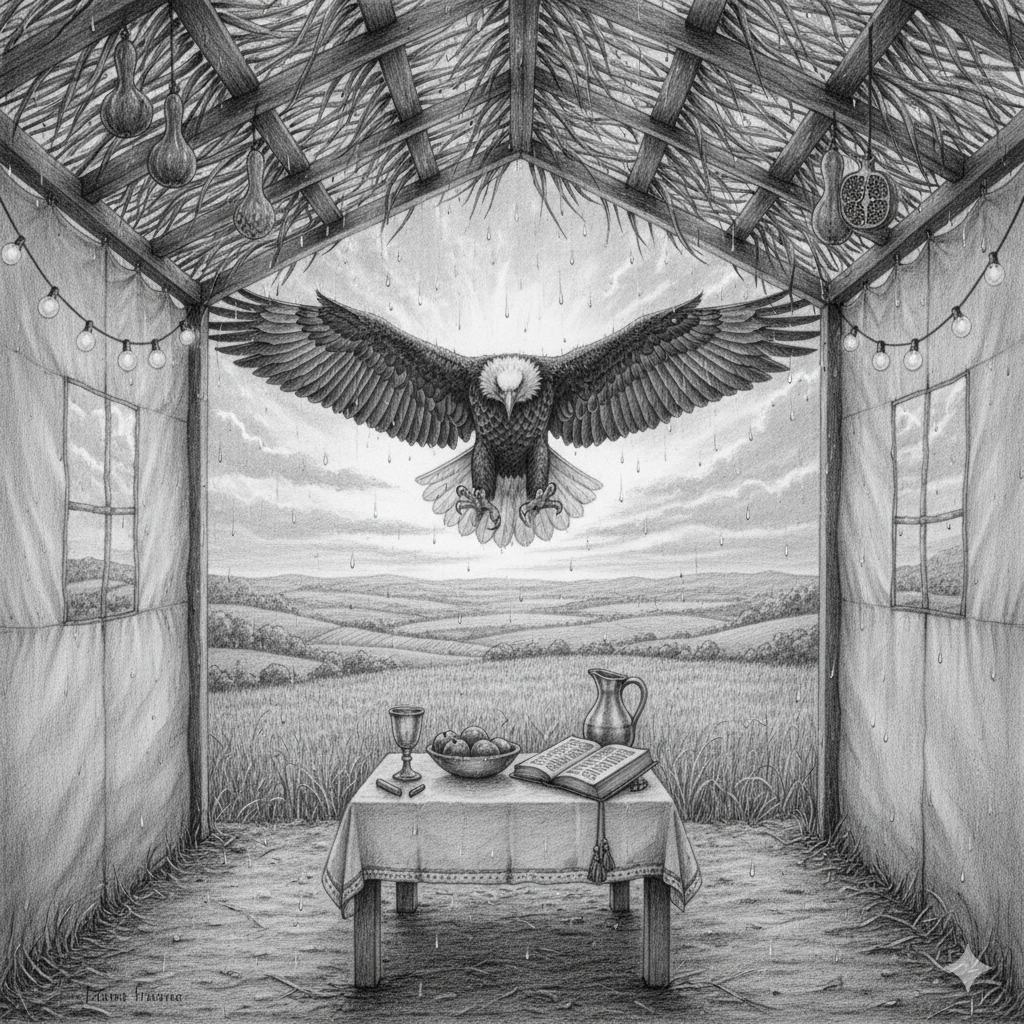
    There is a particular sound to the world when heard from inside a sukkah. The solid walls of our homes are designed to keep the world out; the thin walls of the sukkah invite it in. The rustle of the wind through the s’chach, the distant sound of traffic, the neighbour’s conversation—all of it becomes part of the fragile, temporary space we inhabit. We are exposed, and in that exposure, we become more attentive.

    It is a fitting backdrop for the Torah portion we read this Shabbat, Ha’azinu. The very name is a command: “Listen!” or “Give ear!” It is the opening of Moses’ final poem, a great song of witness offered as his legacy to the people. He does not begin with law or history, but with an appeal for deep listening, calling on the heavens and the earth as his audience:

    “Give ear, O heavens, let me speak; Let the earth hear the words I utter! May my discourse come down as the rain, My speech distil as the dew.”

    In the sukkah, this is not a metaphor; it is a possibility. A passing shower might literally send us running for cover. We sit in a dwelling that reminds us how much we depend on the dew and the rain, on the rhythms of a world beyond our control. Moses’ poem uses the language of nature to describe the essence of Torah. This week, we are invited to sit within nature to hear it.

    The poem continues with one of our tradition’s most tender images of God’s care, comparing it to an eagle tending its young: “Like an eagle that stirs up its nest, that hovers over its young, so did God spread wings and take them, bear them on pinions.” We build our solid homes to convince ourselves that we are self-sufficient, that we have no need of such hovering protection. But for one week, the sukkah dismantles that illusion. Its flimsy structure reminds us of our vulnerability, of our reliance on a strength greater than our own. We sit in our temporary nest, looking up at the sky, and remember that we are, in some profound way, still fledglings.

    Moses summons heaven and earth to act as eternal witnesses to his song. In the sukkah, we are literally sitting between the two. Through the latticed roof, we see the heavens; beneath our feet is the earth. We become participants in the listening Moses demands.

    Perhaps this is the deepest connection between the temporary hut and the eternal song. Our homes, for all their comfort, can create an illusion of permanence and control, insulating us not just from the weather but from a sense of wonder and dependence. The sukkah and the poem of Ha’azinu are a necessary disruption. They call us back to a state of attentive listening, to a recognition of the fragility of our existence, and to the faithful presence that holds us, like an eagle, even when we feel most exposed.

    As we celebrate z’man simchateinu, our season of joy, may it be a joy deepened by this quiet attentiveness.

    Chag Sameach and Shabbat Shalom.

    #Sukkot #Haazinu #ShabbatShalom #Sukkah #ChagSameach #JewishSpirituality #SpiritualReset #SeasonOfOurJoy

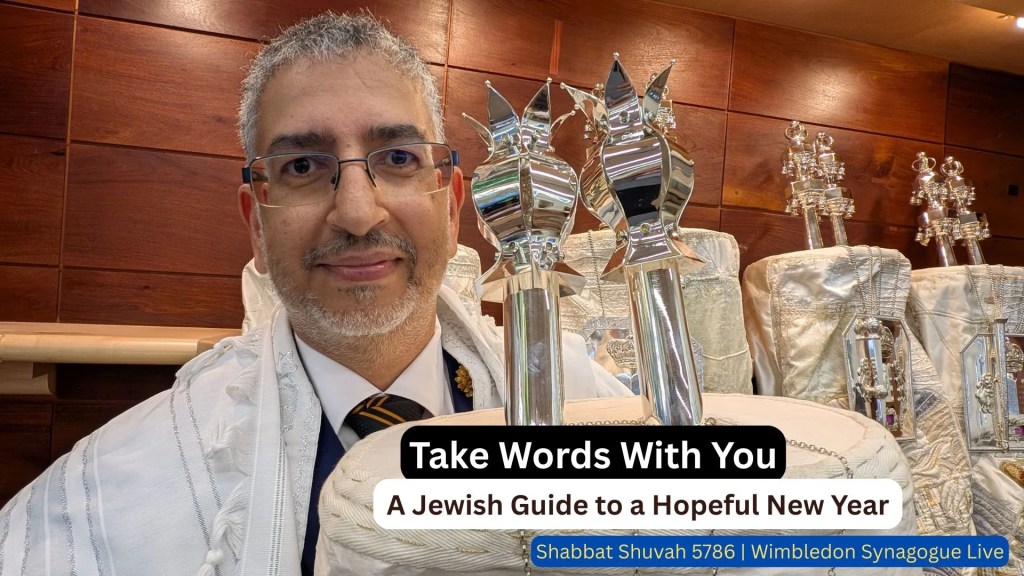
  • Take Words With You: A Jewish Guide to a Hopeful New Year

    Take Words With You: A Jewish Guide to a Hopeful New Year

    Between Rosh Hashanah and Yom Kippur, the work of ‘teshuvah’ (return) can feel daunting. But what if the essential tool for change isn’t guilt, but language? Rabbi Adrian Schell explores the ancient Jewish “technology” of using words—for apology, for prayer, and for rewriting our own stories—as we prepare for the new year. Drawing on the Torah portion Vayeilech and the prophet Hosea, this sermon reframes Yom Kippur not as a day of judgment, but as a hopeful destination on a communal journey.

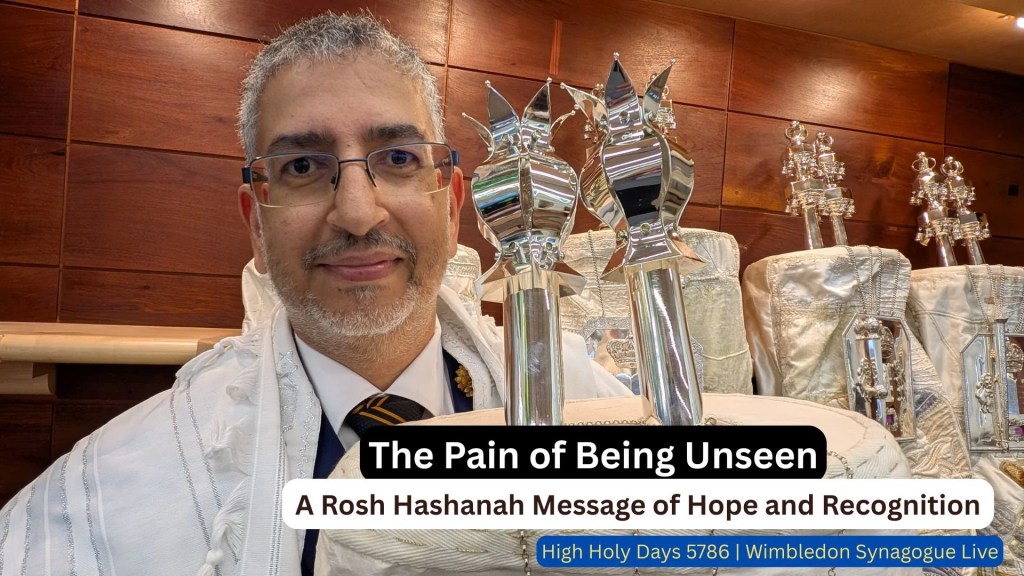
  • The Pain of Being Unseen: A Rosh Hashanah Message of Hope and Recognition

    The Pain of Being Unseen: A Rosh Hashanah Message of Hope and Recognition

    On Rosh Hashanah, we stand before the Divine with a profound and deeply human hope: to be truly seen. This sermon explores the quiet, sinking feeling of being overlooked that we have all experienced and connects it to the central prayers of the High Holy Days. It asks: What is the greatest blessing we can receive in this new year?

    The proposed answer is not a magical solution to our problems, but something far more powerful: a change in our own perspective. The sermon develops, based on the biblical story of Hagar, a beautiful metaphor for this blessing, asking God to open our eyes so we can see the “wells” of strength, love, and potential that already exist within and around us, often hidden by our own despair or weariness.

    This is a message about empowerment and agency. It is a call to action for the new year: to find the strength to repair relationships, to be kinder, and to see the divine spark in others. Ultimately, it is a prayer that we might become a community where no one feels invisible, and that this be a year where we not only feel seen, but learn to truly see.

    Let this season be a time to step out of the darkness and behold the light of renewal and awe.

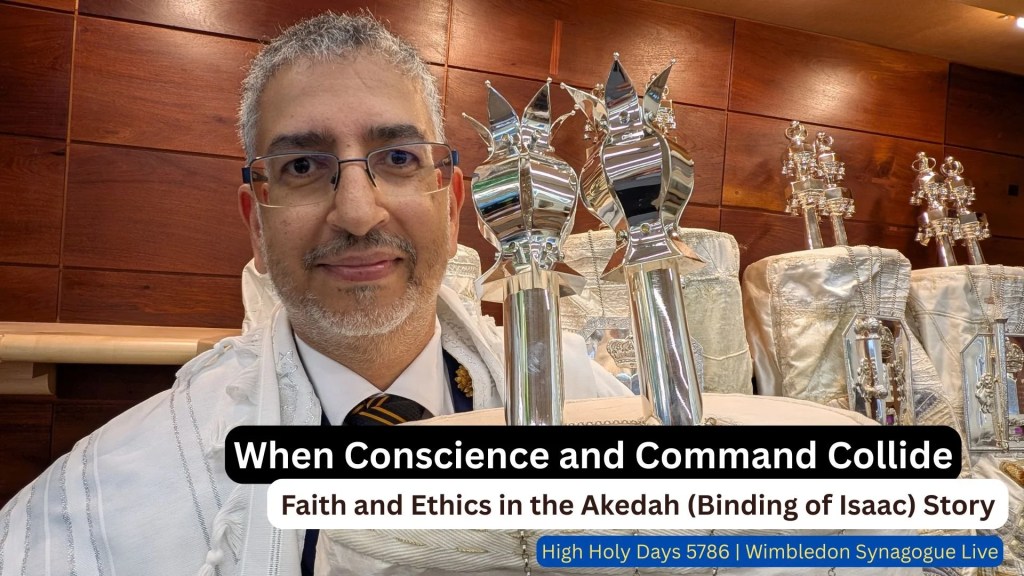
  • When Conscience and Command Collide: Faith and Ethics in the Akedah (Binding of Isaac) Story

    When Conscience and Command Collide: Faith and Ethics in the Akedah (Binding of Isaac) Story

    When Conscience and Command Collide: Faith and Ethics in the Akedah (Binding of Isaac) Story

    In this powerful sermon for the first day of Rosh Hashanah 5786, Rabbi Adrian Schell of The Wimbledon Synagogue offers a profound re-reading of the Binding of Isaac (the Akedah).

    What if Abraham’s journey up the mountain was not an act of blind submission, but a courageous test of God’s own promise? This sermon explores faith not as the silencing of our moral conscience, but as an active, courageous partnership with the Divine. It delves into the collision between command and covenant , the modern voices of fear and anger that command us today , and the silenced voice of Sarah, whose cries of determined hope become the very sound of the shofar.

    A message that challenges us to hold fast to our moral centre and renew our commitment to healing a fractured world, starting with the one inside each of us.