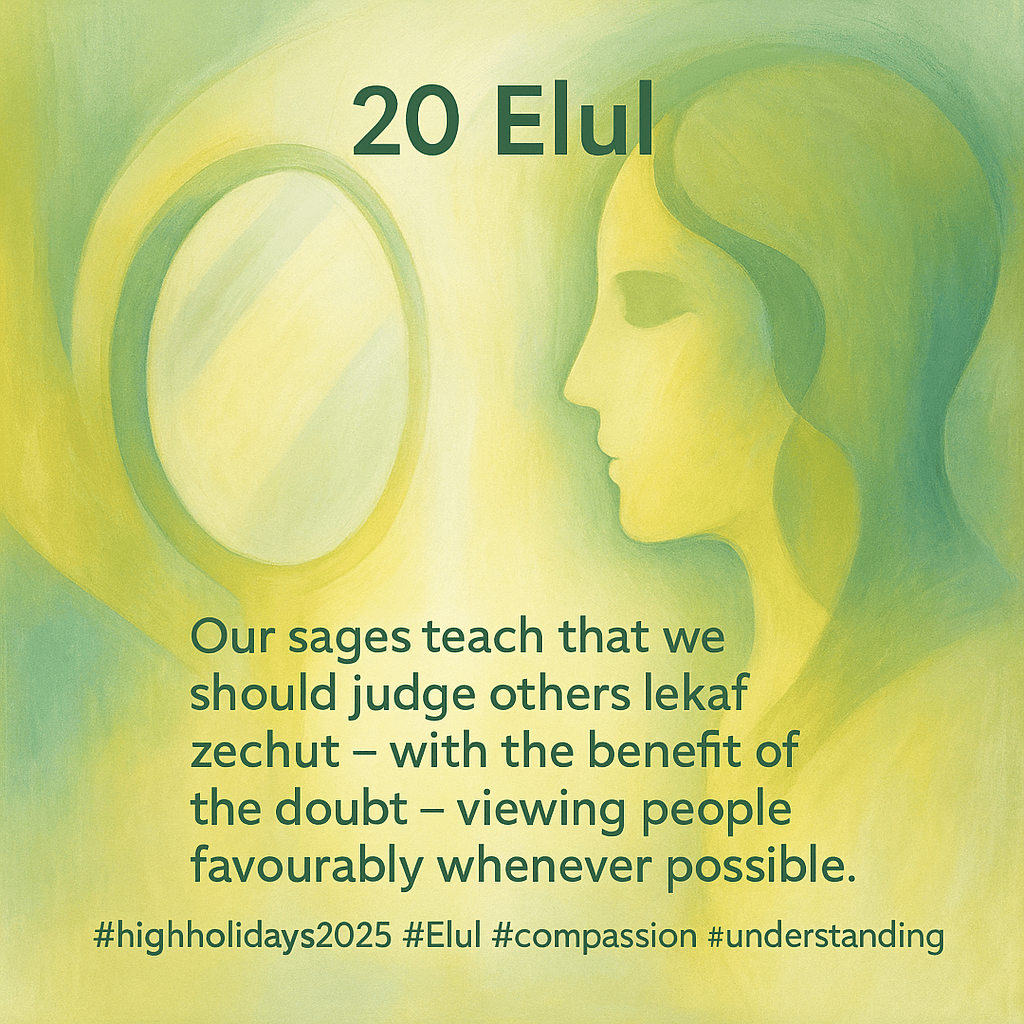
Our sages teach that we should judge others lekaf zechut – with the benefit of the doubt – viewing people favourably whenever possible.
#highholidays2025 #Elul #compassion #understanding
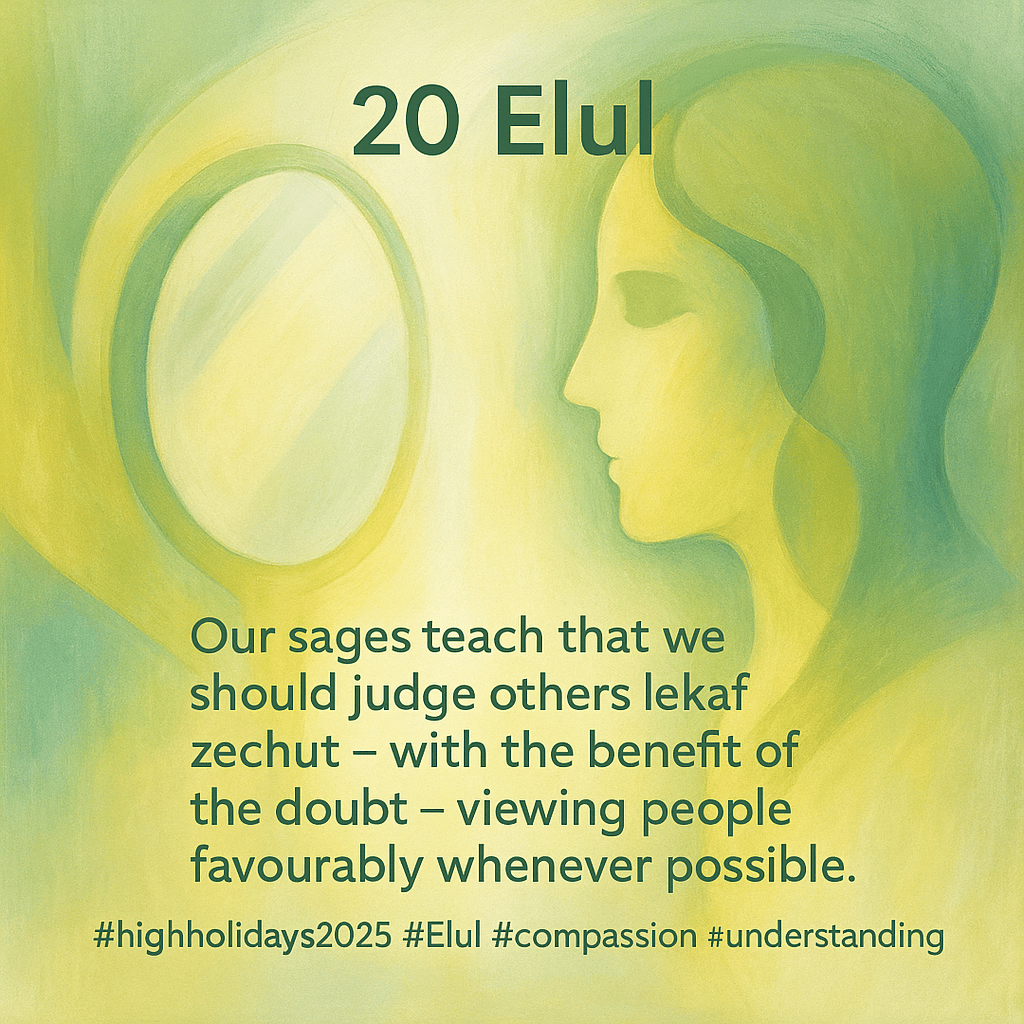
Our sages teach that we should judge others lekaf zechut – with the benefit of the doubt – viewing people favourably whenever possible.
#highholidays2025 #Elul #compassion #understanding
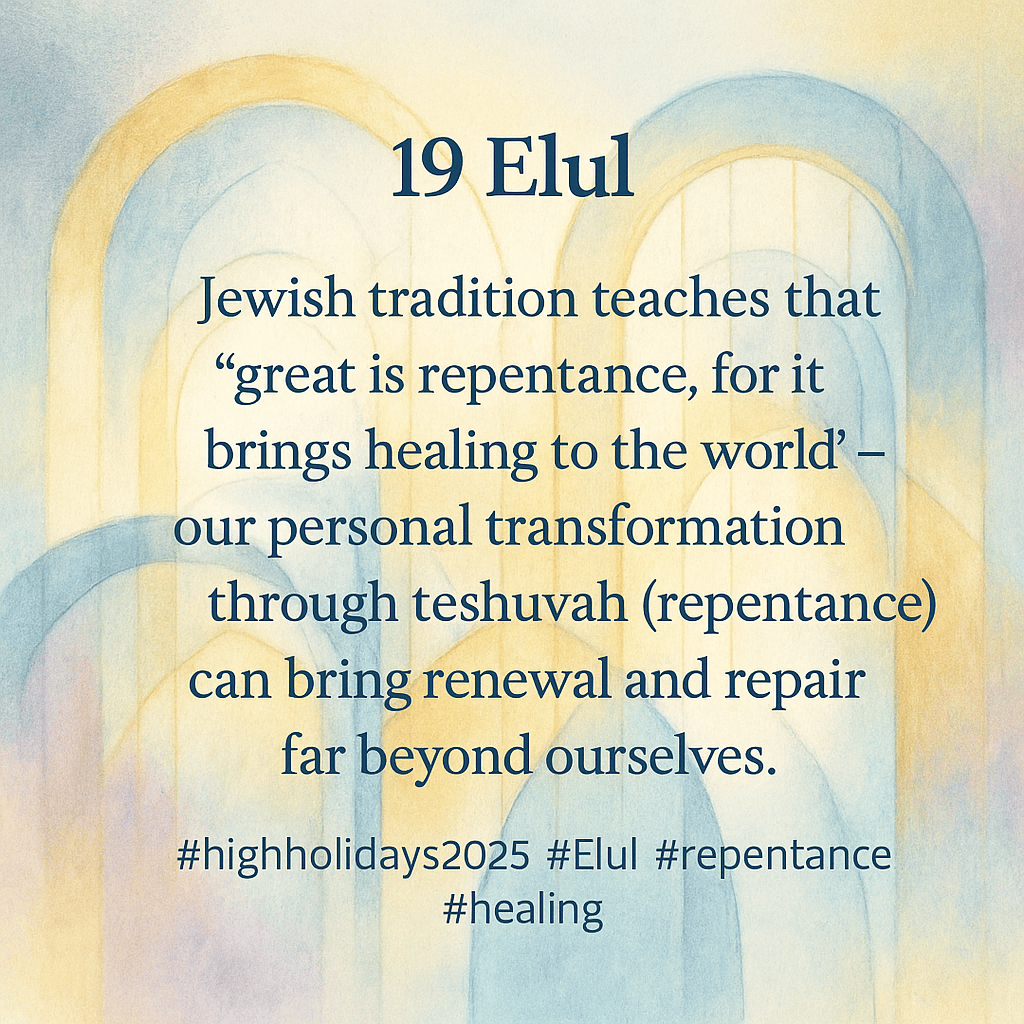
Jewish tradition teaches that “great is repentance, for it brings healing to the world” – our personal transformation through teshuvah (repentance) can bring renewal and repair far beyond ourselves.
#highholidays2025 #Elul #repentance #healing
Pirkei Avot teaches that you are not obligated to complete the work of perfecting the world, “but neither are you free to abandon it” – encouraging perseverance in pursuing goodness and justice.
#highholidays2025 #Elul #perseverance #responsibility
There is a kind of seriousness we sometimes mistake for holiness. We approach our religious lives, especially as the High Holy Days draw near, with a sense of profound obligation, of weighty duty. There is a time for solemnity, of course. Yet, our tradition is wary of a service that becomes so heavy it crushes the spirit it is meant to lift.
Tucked away in the long, difficult litany of curses in our portion, Ki Tavo, is one of the most surprising rebukes in the entire Torah. The consequence for failing to uphold the covenant is severe, but the reason given is startling. It is not for a failure of action, but a failure of affect. “Because you did not serve the Eternal your God with joy and gladness of heart,” the text warns. The absence of joy is, itself, a spiritual failing.
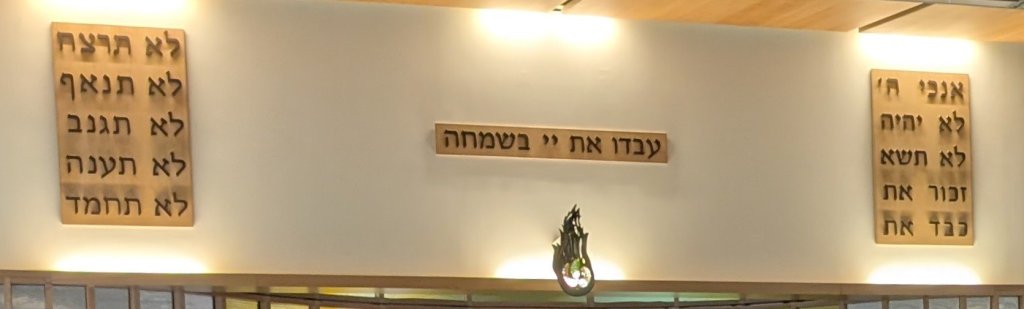
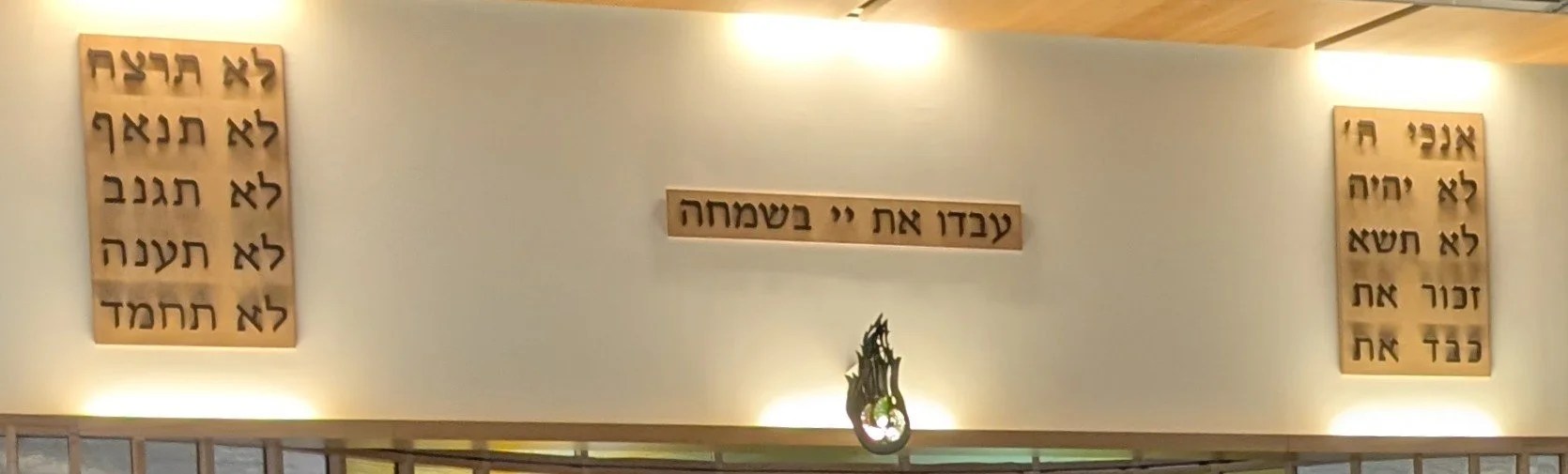
This is a radical idea. It suggests that our tradition is concerned not only with what we do, but with the orientation of our hearts as we do it. It reframes service, avodah, not as a burden to be endured, but as a path to be walked with a glad spirit. This is the very essence of Psalm 100, which we know so well: Ivdu et Adonai b’simchah, “Serve the Eternal with gladness” is even written above our Torah ark. It is not a suggestion, but an instruction.
The joy our tradition speaks of, simchah shel mitzvah, is not a superficial happiness or a denial of life’s difficulties. It is the deep sense of rightness that comes from living a life of purpose. It is the quiet delight found in a shared Shabbat meal, the warmth that comes from giving tzedakah without expectation of thanks, the profound connection felt when we stand together in prayer. This joy is not an escape from the world; it is the energy that fuels our work within it. Service without joy becomes brittle and can easily break. Service with joy is resilient, sustainable, and life-giving.
Tonight, as Shabbat ends, we will gather for our Selichot service, the formal beginning of our period of High Holy Day reflection. How can this call to joy possibly square with the solemn mood of repentance? It seems a contradiction. But perhaps it is not a contradiction, but a prerequisite. The Chasidic masters taught that sadness closes the gates of heaven, while joy opens them. We cannot begin the honest work of teshuvah, of return, from a place of despair. We need the light and warmth of Shabbat’s joy to give us the courage to face our own shadows.
May this Shabbat fill us not with a fleeting happiness, but with a deep and resilient joy, a gladness of heart that we can carry with us into the sacred work of the days to come.
Shabbat Shalom,
Rabbi Adrian
Our sages teach, “Not study but practice is the main thing” – reminding us that learning must lead to action, and we truly live our values through what we do.
#highholidays2025 #Elul #action #integrity
Jewish tradition teaches that worship is only meaningful when it reflects our commitment to be just and kind in our dealings with others.
#highholidays2025 #Elul #worship #ethics
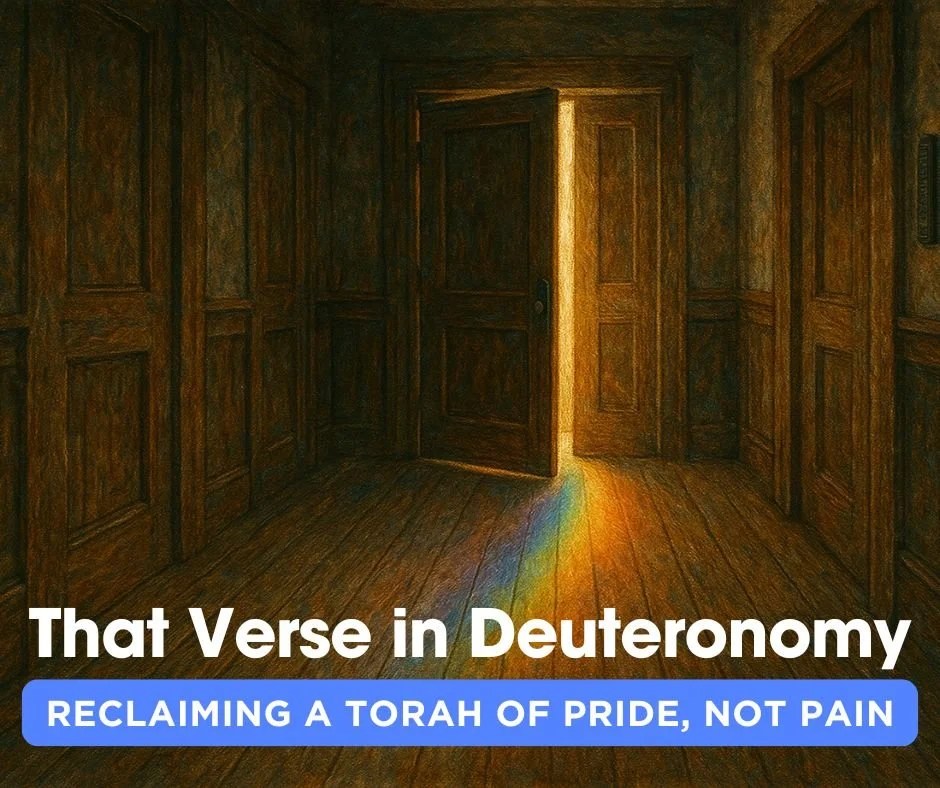
Imagine our tradition, our Torah, is a vast and ancient house. We do not build it from scratch; we inherit it. It has been passed down to us through so many generations that the floorboards whisper with the footsteps of our ancestors. It is a magnificent, sprawling, and sometimes bewildering place.
There are grand halls where the light streams in, rooms whose walls are lined with psalms that sing of hope. There is a library filled with thousands of volumes of Talmudic debate, crackling with intellectual energy. There is a kitchen, warm and fragrant, where the laws of kashrut and the recipes for festivals and Friday night dinners live side-by-side, teaching us how to sanctify the everyday.
We spend most of our lives exploring these beautiful, life-affirming spaces. This is the house of our souls.
But in this great house, there are other rooms. Small, sometimes difficult rooms. And on a night like this, a night of Pride, we have to talk about one of them.
You know the one. You walk down a long corridor, and you find a door that is often kept shut. When you enter, the air is cold. The furniture feels sharp-edged. And on the wall, framed in heavy, dark wood, hangs a single decree from our portion, Ki Tetzei: “A woman shall not wear that which pertains to a man, nor shall a man put on a woman’s garment.”[1]
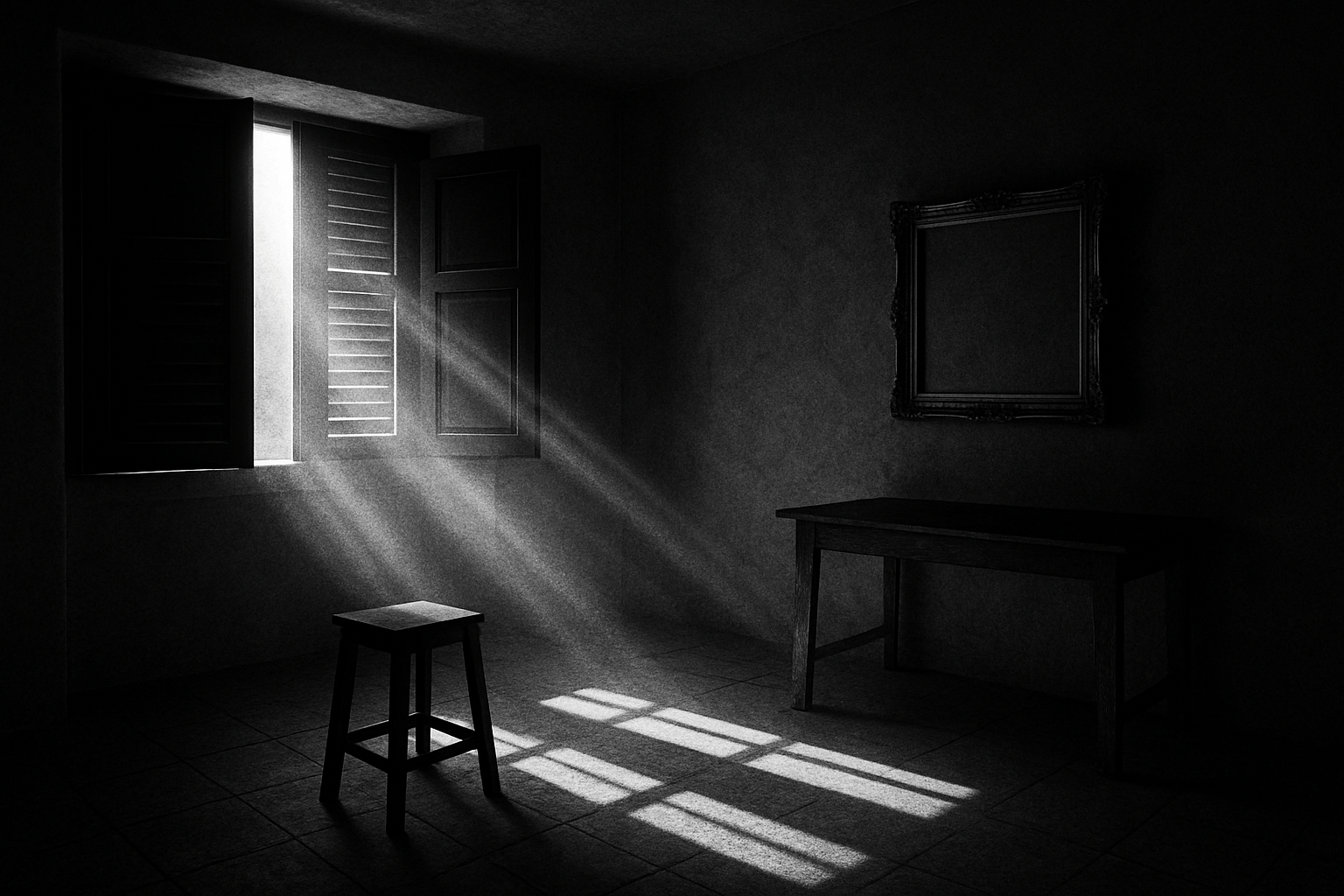
For centuries, this has been a room of pain. People have been pushed inside and told, ‘This is your place. This defines you.’ Others have been cast out of the house altogether because of what is written on that wall. It has been used as a place of judgment, a place to tell transgender and non-binary and queer people that they have no part in the beauty of the rest of the house. That their way of being is, in the verse’s own stark terms, an “abomination.”
As a gay man, I know what it is to be shown a difficult room in this house. I have had the verses from Leviticus[2] pointed out to me, the lines from Genesis saying that “a man should cling to his wife”[3], and been told, ‘See? This beautiful house was not built for you.’ I know the particular chill of having our inheritance, our sacred text, used to declare our love and our lives invalid. It is a profound and lonely pain.
But we are not tenants in this house; we are its inheritors. And inheritors have a right, and a responsibility, to open the shutters, to study the architecture, to understand what a room was truly for.
So let us not flee from this cold room. Let us stay a while. Let us look closer. Tucked away on a dusty shelf, we find notes left by earlier inhabitants. Here is one, left by the great sage Rashi. He writes that this room was designed as a protection against deception, to prevent people from disguising themselves to commit adultery[4]. Here is another note, from the philosopher Maimonides. He suggests this room was a safeguard against ancient pagan rituals[5]. We see that for our greatest ancestors, this room was never meant to be a prison.
It was meant to be a lock on the door against harm, against falsehood, against the things that would cheapen the sanctity of human relationships[6]. Its purpose, in their eyes, was safety.
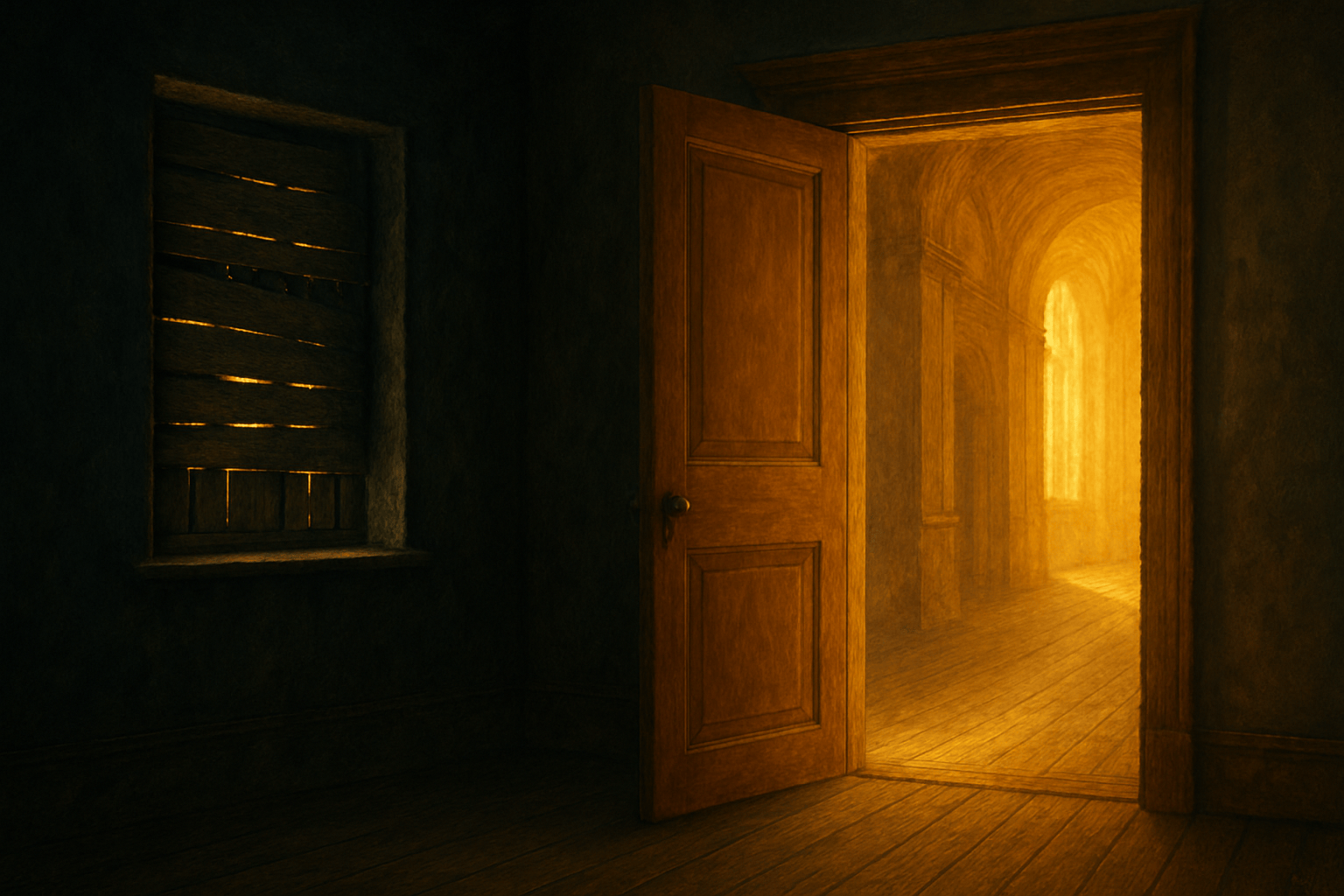
With that understanding, something shifts. The room is still challenging, its language still harsh. But we can see that its core impulse was not to shame identity, but to forbid deceit. And then we realise the most important thing of all. This one room is not the whole house. We can walk out of that door and find ourselves in the most magnificent space of all—the Great Hall, at the very centre of our tradition. And on the walls of this hall, there is only one, luminous declaration, repeated over and over: That every single human being is created b’tselem Elohim[7], in the Divine Image.
In this hall, there are no two faces alike. Every expression, every identity, every soul is a unique and irreplaceable reflection of God’s own boundlessness. The light from this hall is so brilliant it streams under every doorway. It changes the way we see everything else.
To live as a Progressive Jew is to choose to live in the light of that Great Hall. It is to insist that the truth of b’tselem Elohim must illuminate every other room in the house.
And this changes our relationship with that difficult verse in Ki Tetzei. We are no longer just its inheritors; we become its restorers. We can open the shutters in that cold room and let the light flood in. We can say: if this text’s deepest fear is deception, then its highest hope must be authenticity.
A person living their truth, expressing their genuine gender identity, is not committing an abomination; they are performing an act of profound spiritual courage. They are bringing more truth, not less, into the world. They are living in the light of the Great Hall.
This is our work today, especially on Pride Shabbat. Our world is full of voices trying to lock our trans and non-binary siblings back in that cold, dark room. They use the same logic of shame and exclusion, not just in synagogues, but in newspapers, in Parliament, in our schools.
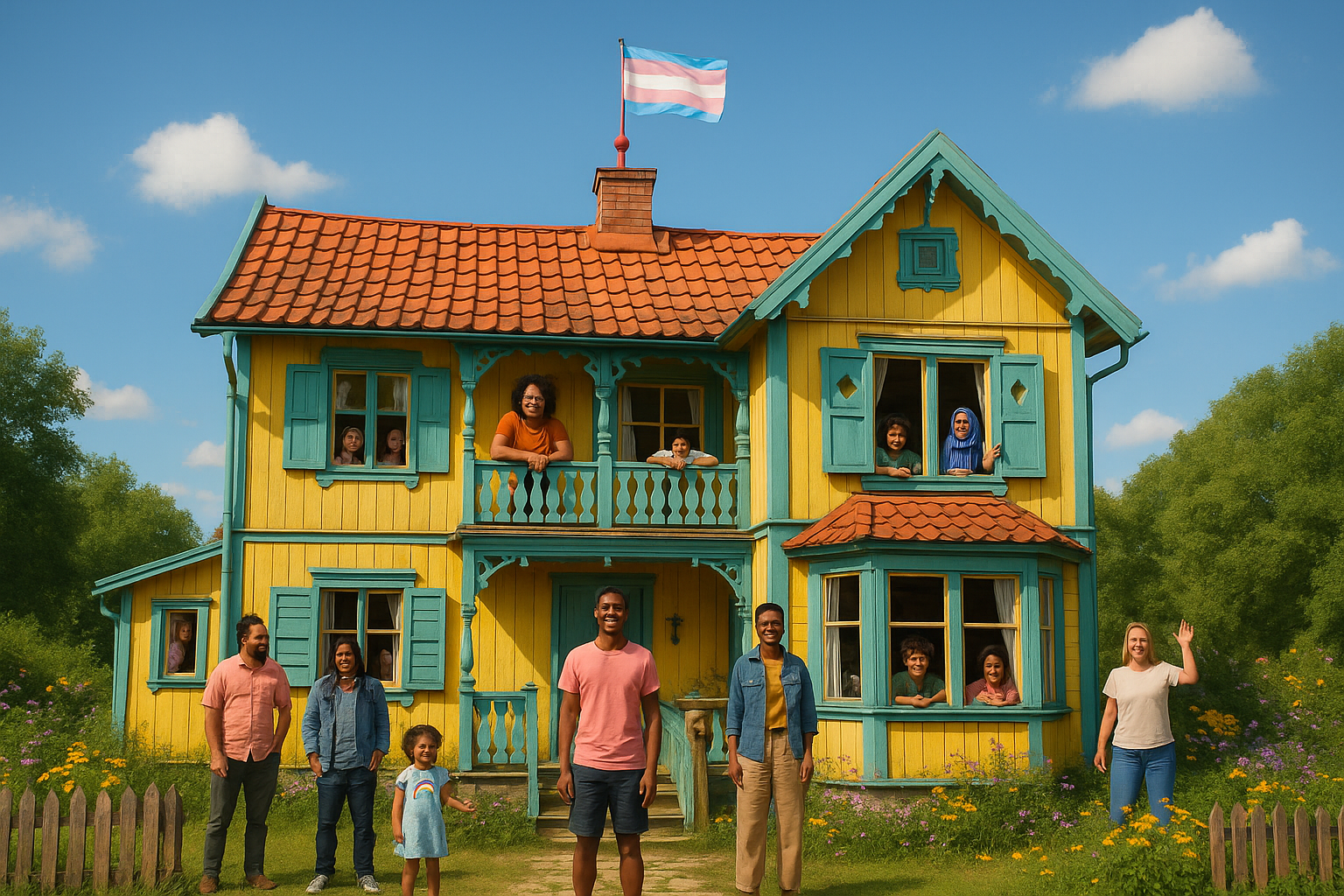
Our task is to stand at the door of this great house—our community, our tradition—and to be the ones who welcome people in. To say, ‘I know, some of the rooms in here are difficult. But let me show you the magnificent hall at its heart. Let me show you the gardens of justice. This house belongs to you, too.’
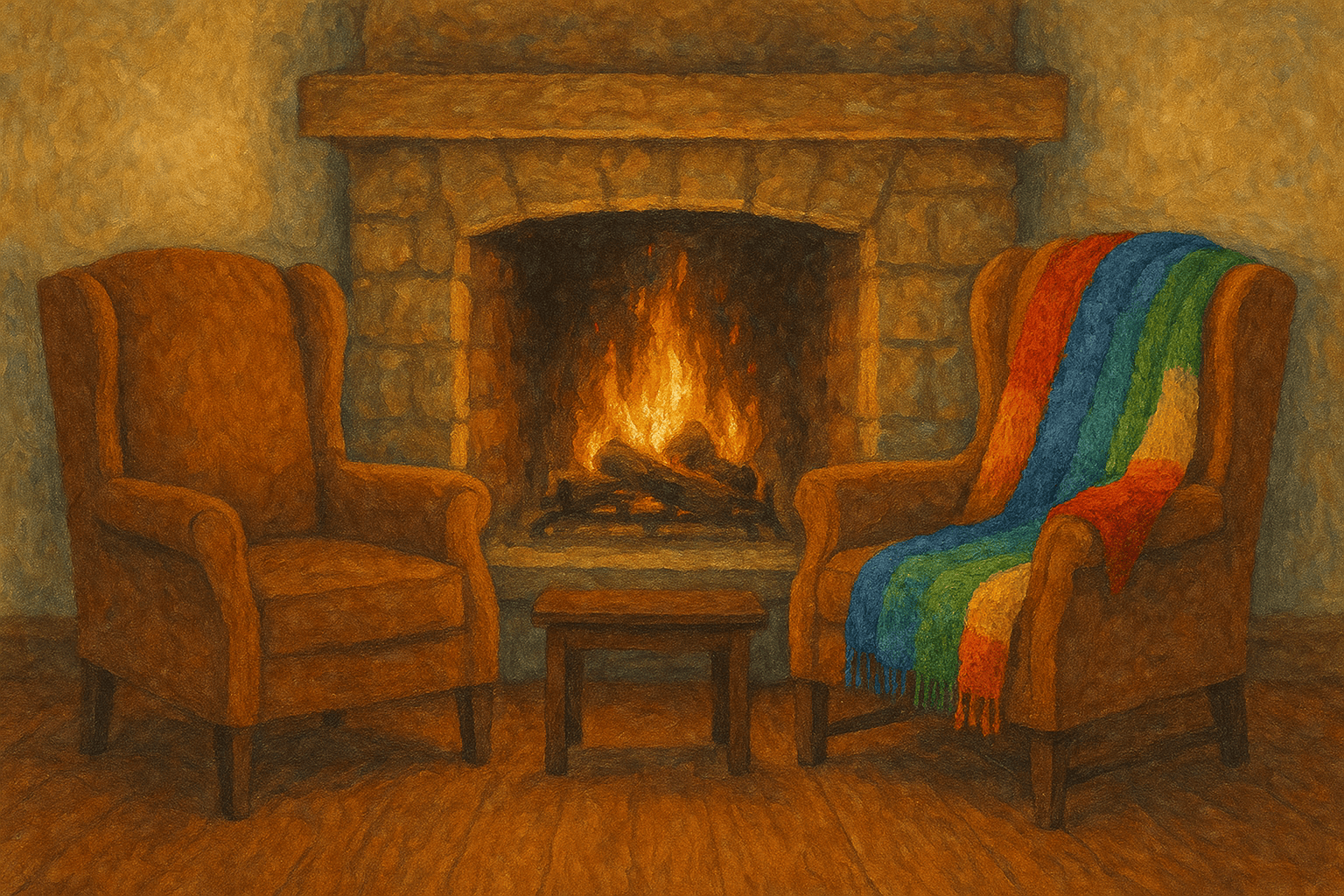
To our trans, non-binary, and queer siblings, hear this: This is your house. You are not a guest. You are not an intruder. You are an inheritor, with every right to find your place, to hang your own pictures on the walls, to fill its rooms with your own light, your own songs, your own truth. You make this house more beautiful, more holy, and more whole.
And to those who stand as allies: your / our job is to be the custodians of the house’s warmth. When someone is made to feel unwelcome, we bring them a seat by the fire. When a difficult text is read with cruelty, we must be ready to read it with love. We must ensure that our part of this house, this synagogue, is always a room of safety, a sanctuary of belonging.
The beauty of the house we inherit is that it is not a museum. It is a home. And a home is a living thing. Every generation has the holy task of adding a room, opening a window, letting in more light. On this Pride Shabbat, let us commit to that sacred work. Let us build a Judaism where every room is a room of welcome, and where the light from the Great Hall of b’tselem Elohim shines so brightly that no corner is left in shadow.
Ken yehi ratzon.
[1] Deuteronomy 22:5
[2] Leviticus 18:22; 20:13
[3] Genesis 2:24
[4] Rashi, following Sifrei and Nazir 59a, says the ban targets dressing to mingle deceptively and facilitate sexual transgression. https://www.sefaria.org/Rashi_on_Deuteronomy.22.5?lang=bi
[5] Maimonides links it to pagan ritual practices; cross-gender garb as cultic behaviour. https://www.sefaria.org/Mishneh_Torah%2C_Foreign_Worship_and_Customs_of_the_Nations.12.11?lang=bi
[6] https://www.rabbinicalassembly.org/sites/default/files/public/halakhah/teshuvot/2011-2020/transgender-halakhah.pdf
[7] Genesis 1:27
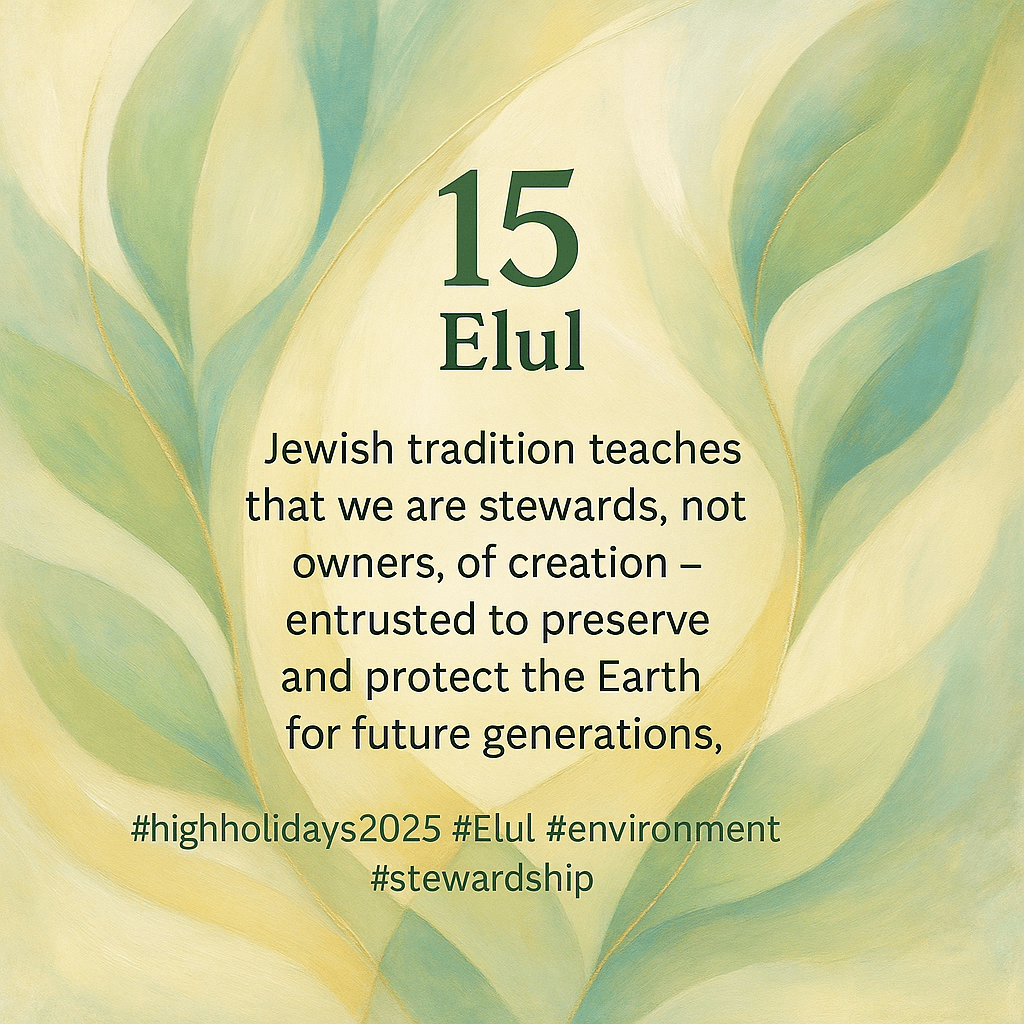
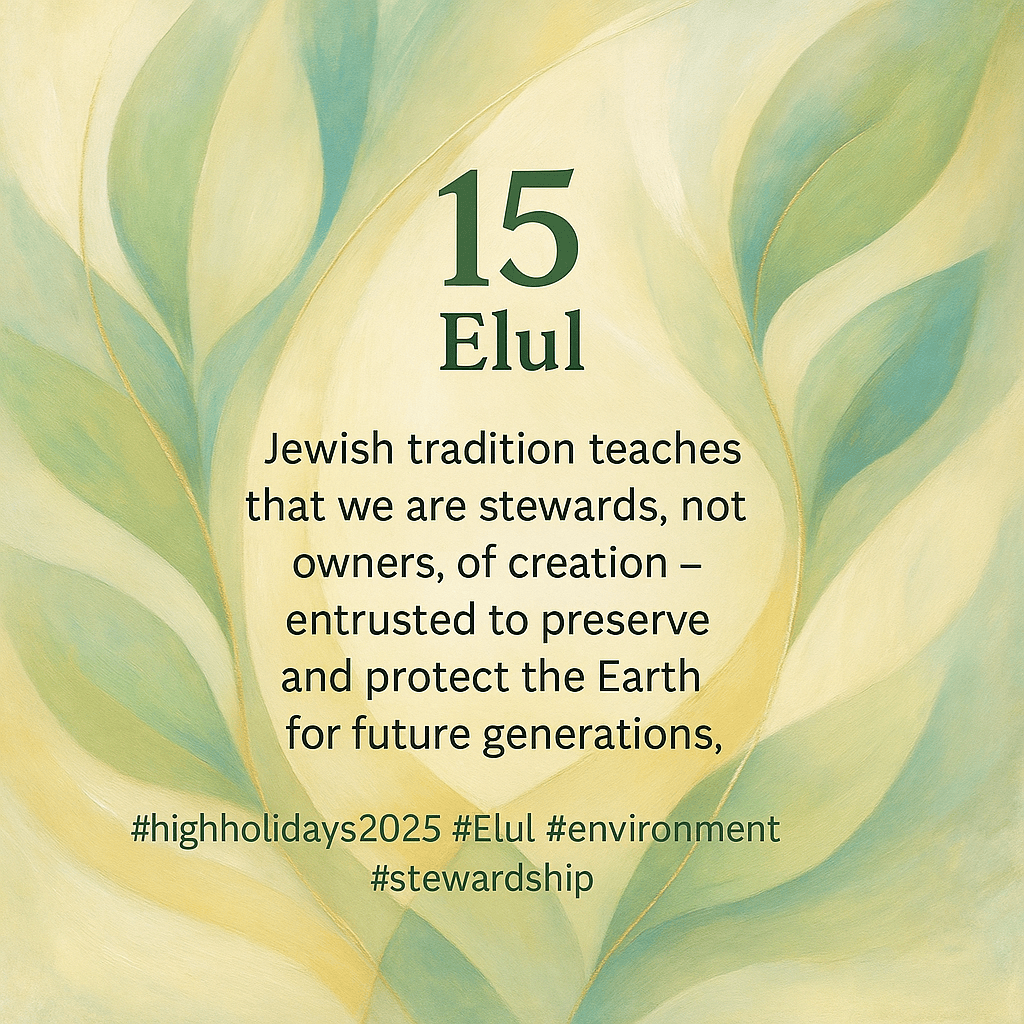
Jewish tradition teaches that we are stewards, not owners, of creation – entrusted to preserve and protect the Earth for future generations.
#highholidays2025 #Elul #environment #stewardship
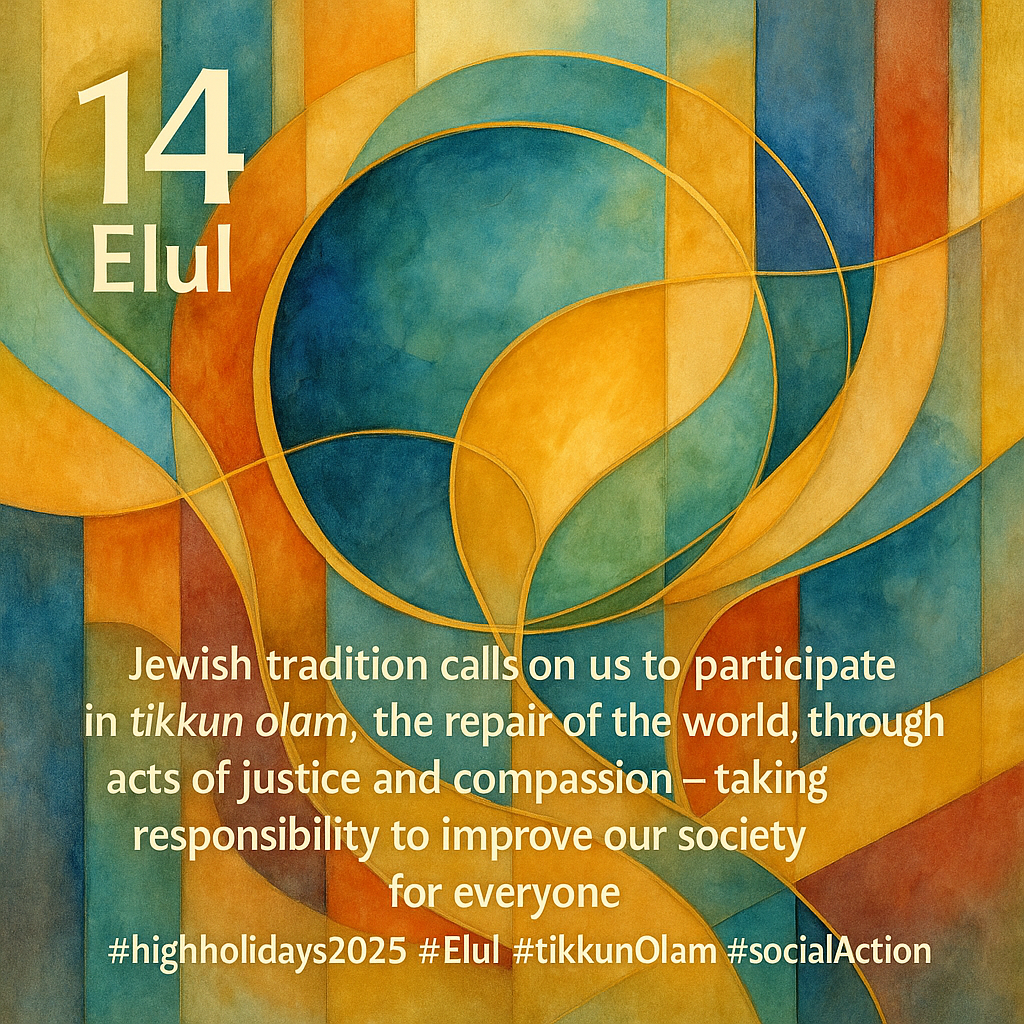
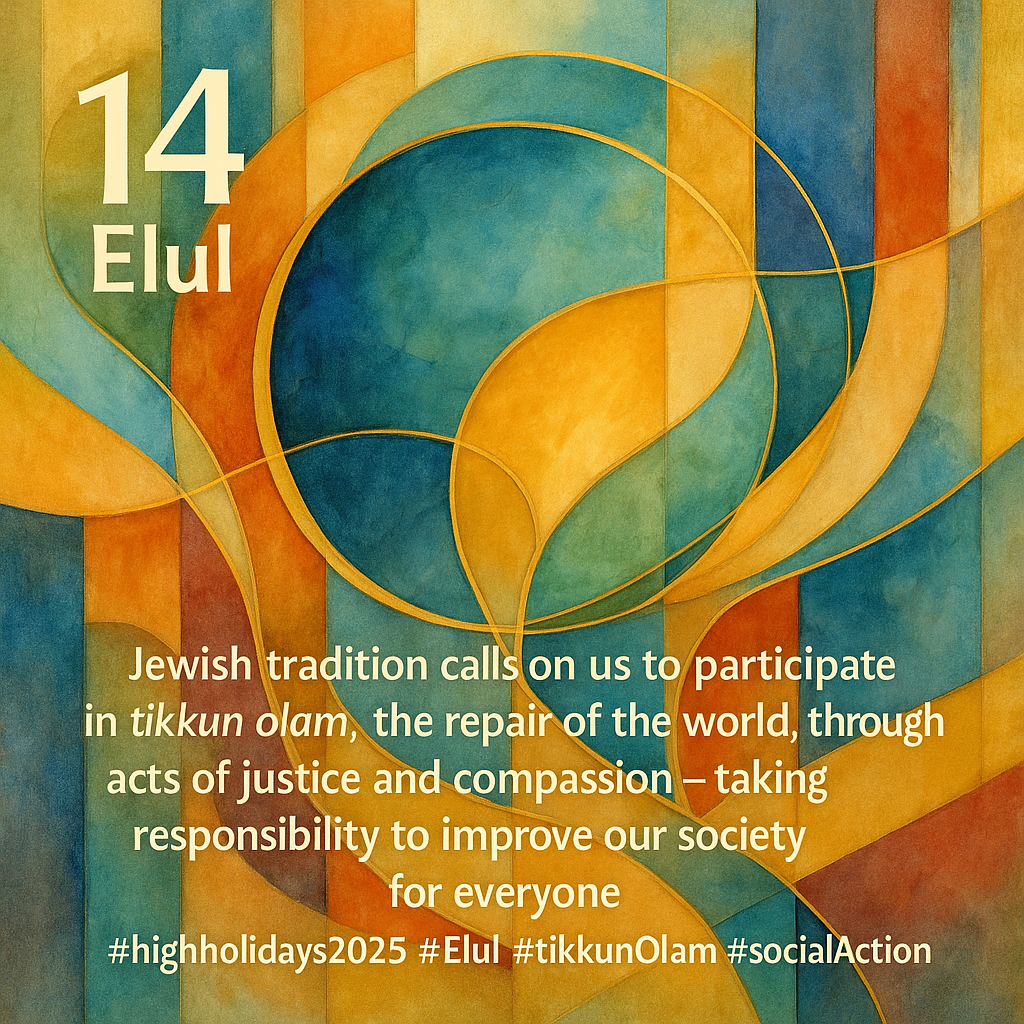
Jewish tradition calls on us to participate in tikkun olam, the repair of the world, through acts of justice and compassion – taking responsibility to improve our society for everyone.
#highholidays2025 #Elul #tikkunOlam #socialAction
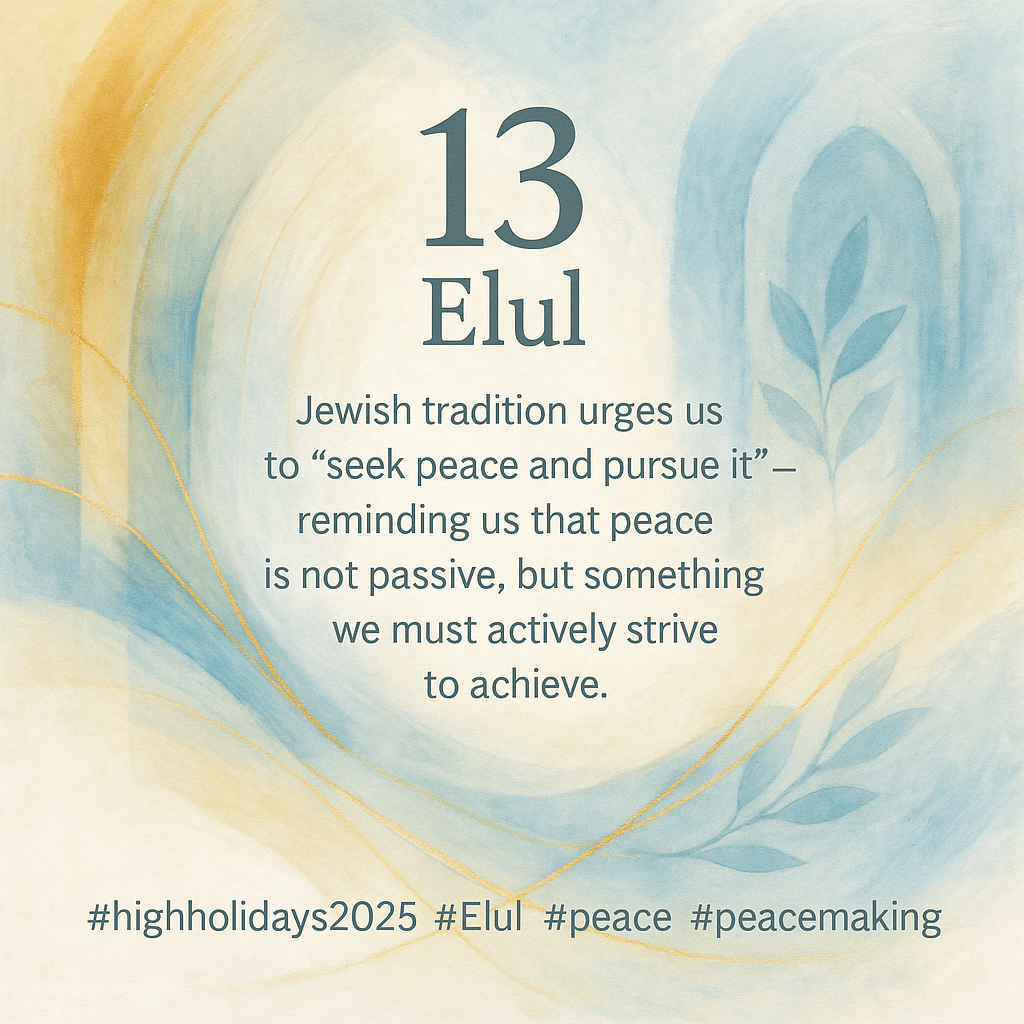
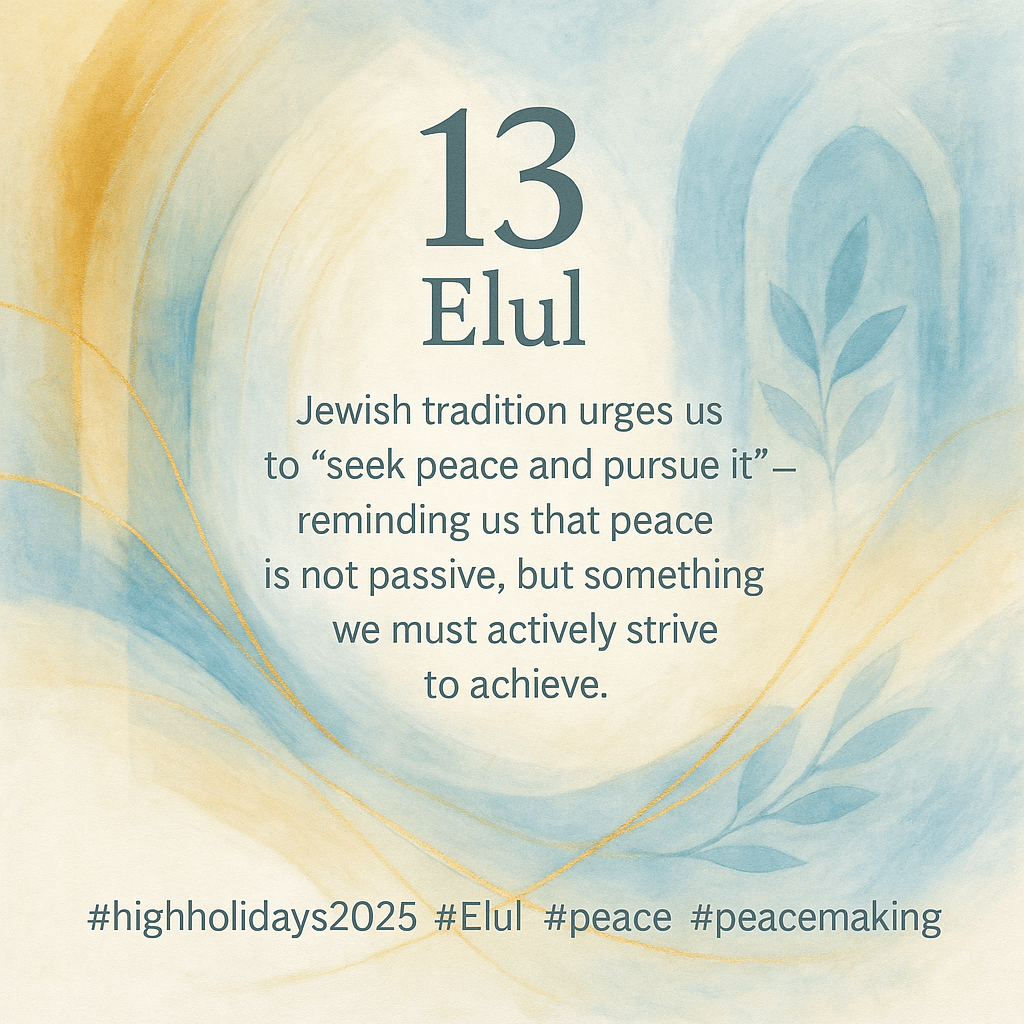
Jewish tradition urges us to “seek peace and pursue it” – reminding us that peace is not passive, but something we must actively strive to achieve.
#highholidays2025 #Elul #peace #peacemaking

