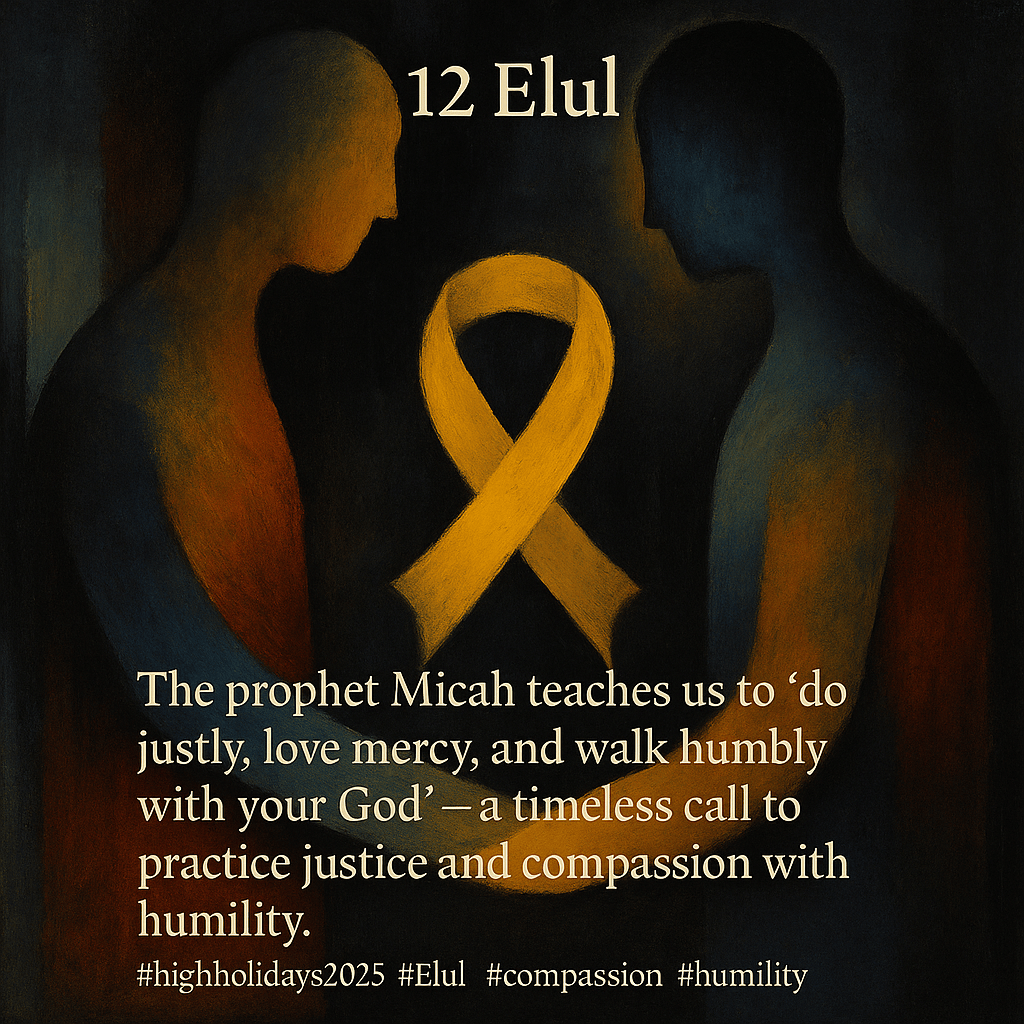
The prophet Micah teaches us to “do justly, love mercy, and walk humbly with your God”– a timeless call to practice justice and compassion with humility. #highholidays2025 #Elul #compassion #humility #bringthemhome #700
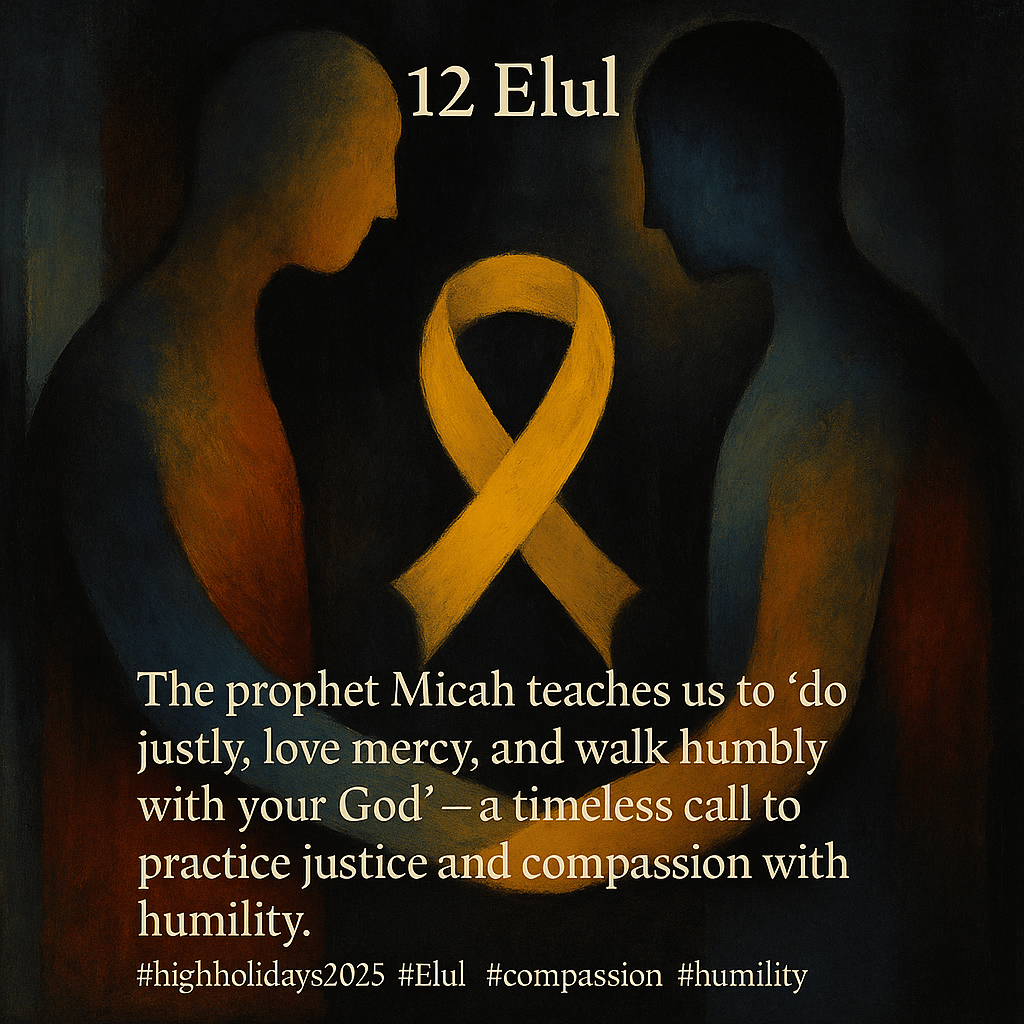
The prophet Micah teaches us to “do justly, love mercy, and walk humbly with your God”– a timeless call to practice justice and compassion with humility. #highholidays2025 #Elul #compassion #humility #bringthemhome #700


There are numbers that feel heavy to say, heavy to hold. This Friday marks 700 days. Seven hundred days since families were shattered and hostages were taken into captivity in Gaza. After so many months, as the world’s attention shifts and fades, hope can feel thin, and the act of remembering can feel like a painful, powerless gesture.
This Shabbat, we read Parashat Ki Tetzei, a portion filled with dozens of individual laws for building a just and compassionate society. Among its many instructions, we find the mitzvah of hashavat aveidah, of returning a lost object. The Torah commands us not to see our kinsman’s lost sheep and simply ignore it; we are obligated to return it. But the text adds a phrase of profound moral power. Concluding the instruction, it says: lo tuchal l’hitalem – ‘you are not able to ignore it’ (Deuteronomy 22:3).
This is more than a legal rule; it is a spiritual command against the slow erosion of apathy. You cannot look away. You cannot pretend you did not see. You cannot allow the passage of time to make the lost simply disappear from your conscience. It is a demand to remain stubbornly, actively aware.
The hostages, of course, are not lost property. They are lost pieces of our collective soul, stolen from the body of our people. Our sacred obligation, commanded in this week’s parashah, is lo tuchal l’hitalem. We cannot, we must not, ignore them.
Here at Wimbledon, this obligation has a name and a place. The empty seat we keep in our sanctuary is for Segev Kalfon. It is our quiet, constant refusal to be indifferent. It is our public declaration that we have not forgotten, and we will not forget. Every Shabbat, that empty space reminds us of the full space he, and all the hostages, ought to be occupying in the world, with their families, in freedom.
Seven hundred days is a measure of pain, but it is also a measure of our faithfulness. Our remembering is an act of hope. Our prayers are an act of hope. Our simple refusal to forget is our most profound declaration that our hope is not, and will never be, lost.
May Segev, and all who are held captive, be returned to us, speedily and in our days.
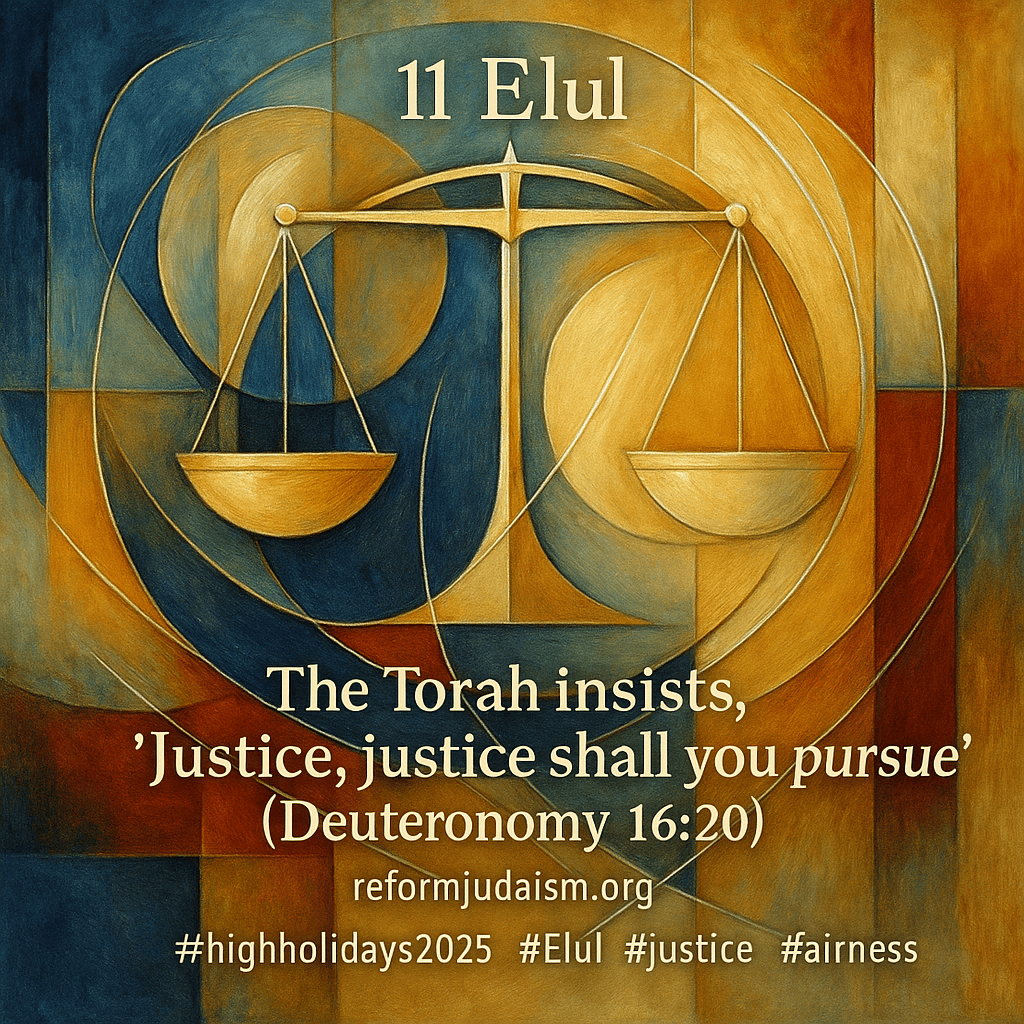
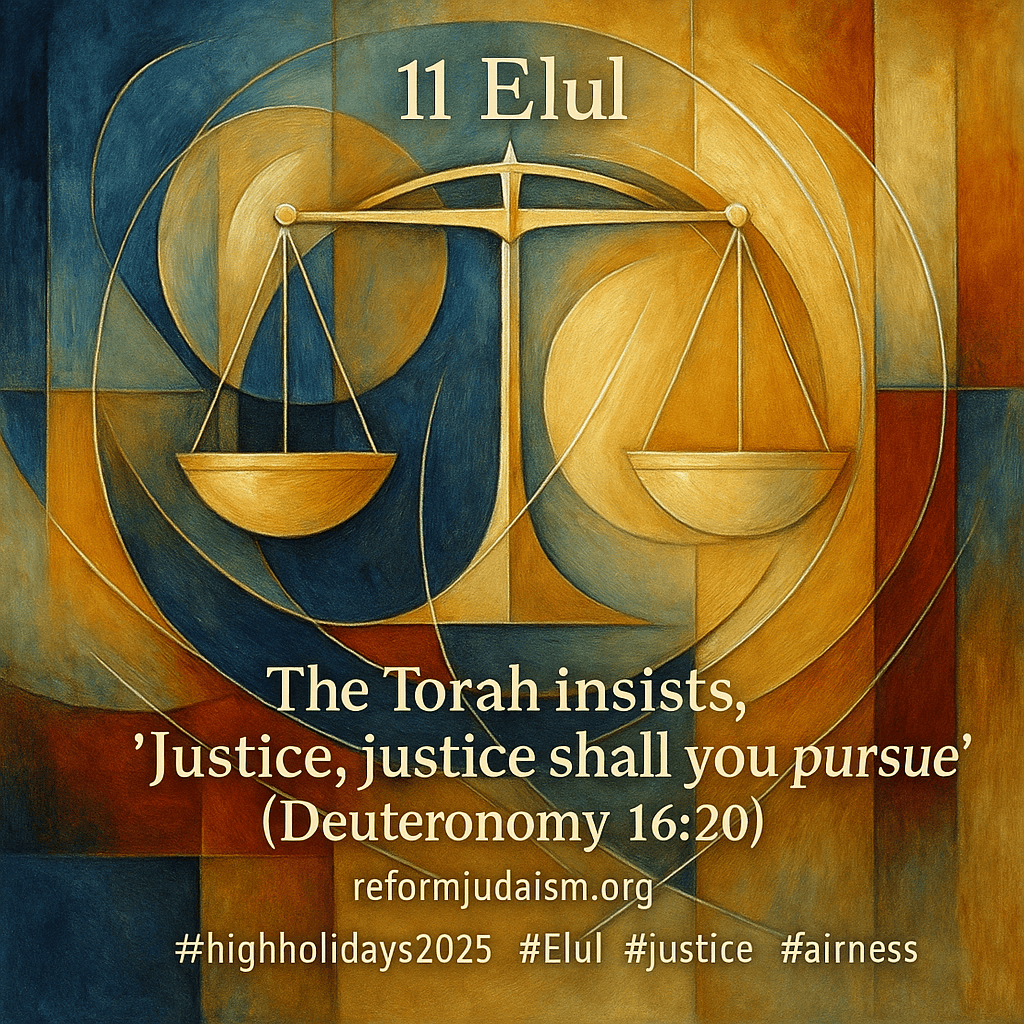
The Torah insists, “Justice, justice shall you pursue” (Deuteronomy 16:20)– a double emphasis highlighting our sacred obligation to seek justice and fairness for all.
#highholidays2025 #Elul #justice #fairness
Jewish tradition teaches that “whoever saves one life, it is considered as if they saved an entire world” – affirming the infinite value of each human life.
#highholidays2025 #Elul #sanctityOfLife #responsibility
The Torah warns, “Do not stand idly by while your neighbour’s blood is shed” – insisting that we intervene and speak up when others are in danger or suffering.
#highholidays2025 #Elul #takeAction #saveLives
Pirkei Avot teaches: “If I am not for myself, who will be for me? If I am only for myself, what am I? If not now, when?” – a charge to balance self-care with care for others, and to act with urgency for what is right.#highholidays2025 #Elul #action #urgency
Rabbi Abraham Joshua Heschel taught that “in a free society, some are guilty, but all are responsible,” reminding us of our collective duty to confront injustice.
#highholidays2025 #Elul #socialJustice #collectiveResponsibility
Jewish tradition teaches that we are all responsible for one another – kol Yisrael arevim zeh bazeh – emphasising community solidarity and mutual care. #highholidays2025 #Elul #community #solidarity


There’s a particular feeling that comes with the start of a long journey. Maybe you’ve felt it. That moment when the bags are packed, the destination is set, and you’re standing on the threshold, full of confidence. You’ve got the map. You know the way. Nothing can possibly go wrong. It’s a wonderful feeling, that initial burst of certainty.
And then, somewhere along the road, the map no longer matches the territory. The sun that was shining so brightly is hidden by clouds, the clear path becomes overgrown, and unease begins to creep in. You start to wonder if you’re lost. You start to feel very small and very alone.
This evening, we stand at the beginning of such a journey. We have just stepped into the month of Elul, the month that leads us toward the High Holy Days. Our tradition gives us a travelling companion for this journey, a spiritual map of sorts. It is a poem, an ancient song: Psalm 27. For the next month, our tradition invites us to read it every single day. It is a beautiful practice, because this psalm understands the journey perfectly. It knows all about that first burst of confidence, and it knows all about the moment when the ground suddenly falls away beneath your feet.
It begins with a roar, a declaration of absolute faith. “The Eternal is my light and my salvation, whom shall I fear? The Eternal is the stronghold of my life, of whom shall I be afraid?”
You can almost feel the swagger in those opening lines. The poet imagines armies massing against them, wars breaking out, and they just shrug. “My heart would have no fear, still would I be confident.” It is the kind of faith we sometimes wish we had. Unshakeable. Bulletproof. The kind of certainty that feels like a fortress. For six verses, the psalmist builds that fortress of faith, brick by confident brick. It is a powerful and inspiring start to the journey.
And then suddenly, at verse seven, the fortress crumbles.
The confident declarations stop. The swagger is gone. The voice changes completely, from a public proclamation to a private, desperate whisper. “Hear me, Eternal, when I cry aloud. Do not hide Your face from me.”
What happened? The armies and the wars the poet was so sure about turn out not to be the real threat. The real terror is not the enemy outside the gates. It is the silence within. The fear of being abandoned, of calling out into the darkness and hearing nothing in return. The poet who just a moment ago was fearless is now pleading, “Do not forsake me, do not abandon me.”
This is why Psalm 27 is our perfect companion for Elul. Because it is honest. It tells the truth about our spiritual lives. Life is not one long declaration of confidence. It is a journey of highs and lows. Some days we feel like we are in verse one, standing in the light, secure. And some days we are in verse nine, lost in the dark, pleading not to be forgotten. The psalm gives us permission to be human. It teaches that real faith is not the absence of fear or doubt. Real faith is spacious enough to hold both.
This is the shape of teshuvah, the journey of return. We begin with an ideal, we confront the reality of where we are, and then we take the hard steps of turning back.
And where does this psalm leave us? It does not circle back to the easy confidence of the beginning. That would ring hollow. Instead, it offers something more profound. It offers hope.
“Hope in the Eternal. Be strong. Let your heart take courage. Yes, hope in the Eternal.”
The Hebrew word for hope here, kaveh, is related to the word for a cord or a rope. It suggests twisting together fragile strands until they become something strong. Hope, the psalm teaches, is not passive. It is not waiting for feelings to change.
It is an act of courage. It is the gathering up of our fears, our doubts, our joys, our trust, and weaving them into something that can hold us. It is about strengthening our own hearts.
That is the work of Elul. Not to arrive at Rosh Hashanah pretending to be fearless, but to arrive honest. To know that we can be both strong and afraid, both certain and questioning.
So I invite you to take up this tradition. Let Psalm 27 walk with you this month. Read it, sit with it, let it tell you where you are in its story on any given day. Let it be a spiritual alarm clock, waking you to the journey ahead. Let it remind you that you are not alone in your feelings, whatever they may be.
And may it give you the courage to keep twisting those fragile threads together until they form a rope of hope strong enough to carry you forward.
Shabbat Shalom.
The Torah commands us to love the stranger as ourselves, “for you were strangers in the land of Egypt” – teaching inclusion and a welcoming spirit towards outsiders.
#highholidays2025 #Elul #inclusion #welcome

