
Category: Drasha
-
Two Nations in One Womb
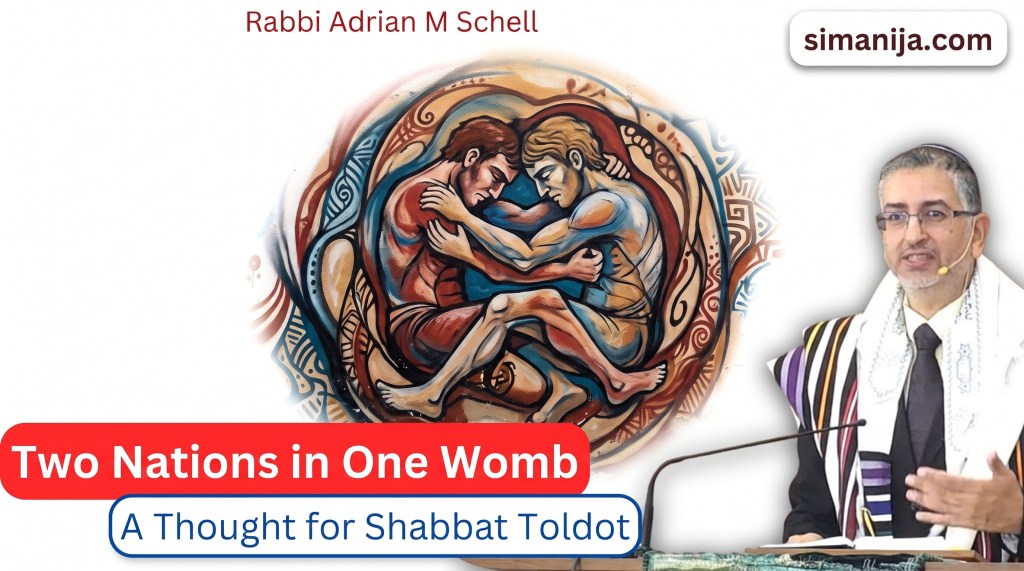
To hope for a kiss and brace for a bite: Toldot, Interfaith Week and the stubborn work of remembering without hatred.
-
Hearing Requires Room for Every Story
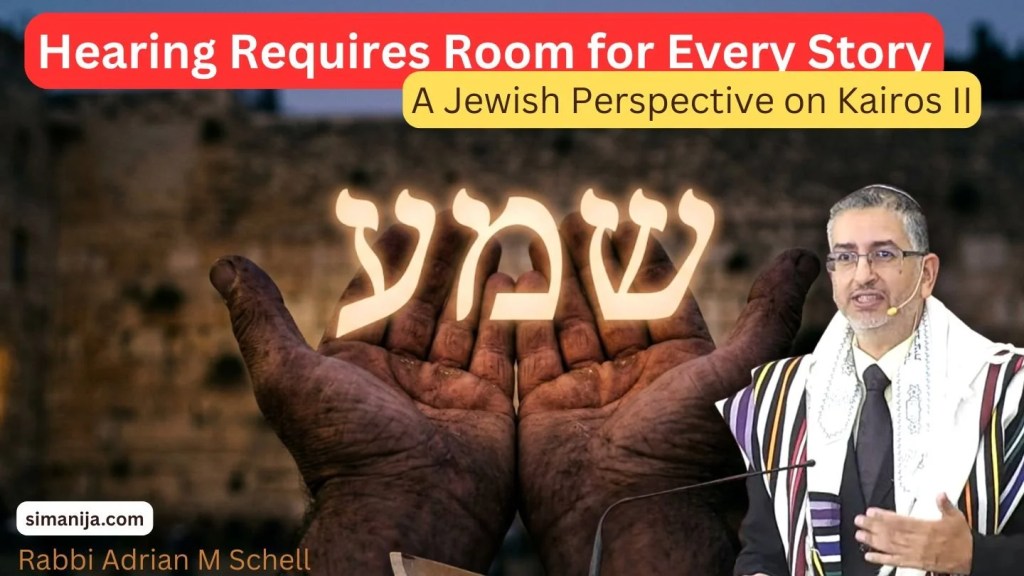
Hearing is never a passive bureaucratic gesture. Twice a day, Jewish liturgy commands us to engage in a profound act of spiritual attention: “Hear, O Israel.” We know the Shema not as a polite request, but as the central spiritual imperative of our tradition. To hear is to bear witness to the Eternal, to internalise…
-
Welcome Is Not Enough
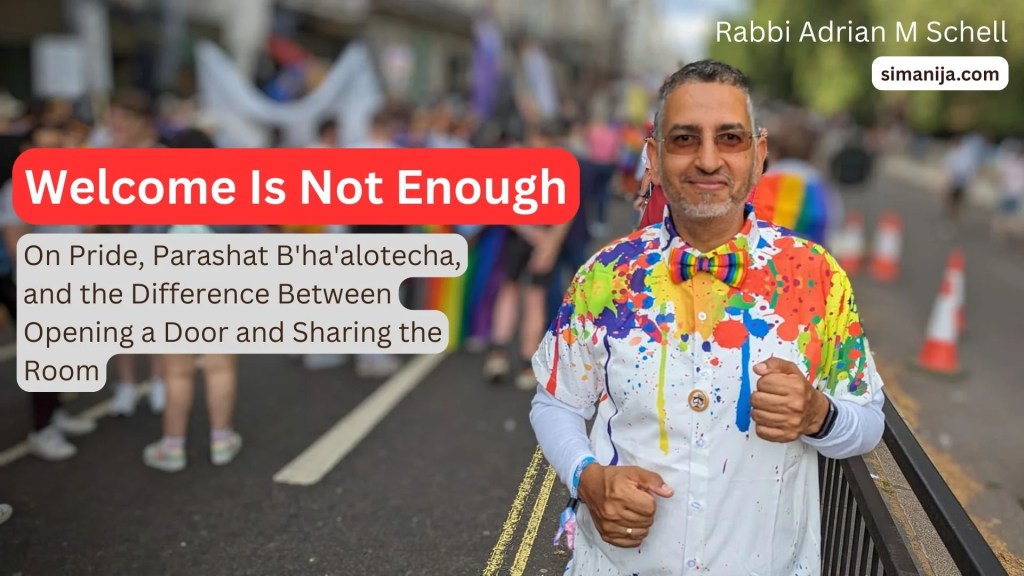
There’s a difference between opening a door and sharing the room.This week’s Torah portion — with its “mixed multitude” and the bold question Lamah nigara? (“Why should we be excluded?”) — has something urgent to say about Pride Month and trans inclusion in Jewish life.Rabbi Adrian Schell argues that queer and trans Jews aren’t a…
-
The Holiness of Doing Nothing
Parashat Behar opens with one of the Torah’s most radical ideas. Every seventh year, the land of Israel must observe a shmita [sabbatical year]. No sowing, no pruning, no harvesting. The fields are simply left alone. Not because the land is broken, but because rest is not a reward for good work. Rest is a commandment.
-
Beyond Silhouettes: Choosing People Over Labels
There is a particular comfort in “we and them” because it tidies a complicated world. The holiness of a community is found in its ability to recognise the individual within the mass. This requires a refusal to see a “refugee” or “man” as a monolith, insisting instead on seeing the Tzelem Elohim [Divine reflection] in…
-
Being Alive is Reason Enough
Life trains us to ask hard questions. We are skilled at complicating what is good, at asking what price was paid and who is left behind. We spill drops of wine at the Seder precisely because we carry the suffering of others inside our own joy.Yet the Song of the Sea suggests a different spiritual…
-
Love, Justice, and the Soul of Israel
Rabbi Adrian Schell examines the moral test of the soul of Israel in this Pesach [Passover] sermon. Drawing on Deuteronomy and Song of Songs, he addresses the Kotel [Western Wall] bill and the Death Penalty Bill, arguing that liberation requires protecting the dignity of the stranger and the Soul of the Jewish State. True love…
-
They Burned Our Ambulances, Not Our Resolve
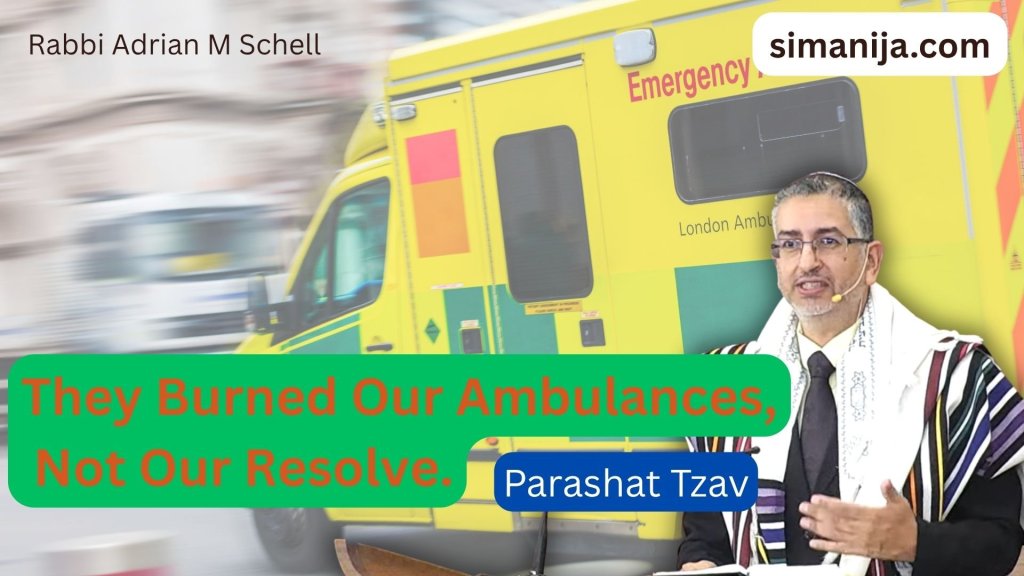
On Monday morning, we woke to images that turn the stomach. Four ambulances, vehicles whose absolute sole purpose is to save lives, were reduced to charred, twisted metal in Golders Green. The shattered glass and the blackened frames speak of a profound, targeted hatred. To attack a Jewish volunteer emergency service is not simply an…
-
Finding Holiness in a Fractured World
Vayikra [and He called] refuses the idea that faith should be simple, tidy, or continuous. It understands that life is fractured, and that a human being often comes to the holy place carrying contradiction. Sometimes we arrive with devotion. Sometimes we arrive with numbness. Sometimes we arrive because something inside us has gone wrong, and…
-
Touching the Edge of Life
The Torah recognises that death and pain change the texture of the air around us. In this sermon for Shabbat Parah, Rabbi Adrian explores the ancient ritual of the Red Heifer (Parah Adumah) from Numbers 19. While we often focus on the bereaved, the Torah highlights a striking paradox: those who help others become “pure”…

