Der Wochenabschnitt Wajeze berichtet von Jakobs Reise nach, seinem Leben in, und seiner Flucht aus Haran. Er erzählt von Jakobs erster Begegnung mit Rachel und von den Jahren, die er für Laban arbeiten muss. Der Bericht schildert die gemeinsamen Lebensjahre mit Rachel und Lea und die Geburt der ersten 11 Söhne und die von Dina. (more…)
Category: Drasha
-
Vayetze: Bargaining with God ?
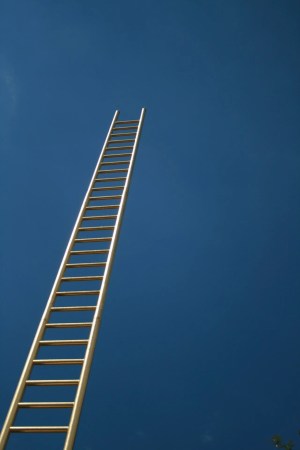 Parashat Vayetze tells of Jacob’s travels to Haran, his sojourn there, and his return to Canaan. It recounts Jacob’s first meeting with Rachel, his time working for Laban, living with Rachel and Leah, and the birth of all his children save Benjamin. Jacob has a dream in which he sees a ladder set upon the earth reaching up to the heavens. God appears at the top of the ladder and promises Jacob he will inherit the land of Canaan. He promises Jacob, saying: “Remember I am with you.” Jacob wakes up and offers the first recorded Jewish prayer in the Bible:“If God remains with me; if He protects me on this journey that I am making and gives me bread to eat and clothes to wear, and if I return safely to my father’s house – the Eternal will be my God …”There is something troubling about Jacob’s prayer. It sounds more like Jacob is saying ‘let’s make a deal’ than the exalted theological language we would expect from one of our forefathers. More than that, his vow is strange because he seems to be asking for the very things that God has already promised him! (more…)
-
Parashat Chayei Sarah: Death is not the end
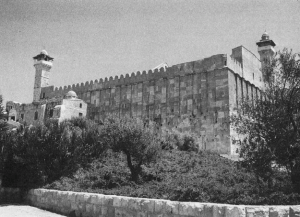 When someone we love passes away, we experience deep sorrow and grief. We miss that person’s presence and caring. We miss the support and all that we shared. Jewish mourning rituals and customs are meant to help us cope, to face the loss realistically, and to find comfort. Jewish tradition helps us to understand that “death is not the end” but rather that our loved ones continue to live in our memory and keep influencing the ones left behind.In this regard, this week’s Torah portion, Chayei Sarah, provides us with a very important tool. While Chayei Sarah may be translated as “Sarah’s lifetime,” our parashah actually deals with Sarah’s death, how Abraham dealt with it, and how life continued for her family after this big break, just before Yitzchak and Rivka start their own new family. (more…)
-
Vayera
Genesis 21:1-22:24 (Plaut p.132; Hertz p.71)Haftarah Second Kings 4:1-37 (Plaut p.149; Hertz p.76)Parashat Vayera includes the well-known report of Abraham’s plea to God to save the lives of the inhabitants of Sodom and Gomorrah. While the effort that Abraham is prepared to invest in order to save these two wicked cities may be considered admirable, one cannot help but notice the sharp contrast between his actions here and the way he behaves later in our parashah. As our parashah draws to a close, we read how Hagar and Ishmael are expelled without mercy; Abraham protests but obeys Sarah’s words as God instructs him. However, in the next chapter, Abraham takes his son Yitzchak to sacrifice him on Mount Moriah, responding to God’s call without protest. Where is the fighter for human rights who earlier exclaimed, “Will You sweep away the innocent along with the guilty?” Why is Abraham prepared to set aside ethical considerations, and just obey orders? (more…)
-
Lech Lecha: Every person has a name
Lechol ish yesh shem shenatan lo elohim venatnu lo aviv ve’imo.
Every person has a name which God gave him and which his father and mother gave him
(by Zelda Schneurson Mishkovsky (1914-1984))
For all of us, our name is an important and delicate gift, we got from our parents. Not only does a name contribute to our identity, it also reflect religious, spiritual, traditional, and emotional dimensions, our parents had in mind, while choosing our name. It is possibly one of the most personal things about us, and yet we don’t choose it ourselves, regularly. To be honest, I think, we all do not often spend much time to reflect on it. We got the name from our parents, and we just “need to live” with it. (more…)
-
Parashat Noach: The rainbow brings together, and is creating a whole
 Parashat Noach tells the story of God’s decision to destroy the earth with a flood because of the corruption and wickedness found in the world. Only Noach – the only righteous man on earth – his family, and a pair of every kind of creature on earth were to survive. Noach was told to build a large boat, the Ark, sufficient in size to accommodate the family and all the creatures. After the flood, those aboard the Ark started a new life on earth all over again, and God promised to Noach that never again a flood would be sent to destroy the entire earth.Having saved Noach and his family, God enters into a new covenant with humanity. This includes the prohibition against eating live flesh (Genesis 9:4), the law against shedding another person’s blood (Genesis 9:6) and the instruction to be fruitful and multiply (Genesis 9:7). The rainbow is a reminder of the covenant which God entered into with Noach, not just for us, but also for God, who will see the rainbow: ‘And I will remember my covenant, which is between me and you and every living creature of all flesh’ (Genesis 9:15). (more…)
-
Noach
Genesis 11:1-32 (Plaut p.69; Hertz p.38)Haftarah Noach Isaiah 54:1-55:5 (Plaut p.85; Hertz p.41)Shabbat Rosh Chodesh Isaiah 66:1-13, 23 (Plaut p. 1492; Hertz p.944)Parashat Noach tells the story of God’s decision to destroy the earth with a flood because of the corruption and wickedness found in the world. Only Noach – the only righteous man on earth – his family, and a pair of every kind of creature on earth were to survive. Noach was told to build a large boat, the Ark, sufficient in size to accommodate the family and all the creatures. After the flood, those aboard the Ark started a new life on earth all over again, and God promised to Noach that never again a flood would be sent to destroy the entire earth. A new covenant was formed between God and all human beings. To this day the rainbow is the sign for this eternal covenant. The Parashah continues with the report of the building of the Tower of Babel. The people decide to build a city, and to create a tower that would reach from earth to heaven. This, too, angered God, who destroyed the tower and scattered the people across the entire planet, each group talking a different language. (more…)
-
Pessach and Sukkoth, two sides of the same coin
Chapter 23 of the Book of Leviticus outlines two mitzvot associated with the festival of Sukkoth. In verse 40 it says
“On the first day [of the festival] you shall take the product of hadar trees, branches of palm trees, boughs of leafy trees and willows of the brook…..”.
These are the four species of vegetation that we today know as the etrog, lulav, myrtle and willow. The Rabbis taught that we hold the four species together, and wave them in all of the directions of the compass, as well as upwards and downwards. In this way, we mobilize the winds that blow from all directions to bring rain to Israel for the new season of sowing and harvest.In Leviticus 23: 42-43 we read,
“He shall live in booths [Sukkoth] seven days; all citizens in Israel shall live in booths, in order that future generations may know that I made the Israelite people live in booths when I brought them out of the land of Egypt…..”.
-
Yom Kippur: A day of hope
And this shall be to you a law for all time: In the seventh month, on the tenth day of the month, you shall afflict your souls [teannu et nafshoteichem]; and you shall do no manner of work, neither the citizen nor the alien who resides among you. For on this day atonement shall be made for you to cleanse you of all your sins; you shall be clean before Adonai. It shall be a sabbath of complete rest for you, and you afflict your soul [ve-innitem et nafshoteichem]; it is a law for all time. (Leviticus 16:29–31)
Yom Kippur isn’t an easy day. Not because of we are fasting. I agree, fasting is one of the duties of today, as commanded in the Torah, but fasting in itself only needs a bit of physical strength. If, God forbid, we are ill, or get sick, we are even commanded to break our fast. (more…)
-
Parashat Ha’azinu: A divine promise
Parashat „Ha’azinu“ consists of the last prayer Moshe says, in front of the people. In this wonderful composed prayer, he explains once again that God is perfect, and full of mercy. God is never wrong, he is true and „YaShar“, straight. For the last time, Moshe reminds his people to be honest in their dealings towards God, to remember the past, and to teach the lessons, which can be drawn from the story to the next generation.The Haftarah, which is linked to this Shabbat, and where this Shabbat’s name is actually taken from, starts with a prophetic warning to Israel, to return to God, – la’shuv.Both texts are here to give this Shabbat a special meaning. This period between Rosh haShanah and Yom Kippur is very special and unique; our relationship with God reaches a different level. From my understanding, it is intended that we get closer to God. During this period, it becomes easier to address God in reviewing the past year – What was good, what was not so good, what went wrong? We are standing in front of the Eternal, as our own lawyers in a trial, presenting our case, ourselves, to the judge. (more…)

